No.: PET6425
English name: Barbusoligolepis
Origin: Sumatra, Southern Asia
Vulnerability to disease: end-of-life disease
Life: An overview of the variety of 6-10 year chessboards
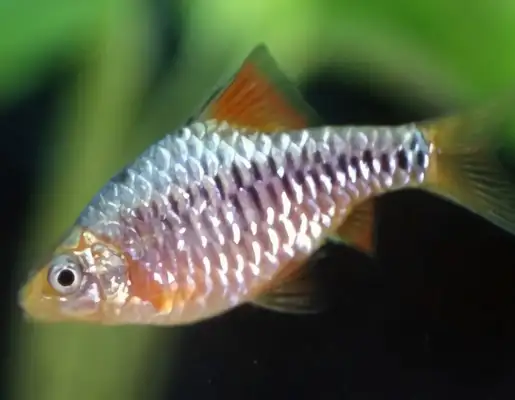
Chess boards are at the irregular black spot on the side of the juvenile, and through our naked eyes, they look like pieces are on board, so they're famous. Chess board is easy to feed and has a lively personality and can mix with small fish.
Don't call it: Blankfish, Seven Star Lamps.
Category: Freshwater tropical fish
Context: Animals
Distribution: Sumatra of Southern Asia
Latin name: Barbusoligolepis
Chinese literary name: the appearance of the chess board
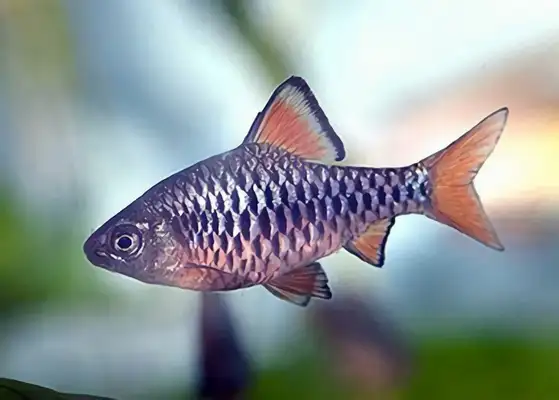
Chessboards, originating from Sumatra in southern Asia, are not very difficult to raise because they are less demanding for water quality and are healthy, and are very popular with fish friends because of their small appearance.
The board is coated with large scales, green on the back, and silver white on the abdomen, and is called a “gay board” because it is organized like a board. The male fish during the breeding period will appear in a red-satisfactory marriage colour and the male has a black side of the back and hip fins, which can be distinguished as male and female. Chess board size 4-5 cm, diamond shape. Both the back and the back fin are high, the hip is wide, the tail is short and the tail fin is fork. The colour of olives is mixed with the red, blue, green dots and the red of the fins. The greatest feature is the black edge of the fins and the edges of the scales, which are also in the juvenile stage and are clearly black on the fins. Chess board breeding environment
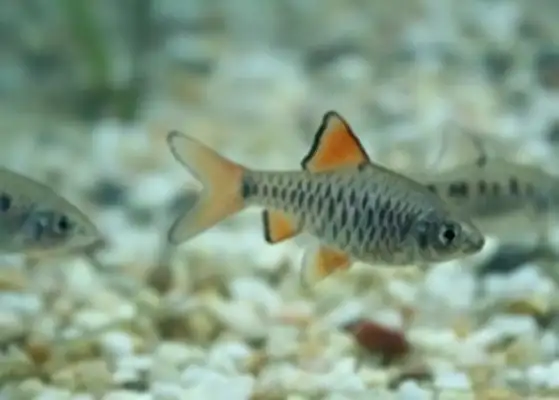
The size of the board is so small that the fish tank that feeds the board is not so large as to match the growth and activity of the board. In addition, light is required in the process of raising the board, and it is recommended that the mouth of the glass lamp barrel be 100 mm above the water surface to prevent the board from jumping.
Chessboards like soft water with weak acid, which, while not demanding water quality, prefers soft water. The board can withstand temperatures of 15°C and is suitable for raising water temperature of 20°C-28°C. In the spring, the management of the board focused on proper delivery of bait and prevention of disease. In spring, the climate warms and the board of chess after winter begins to be active, but the body is relatively weak and the number of baits should gradually increase. Due to climate change, special attention has been given to temperature protection in the event of wind and rain. In the spring, bacterial viruses are also growing rapidly and fish disease is most prevalent. Care must be taken to prevent and treat diseases. I'll feed you.
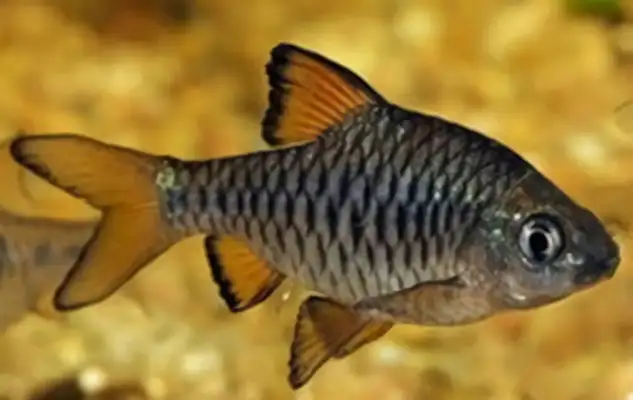
While the board is small, it is not very difficult to feed and is not very picky about the bait to feed. The proposal to place an edible in the aquarium of the chess board could effectively prevent fish from falling into the bottom, resulting in contamination of water quality.
The board is a groin-looking fish, egg-breeding, board-breeding, tactful, gentler, like to swim down in the water, able to live in harmony with other tropical fish species, and can be shared with other small fish. We can feed chess board animal bait, not food.