Title: PET3380
English name: Magpie Robin
Vulnerability: respiratory, digestive and parasitic diseases
Life: 5-10-year profile of the four-hairbird species
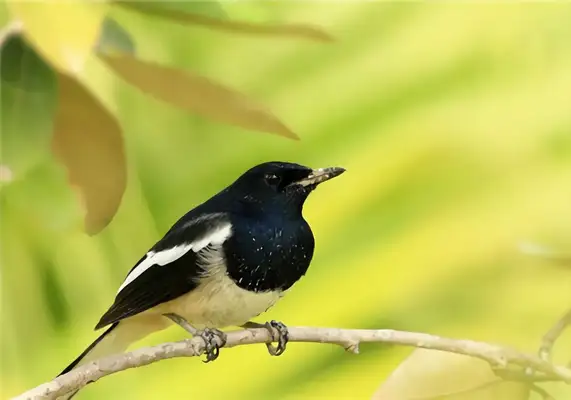
The four birds are also known as Magpie Robin, alias more slags, letterbirds, etc. The reason for this is that he likes singing on branches or outside buildings when he's happy. That's why it's called the Four Hicks. Apart from the smaller body size, the outer shape of the four-hairbirds is very similar to that of the herring.
Chinese literary name: Four Hicks
Chinese aliases: pig slag, slag, letterbird or four-single
English name: Magpie Robin
Two words: Copsychus saularis
Context: Animals
Gate: Pipeline gate
Amen: vertebrate Amen.
Programme: Birds
APA: Today ' s APA
FREEDOM: FREEDOMS
Section: Section
Distribution: The Yangtze River Basin and its areas south of the country are widely spread, with South Dhainan Island, Guangdong, Hong Kong, Guangxi, Fujian, North to Shaanxi, Henan and South-East Gansu Provinces, and West to Sichuan, Guizhou and Yunnan Provinces. Quakers.
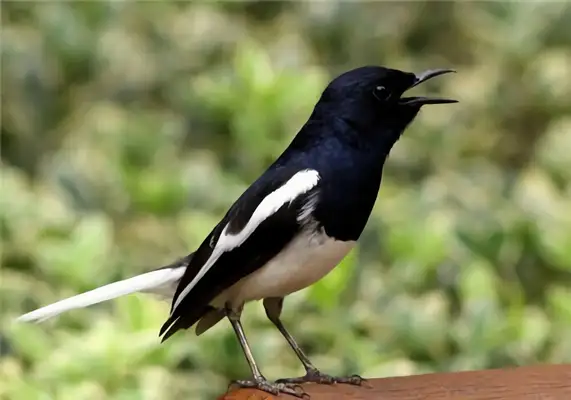
The most typical feature of the four-happiness bird is that of its strangely long tail, about 21 centimetres long, which is often confused with the four-happiness bird, different from the smaller individual. It is therefore not difficult to distinguish.
The four birds belong to small birds, most of them are black and have white wings and white and white in the lower body. The female is brown and has white wings, as well as brown in the front and white in the back. Characteristics are clear and not difficult to identify in the field. Similar types of euphoria are significantly large, female and male alike, and are not difficult to identify in the field.
The size of the male bird, head, side, pillow, neck, neck, back, shoulder, and upper part of the head and upper part are black and blue metal glitter. Two tail feathers in the centre, the rest of which are white, have only a slight black spot in the base, and the fourth external side has only an inner or internal and external luminous black plume. The two wings are black and brown, the wings are small, medium, secondary and inner, and white, forming a large white wing spot on the wings, especially when flying. The lower cheeks, throats, upper chests, cheeks, necks and the same colour as the head, are bright blue and black, white in the lower chest, belly and tail, and gray in some of them. The female is broadly similar to the male, but the upper body is mostly black or dark gray, front, front, front, head, cheek, throat, chest gray or brown. The rest of the lower body is slightly brown. The young bird is brown or dark, has a larynx, chest brown or yellow, has a black and brown feather, and the rest is similar to adult birds. Ion membrane, black mouth, twilight and toe brown or brown. The Four-Hairbird Living Environment
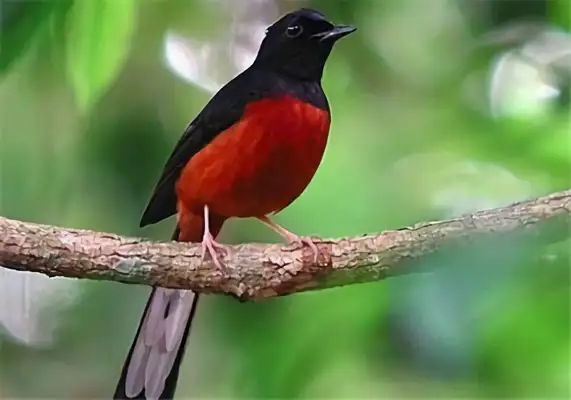
The four-happiness birds are more widely distributed in the country, with a relatively large number of breeders, with four-hidden birds growing in the field for approximately five years, and more than in the field for 10 years. The four-hairbirds can also be raised on a bird's shelf like a dot, so don't be funny.
The Four-Hairbird has a high volume of excretion and a strange smell; it likes water baths and the bottom is easily contaminated. The bottoms of cages and scavengers (or mats) are cleaned every other day or two, and bathing is best carried out in a bath. Water cans are cleaned and fresh water is replaced daily. The powder in the food tank is replaced with new material each time the bottom is cleaned. • Reduction in the number of water baths during the plume replacement period (8-10 months), with the summer covered by gauze in the south, and indoor winter in the north, with temperatures above 15°C. ♪ Four-hairbirds raise knowledge ♪
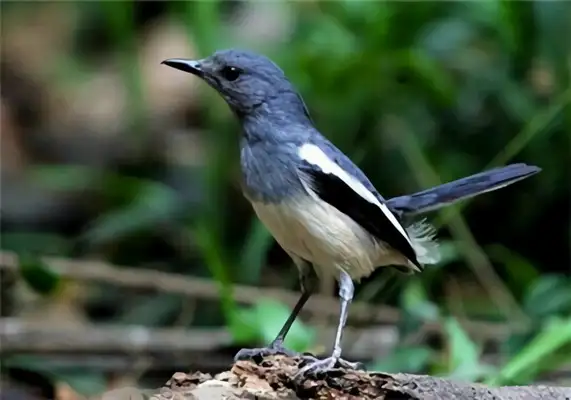
Four-happiness birds have two sub-species, most of which are found in South China, and four-happiness birds, like other birds, use their mouths to catch food. The females and males of the four-happiness birds identified many feeders that could not be distinguished.
The four birds are famous songbirds, so they tend to feed only males. It's male and female, easy to identify. The males are black and white, and they are as euphemisms. Female heads, necks, chests and backs are grey and black, metal-free and abdominal white. The young males have brown feathers on their chests, and the small feathers are mixed. The female has a light gray spot on her chest and a little bit white on her plume. The four-hairbird feeding point.
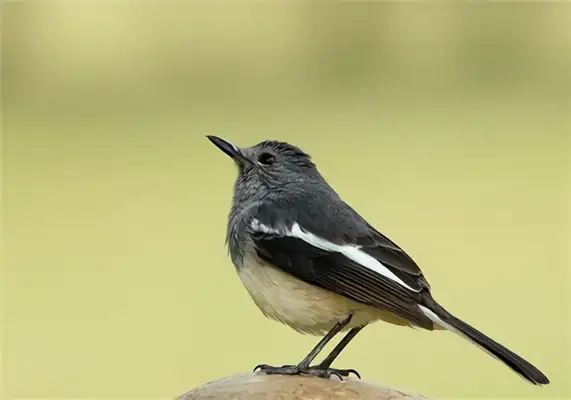
Unlike other birds, he has a poor digestive absorptive capacity for granular feed and should therefore consider powder when feeding. The four-happiness birds that survive in the wild are usually fed by insect capture, so that the four-happiness birds raised by families can also feed the insects appropriately.
The general synthetic feed is given to Super Black Gold One, the Super Black Gold Fours is very well suited to the stomach of the Four Heroes and the Birds, and the general powder is provided with regular feed, and some insects are fed such as locusts, tarp, rollers, yellow powder, etc., or cattle, lamb scavengers, which can normally be fed to the Super Black Gold wrench. Some have fresh shrimp instead of insects. Increase the percentage of protein feed (especially living insects) and multivitamin supplements.