Just after Mid-Autumn, I haven't taken it back from my heart. Surprised? But every time I take a vacation, it's hard for the pet owner of a dog, because there's a dog in the house who chooses to go out, it doesn't feel comfortable leaving the dog, it doesn't want to go out and it's too big for the world. I want to see the mood. In order to go out and not let the dog suffer, the scavengers start to figure out how to foster the dog, as some of their friends sum up, and there's a rumor that many pet owners are taken seriously, that it's safer to foster the dog in a pet hospital than elsewhere, because the pet doctor is more professional and more secure to take care of it.
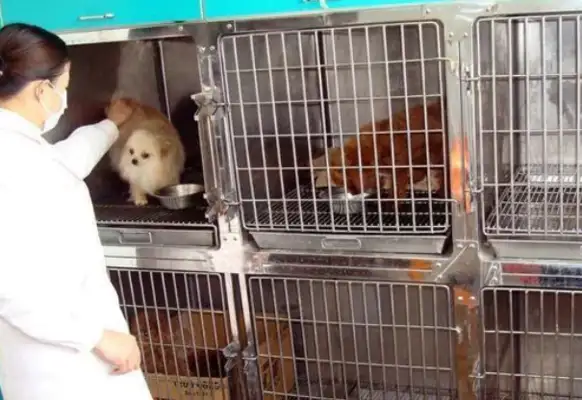
Today, there is a rumour that pet hospitals are the most unsafe way to foster dogs, and that many of the foster and inpatient units in the pet hospitals are not fully independent, so they are much more insecure for dogs who are unvaccinated and infirm.
Share cases:
A friend of mine was going to work out of town, so he wanted to put Teddy in foster care in our pet hospital, and when work and accommodation were arranged, he came to pick up the dog, and the dog had been given two shots, because friends couldn't refuse, so he had to accept it. For safety reasons, he put it in our lunch-time dormitory (room with the hospital), but on the fifth night of foster care, the dog vomited, observed the day after, and continued to vomit, and the dog had a tiny virus. He explained to his friends for half a day, and he didn't know if he heard it (when most people were emotional) and couldn't delay it, so let's treat the dog. Fortunately, the dog has already been vaccinated with two shots, and has been cured for six days. Call his friend and let him come back and pick it up, then he'll drop it down.
Reflections:
They were placed in foster care at the pet hospital, where they were infected with a tiny virus, because they had not refused the vaccine.
It has nothing to do with how well you care for a dog, mainly because it's not in a bad environment.
The pet hospital is a major health boiler, which, although disinfected daily, is not safe.
Let's see what are the present forms of foster care and what are their strengths and weaknesses?
Patient hospital foster care:
The pet hospital is probably the first place to offer foster care services, since people first came into contact with the pet service industry, only the pet clinic, including the now independent pet beauty, was first done at the pet hospital, so many people are used to it, as long as the pet has any problems, the first thought is the pet hospital.
Advantages:
Dogs can be detected in a timely manner, some emergencies occur, and pet hospitals can handle them more professionally.
Disadvantages:
Every day it's a sick dog, with a high risk of infection.
Activity space and time are limited and not much play time. The pet hospital is usually busy, and some time is spent taking care of the dog in the hospital, so there's no time to play with the foster dog, but to do it every day, take them out to shit.
Summary:
In general, foster care in pet hospitals has more disadvantages than good, and we do not foster dogs to enjoy the superior medicine of pet doctors, but rather to give them a comfortable environment, so we suggest that you carefully choose foster care in pet hospitals.
Recommended index:
Patient shop foster care:
Fostering in pet shops is now a place where many people choose foster care, because dogs don't bathe in pet shops, dress or buy drugs when they get sick, so pet shops can eliminate a large proportion of the infection, and dogs can spend their days in foster care safer.
At the same time, the pet shop is a frequent place for dogs, and the dog and pet shop staff are more familiar, so they are not too unfamiliar.
Advantages:
The chances of infectious diseases are much lower.
The pets here can have a lot of little partners playing.
Staff have more time to accompany them and to reduce the sense of loss they are left in unknown places.
Regular bathing and beauty.
Disadvantages:
There are parts of the sterilisation in pet stores that are not doing well and are vulnerable to skin diseases.
Some less responsible staff members were encountered, as negligence led to the loss of dogs.
Recommended index:
Family-style shared foster care:
It's a more popular form of foster care recently, which probably means that in a dog ring or in a dog friend, the dog owner is going out, the dog owner is not going out, and then the dog owner is putting it at the dog's house, and the dog owner is taking care of the dog, he's having fun with another dog, and he's got another date.
Advantages:
Cost savings (with some savings on foster care, especially in the case of large and medium dogs, approximately $50-70 per day)
Don't worry about the dog.
In particular, there are dogs who eat home-made food or who need extra cooking, and care is better.
Disadvantages:
Dogs tend to fight each other, causing injury to each other.
The two dogs are immune to misunderstanding and skin-throwing because of infectious diseases.
Dogs have some discomfort because they are not fed properly and can cause tension between the two owners.
Summary:
This form of foster care is more novel and practical, but at present there are many premature places, such as the absence of a certain contract, where problems arise and there is a great deal of tension between the owners of the pets.
Recommended index:
Hire people to look after dogs:
This form of foster care, which is similar to a person's hourly work, takes the dog home to feed the dog, then takes the dog out to defecate, locks the door and pays for the pet owner.
Advantages:
You don't have to take dogs to strange places.
No need to change dog habits.
Don't worry about the dogs.
Disadvantages:
Property security is not guaranteed.
The professionalism of staff is not guaranteed.
The number of persons currently engaged is relatively small and difficult to locate.
Recommended index:
What do you care about foster dogs?
Dogs may not be placed in foster care without having been vaccinated, and dogs may not be placed in foster care beyond the immunisation period.
Dogs may not be placed in foster care during sickness.
Dogs may not be placed in foster care during emergencies and during pregnancy.
Dogs may not be placed in foster care during dog food exchange.
When a dog is in foster care, it must carry its usual dog food. (Although dog food is available in foster care, it is highly recommended that it be replaced.)
Dogs, while in foster care, do not bring their own cooked foods or the like and feed them to pet shops or pet hospitals, which can easily cause dog diarrhoea.
When you're in foster care, tell the pet store or the dog-care worker about your dog's habits. Some doggies go out first and come back for dinner, but others are the opposite.
Some geriatric dogs, or dogs with chronic illnesses, need to take medication every day, and it is important to inform dog-care workers about feeding methods and doses.
Leave your 24-hour phone number to the foster care unit or individual.
In fact, when fostering dogs, these concerns are as important as the choice of a scalable form of foster care, since only the dog's own resistance is not in question will it be better to stop the disease from occurring outside.
After looking at the analysis of the foster care methods, it becomes clear that the foster dog in the pet hospital is not the best option, and there are many disadvantages. The so-called professionalism in the rumour is what we least want to see in the foster dog, so when we foster the dog, it is more appropriate to choose a pet shop without medical care, or to put it at the home of friends, parents, which is more secure.