Designation: PET5466
English name: Introduction to Red-bellied Parrot's Red Parrot
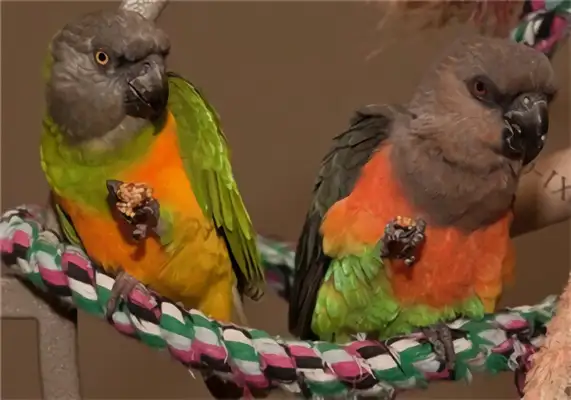
Red-bellied Parrot currently has two subgeneric species, and the gender of the parrot is easily distinguishable. It can be easily determined from the appearance that the abdomen of the male are orange and the female are grey green, which is a better speaking class of parrots.
Red parrots, like most Persian parrots, are quiet African parrots. Red parrots are also a better speaking class among Persian parrots, and they are more outward-looking. They usually speak better words and imitate better than their mothers, but generally the demand for female birds is higher in the bird-rearing industry, because they are smaller.
Chinese literary name: Red parrot
Chinese aliases:
English name: Red-bellied Parrot
Two words: Poicephalus rufiventris
Area: Animal
Door: vertebrate door.
Platform: Birds
It's a parrot.
Section of parrots
African parrots
Organisation
Distribution: Eastern African parrot morphological characteristics
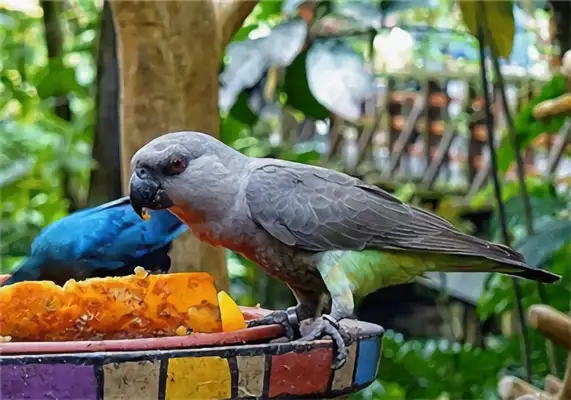
The feathers of parrots are very colourful, are more beautiful in pairs and are suitable for bird breeding. Carrots grow about 22 cm of age, ideally between 113 and 142 g.
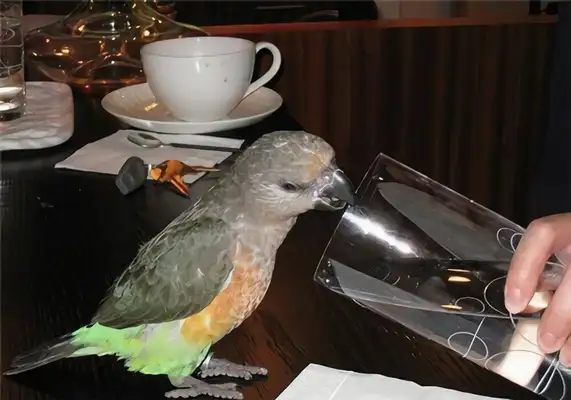
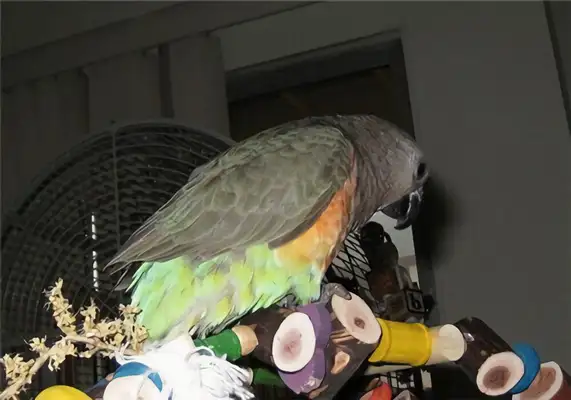
The head, back and wings of the red-breathed parrots are gray brown, with some yellow feathers spread over the bending of the wings; the chest and cheeks have various degrees of orange feathers; the back is yellow green and blue, and the lower part of the chest and the abdomen, as well as the inside of the wings, are orange; the inside of the tail is blue and green; and the beak is black and the rainbow is red. The wings of the female are covered in grey feathers and the breasts and abdomen are green. There are two possibilities for the color of the young bird: the light color of the male, or the orange of the young male. The color of the red feathers is bleak and all have light green rolling sides, orange on the forehead and dark on the iris.
It takes at least 12 months for the young bird to grow into a bird. It is a bi-shaped species; it is the sex of a bird that can be distinguished by colour. The males are usually a little bigger than the females, and they have broad heads and a little large upper jaws. The head and chest of the male are a little bit orange, just like its name; the chest is dark orange, the buttocks are yellow green, the tails and abdomen are green, the beaks are grey, the feet are grey and the iris of the eyes are dark orange. The colour of the female is similar to that of the male, but the female does not have orange breasts and the upper jaw is narrower. It is easy to distinguish from the appearance. It's a parrot's environment.
Red parrots tend to be more resistant to heat than humans and have more habitat in the wild: plain areas, thorny areas, open savannahs and dry forest lands. Such parrots, though heat-resistant, could not withstand an overly humid environment.
It's really bad weather for parrots like rain. If the air is hot and oxygen molecules are reduced, the parrot ' s body will feel extremely ill-adapted, and at this point it is better for the owner to turn on the air conditioner and to cool and humid the indoor air, without placing the parrot on an airless balcony. In the case of winter, parrots are kept as far as possible in rooms without air humidifiers in order to prevent tide sickness. Warming doesn't pose any threat to parrots. In its view, the tide is worse than the heat. A parrot breeds knowledge.
It is normal that the red parrots who have just been captured have little courage and are not adapted to the new environment, but they are not afraid to live soon. Adapting to the environment becomes strong and sensitive during the adaptation period, newly imported birds tend to be more food-oriented and may eat only grain seed feed, but also require a variety of foods, such as vegetables and vegetables.
In the wild, the breeding season is from October to July, nesting in tall trees or termite towers; nesting in termite caves 2-3 metres from the ground, or in caves 10 metres or more. Usually one or two eggs are laid in one nest.
The majority of artificially grown parrots start breeding after the age of 3 or 4 years, usually in winter, but can reproduce throughout the year, providing 30 x 30 x 50 cm thick trunks. Three eggs will be laid at a time, with an incubation period of 25 days, and young birds' feathers will grow for about 60 days, and when the young birds become independent, they will feed them for another three weeks or so. After 12-14 weeks, young birds will start to act independently.