No.: PET5844
English name: Monocirrhus Polyacanthus
Origin: Overview of the Amazon, Guyanese folic species
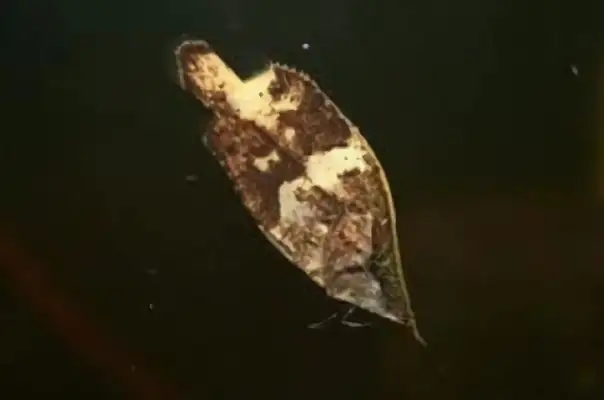
Leaffish are also known as dead fish, leaffish, thorny foliage. The folic shape of the fish, which originated in the Amazon and Guyana, is very special and, if the folic fish remain under water, is almost as different from the leaves that fall into the water.
Chinese literary name: Leaffish
Latin name: Monocirrhus Polyacanthus
Not to mention: leaffish; leaffish; thorny foliage
Context: Animals
Objectives: Seaminus
Section: Leaf Fish Section
Distribution: North America; European folic shape characteristics
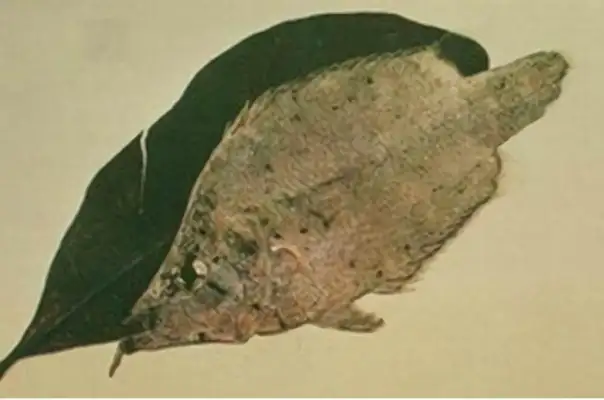
Leaffish are like their names, and if the foliage is almost identical to the leaves that fall into the water, and if the foliage is not moving when they are picked up with a net, the presence of the folicfish can only be detected by picking out the leaves that are found.
The foliage is 10 cm long, tall, flat-side, like a leaf. Head-kiss tip. The mouth is big, it's slanted. The lower jaw is prominent, there's a hard tentacle on it. Eyes above and above. The back fins, ass fins are long until the tail handle, with more hard thorns than soft fins.
The chest fin is small and the abdominal fin is lower than the chest fin. The tail handle is short and the tail fin shape is underdeveloped. The colour changes with environmental light, green and yellow, disguised as a falling leaf that floats into water, with easy access to prey-tree fish and insects, a valuable species with disguised capacity.
Such fish also act strangely, as it floats in water, without any drifting water, and with careful observation, to discover that they move their fins frequently, that their fins are small and transparent, and that they are hardly visible in water.
Initially, the understanding of the fish came from its cavity. Lines with the largest mid-tooth in a circle, in an uneven column. The side is a long, small crown. And there are smaller teeth near the concentric circle, and some of them are pebbles. Leaffish breeding environment
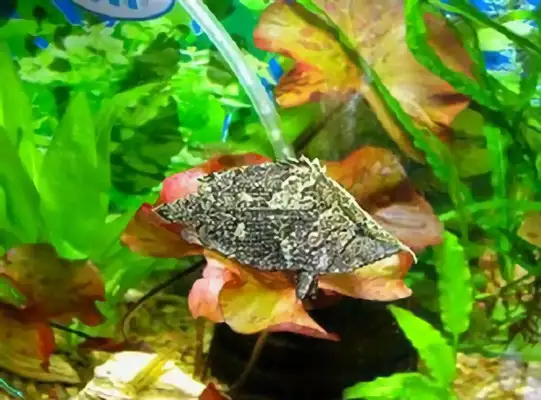
It is not uncommon for folic fish to be raised, but there are a number of aquatic lovers. Leaf-shaped fish are grown and are recommended at 25-28°C, 6.0-6.5 PH and 5-10 dGH.
Leaffish have suitable temperatures of 25-28°C. They were often active in the upper and upper layers of the water, remained silent for long periods of time, slowly approaching their targets and then suddenly attacked. It is not appropriate to mix with small fish. Leafed fish are sticky and sticky on rocks or grass leaves. Take out the female and leave the male with the eggs. Because the fish's fossils are also found in the lagoons and microsaline sedimentary rock, it is thought to survive in different salinity waters. Folial fish feeding points
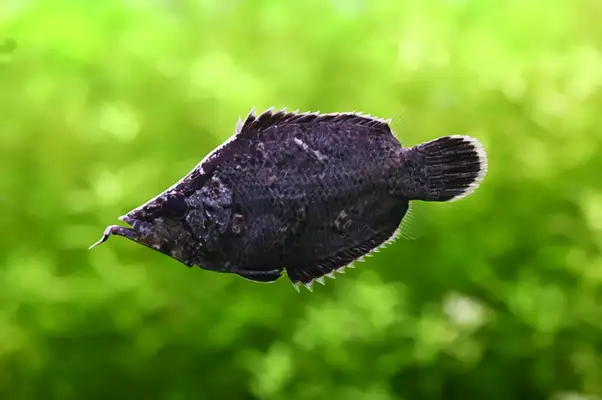
Leafed fish are unique in shape, and artificially raised folic fish need to be aware that they are not suitable for breeding with small fish, preferably alone. In addition, leaffish prefer to eat alive and eat in a sudden attack. It is recommended that some watergrass and sunken wood be placed in aquariums for leaffish.
Leaffish feed on smaller fish and insects. Its feeding methods are very specific, and when it catches, it lies in water for an hour, a day, and even a longer time. When a prey approaches it, it carefully screens the size and strength of the prey, and it prefers to wait rather than risk touching, provided that it is a little older or has a ferocious target. And the prey that it believes can be attacked will be suddenly attacked and captured in a steady manner.