Designation: PET4806
English name: mooutain hare
Character: Fear of cowardice
Nationality: Distribution in the north of the country
Vulnerability: ballworms
Life: Overview of the species of snow rabbits 5-6 years
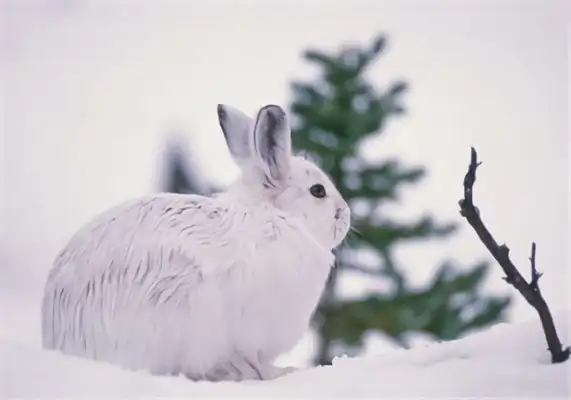
The snow rabbit, a rabbit living in cold areas, is the only fully coloured rabbit that exists in the country in winter, unlike the summer fur colour, and is found in the Heilong River area in relatively large numbers, fear of cowardice and difficulty in raising animals.
Chinese literary name: Snow Bunny
Don't call it a white rabbit, a colored rabbit, a blue rabbit.
Two words: Lepus Timidus
English name: mooutain hare
Context: Animals
Gate: Pipeline gate
Programme: Lactation Programme
FIND: RABBITS
Section: Rabbit Section
Yes: Rabbit
Species: Snow hares
Distribution: Northern Europe, Russia, Hokkaido, Japan, Mongolia, etc., are located along the Heilong River, the north-eastern part of Inner Mongolia and the northern part of Xinjiang.
Form characteristics: The body of the snow rabbit is slightly larger than that of the straw rabbit. 45 - 62 cm long, with a tail of 5 - 6.5 cm long and a body weight of 2 - 5.5 kg. Longer than later and longer than the ear.
Lifestyle: The snow rabbits live on the edge of the marshlands in the cold-temperate or sub-cold-temperate pines, reeds in the valleys, in the willow bushes and in the white-coloured forest, are among the representative animals of the cold- and sub-temperate forests.
Food: Herbs. Snow hare morphological characteristics
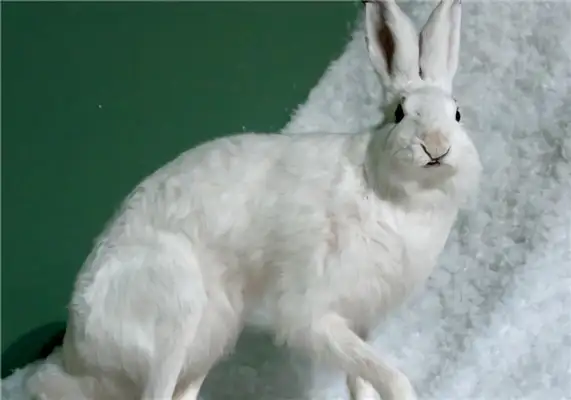
The size of a snow rabbit is larger than that of a normal rabbit, the colour of the fur varies from season to season, and winter turns into a fat snowball, and summer is a grey, thin rabbit, which may be related to its own protective colour, which is the response of animals to the environment to protect themselves.
I. The look of a snow rabbit
The ears of the snow rabbits are shorter than those of the rabbits, because in the cold areas, not only large ears covered with fur vessels are required to spread the heat, but they are often attached to their backs to preserve the heat. Its eyes are large, on both sides of its head, and it provides it with a wide range of visions that can be seen, looked back, looked side by side and looked above at the same time. The only deficiency, however, is that the distance between the eyes is too great to see the object by moving to the left and to the left and to the left, and when running fast, it is often too late to turn the face, so it is often the case that walls and trees are hit, and this is probably the case for the fable of “watch the rabbit”.
ii. Shaggy features of the snow rabbit in winter
The winter is long and dense, with the longest side and abdominal hair, obscurantly white, with only ears and eyes. The size of the nasal cavity and the strength of the lower cavity are both adaptations to cold areas and indications that it is a more evolutionary species.
iii. Shaggy features of snow rabbits in the summer
In the summer, the hares were tanned with light tan and mixed with black hair, with large amounts of black and brown hair on their heads and backs, black and brown ears on their ears, light yellow on their throats, chests and back and back limbs, white on the insides of their cheeks, white on their abdomen and on the insides of their limbs, light tan on the palms of their front legs and brown marks on their backs. During the winter, the body was white, thick and soft, with hair on its side as long as 5 centimetres and only ears and eyelids as black and brown. Snow hare nursing knowledge
The snow rabbits are usually timid and gentle, but in the mating season of March to May, aberrant, less cautious and invisible than usual, becomes extremely active and travels all day to find a spouse. Snow rabbits give birth to 2 to 3 babies a year, with a pregnancy of about 50 days, giving birth to 2 to 10 children each, more than they give birth to 2 to 5. The first-born child, with a body of 90 to 120 g in weight, is born with open eyes, 20 days to live independently, and 9 to 11 months to reach sexual maturity. Life expectancy is 10-13 years. Snow hare living environment
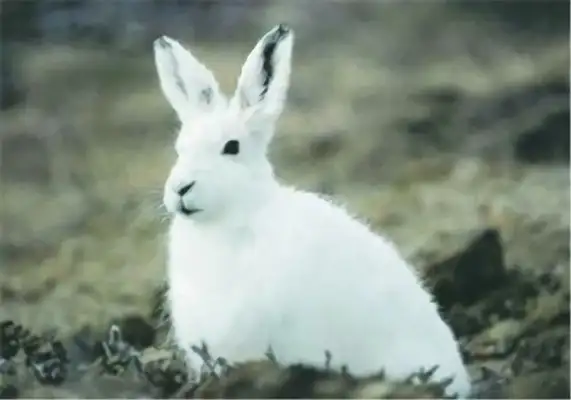
How does a snow rabbit survive in such a dangerous place when it lives in harsh, cold conditions and with many natural enemies preparing to hunt? What's more suitable in its habits?
The snow rabbits are among the representative animals of the cold and sub-cool forests on the edge of the marshlands in the cold temperate zone or in the sub-cooled pines, reeds in the valleys, in the willow bush and in the pyre forest. Except in the case of emergencies, activities are generally separate. In a simple cave hidden during the day in the bushes, in the dents and under the pouring logs, covered with the leaves of the dead and the hairs of its own fall, moving out early in the morning, at dusk and at night, the nests are not fixed, so there is the term “twisted rabbits”.
It has a keen sense of smell, and its nests are usually in a slightly ventilated place, sleeping with its nose up, so that it can smell the air enemy that floats with the wind at any time, and both ears are vigilant in listening to any unusual sound. After a heavy winter snowfall, it digs holes more than a metre deep inside and forms an interlocking runway on snow. In the event of danger, its eyes were wide open, its ears were tied to its back, it was crouched low, and it often escaped attacks by natural enemies because of its protective colours, which resembled the environment.
The snow rabbits are good at jumping and climbing, and they can walk in the snow. They often jump in slow motion, jump out of shock and fly at speeds that can't be covered in their ears. It can leap as fast as 3 metres and speed about 50 kilometres per hour, and is one of the fastest-run wildlife in the world. The running is often emptied up to a metre to observe the movement around and then determine the direction of the escape. As it runs, it can also suddenly stop and turn or run back in order to escape the pursuit of its natural enemies. What do you want?
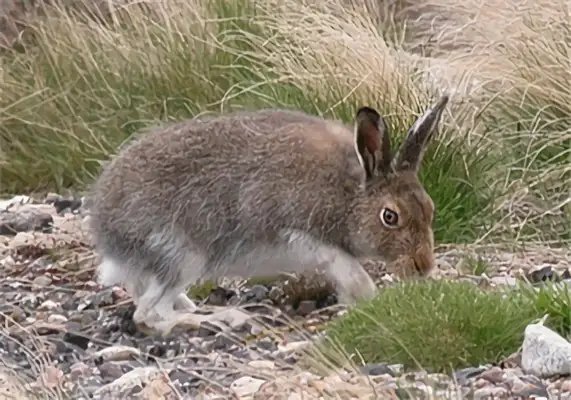
The snow rabbits are a little less timid than the normal rabbits, and many of the rabbits that have been caught may not survive one night, so what is the main food for them in the wild?
Snow rabbits are typical herbivores, fed by herbs and trees, and gnawing in winter. Eat slowly, usually without water. It has two types of faeces, one rounded with hard faeces, which are excreted while eating grass, and the other with a large amount of vitamins and protein in the appendix, which are often excreted from the membranes during rest, where it stretches its mouth to the bottom and re-eats to take full advantage of the nutrients of vitamins and protein, which are four to five times greater than those in the ordinary faeces. It is because of this dual function of digestion that the snow rabbit can starve, hide and endure the harsh natural environment and avoid attacks by natural enemies.
Snow rabbits are rare protected animals and are included in the second level of national protection. Snow hares are economically more valuable, have a good taste for meat, have a high protein content and are delicious. The furry is so plentiful that it can make the furs, cuffs, collars, hats, etc. It's an export earner. Dry faeces can be drugged, and they are known as moon sands, toxic, insecticidal and visible.