No.: PET1979
English name: Giant Asian pond turtle
Origin: Laos, Malaysia, Myanmar and Thailand.
Vulnerability to disease: decomposition
Life: An overview of Asian turtle species in around 80 years
Asian turtles are Asia ' s largest species of water turtles, also known as large oriental turtles, which are larger in size and less used as pets, usually in temples. Asian turtles are grotesque turtles, which usually eat some vegetative food in the wild, but prefer some meat when raised. Asian turtles have a longer life span of about 80 years. Asian turtle morphological characteristics
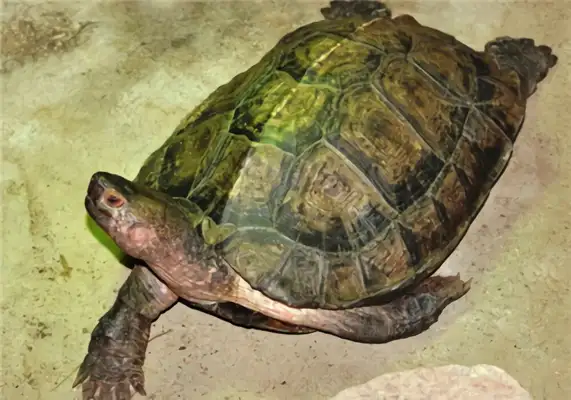
Asian turtles are not part of the Chinese species, they are spread over the New Maatai region, they are larger in size, and they follow the obvious elasticity on their backs, like a visible dragon bone, with large backs and large head feet that can be condensed inside the shell, large head and bright eyes.
Asian giant turtles are the largest of the hard-shell, semi-water-dwelling Asian water turtles, which mature at about 3.5 kg and can reach more than 45 cm and more than 15 kg of sophisticated individuals. The adult back is up to 44 cm, grey and brown, high on the arch, and the back end is sawned, with a visible rise in the middle. The head is green to brown, with yellow, orange or pink spots on it. On the dark yellow abdomen, each piece of shield has a bright dark brown lined pattern that is visible.
There's a toe. Appearances are rounded, back-later brown, central abrasive, and back-later is serrated; abdominal yellow, with a radioactive pattern; head brown, with a small tangerine tatter; and limb-brown, with scales, with well-developed fingers and toes. Male giant turtles have a microblank indentation in their abdomen, with long and thick tails compared to females. Asian Turtle Care Knowledge
Asian giant turtles from South-East Asia tend to hide under wet land cover during rearing. They cannot withstand cold weather, wet cold climates are highly susceptible to respiratory diseases, while dry cold climates are deadly for Asian turtles. Deaths may occur at long intervals below 5°C. When it's cold, the turtles should be moved inside. Asian giant turtles, especially in their formative form, require large breeding sites, including warm and clean water and a piece of land. The planting of branches in the water and the laying of straw on the land help to relieve the mental stress of the turtle. Asian Turtle Living Environment
Since much of the sub-measure is mating in water, the rearing containers must be large enough and be deep enough (more than twice the height of the tortoise is recommended); the rearing after mating can be replaced by semi-dumping, only during the time it is fed or observed at any given time, with the rest of the time being used to dry water basins, with the aim, inter alia, to prevent the underside of the eggs from bubbleing in the water and being crushed and chewed; the best range of activities of the tortoise is fixed, otherwise it is difficult to detect when the eggs are produced; and the presence of a corner of the tort's place of activity (old clothing, rags, straw poles, etc.) will yield eggs to the turtle. Asian Tortoise Feeding Point
The food that all Asian turtles share is bananas, but bananas cannot be fed as the main food for the long term, and Asian turtles, which feed large numbers of bananas for the long term, will have adverse effects such as defecation and selection. According to current farming techniques, corn flour, mashed potatoes and pumpkin mud are the more classic staple foods; shrimps become the main members of the Asian giant turtle baiting; and the classic foods of greens are sweet potatoes, cabbage, wheat and pickles.