No.: PET5008
English name: Dyscophus antongili
Nationality: North-eastern coastal area of Madagascar
Vulnerability to diseases: gastrointestinal disease, aqueous disease, dermatology
Life: 15 to 20 years
Price: Summary of Red Frog variety 500-800
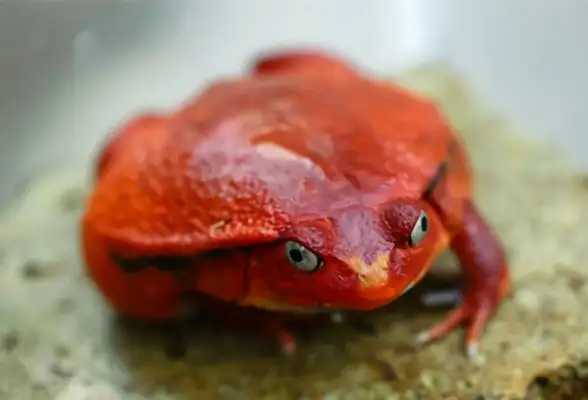
Antungili Red Frogs are mainly located on the eastern coast of Madagascar and feed on insects. Owing to the narrow geographical distribution and increasing damage to the habitat, the wild size of tomato frogs, combined with their relative power in the pet market, poaching has been difficult to control and is now protected in appendix I to the World Convention for the Conservation of Endangered Species of Wild Fauna and Flora. The red frogs in Antonjeli generally sell larvae, and many climbers buy larvae for some time and discover that their tomatoes will have two colors. One is pretty red, the other is yellow. But most of the reptiles want to have a red tomato, so let's start with the biggest difference between tomato frogs and females. The male tomatoes are yellow, and the mother tomatoes are beautiful red. That is why it is necessary to select the mother when selecting the larvae in order to produce the red tomatoes.
Chinese literary name: Antungili Red Frog
Latin name: Dyscophus antongili
Section: Toad Section
Region: Madagascar, north-eastern coast
Food: Insect-like Andungili Red Frog character
The male population of the Red frog Antungili is 60-65 mm and the female 90-95mm. If threatened, the body will swell as if it were an enemy. Tomato frogs are good-looking, but don't touch them. They have defensive toxins in their pretty skins that can cause severe pain to the offending. Male tomato frog (tomato frog) is 60-65 mm long and weighs about 410 g; female frog is slightly larger, 90-135 mm long, weighs about 230 g and points of conservation for antungili Red Frog
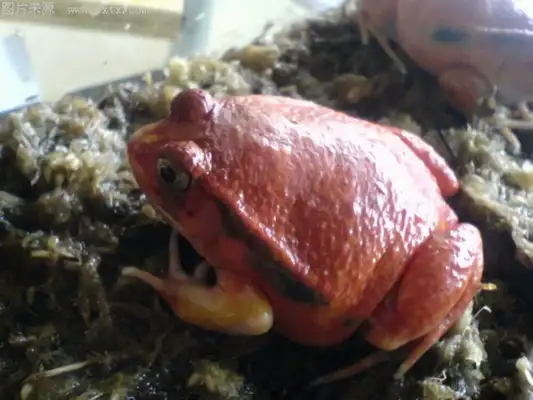
Antungili Red Frog is a frog living in a tropical marsh area, usually with a length of 8-10 cm. The market can see from 2 cm of larvae to 10 cm of lyceum, which is generally more organized. Like all amphibians, they still don't like sports, but they're good at digging. Often half the body is buried in a pit of its own made, with two backslides being a solid and powerful excavation tool. When the pit was dug, he sat on his buttocks and then sat down. The space for raising the red frog Antungili is as wide as possible, with two thirds of the area and one third of the water reservoirs, as they are not ready to jump and are not covered. In fact, I think it should be a little bigger, because in such an environment they are still perceived as urgent. The low materials laid for them are cleaner, and the fear of impurity leads to bacterial infections in the digging of pits. A mixture of sterile soil and sterile bark was initially used and was then simply replaced by fresh moss. It would be preferable not to use compressed-packed mosses in flower shops because they contain excessive preservatives. A few nests of birds were simply used on the landscape plants and buried directly into the mats with the flower pots. The mood was good and easy to manage. Several shelters were built with small logs and pebble towers, which were also popular. Crude weeds were also planted in the ponds, and small fish were placed to test water quality. Biological filtration systems have also been installed to reduce pressure on water exchange. The light uses a 40-w-year-old herb halogen lamp, which is suitable for slow-growing plants but not bright.
The more beautiful things are in nature, the more poisonous they are. In the event of further shock to the tomato frog, a microtoxic liquid may be circulated in the body, although the skin of the exposed person is harmless. But it's not good to enter the eyes and mouth. So, when the hand touches the tomato frog, do not rub your eyes, remember to wash your hands and then eat. Environmental Requirements for Red Frogs in Antonjili
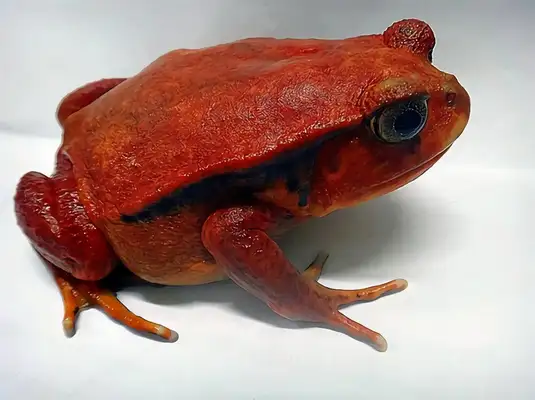
Red frogs in Antonjili love the environment at 23-30°C, so winter must heat up and summer must cool down a little. Because of the variety near the equator and living in the marsh area, the temperature is sometimes 1-2°C in one or two days. But winter is never cold, and less than 20°C does not feed, and long will lead to death. As for humidity, of course, it must not be less than 80%. Unlike the frogs on the grasslands, sometimes they prefer to take a bath. As a result, reservoirs are necessary, which also reduces the burden of poor moisture control. Once the humidity has dropped sharply, the tomato frog can at least take refuge in a pool. Don't look at them with short limbs, swimming and diving. The space for raising the red frog Antungili is as wide as possible, with two thirds of the area and one third of the water reservoirs, as they are not ready to jump and are not covered. In fact, I think it should be a little bigger, because in such an environment they are still perceived as urgent. The low materials laid for them are cleaner, and the fear of impurity leads to bacterial infections in the digging of pits.
A mixture of sterile soil and sterile bark was initially used and was then simply replaced by fresh moss. It would be preferable not to use compressed-packed mosses in flower shops because they contain excessive preservatives. A few nests of birds were simply used on the landscape plants and buried directly into the mats with the flower pots. The mood was good and easy to manage. Several shelters were built with small logs and pebble towers, which were also popular. Crude weeds were also planted in the ponds, and small fish were placed to test water quality. Biological filtration systems have also been installed to reduce pressure on water exchange. The light uses a 40-w-year-old herb halogen lamp, which is suitable for slow-growing plants but not bright. Antungili Red Frog Feeder.
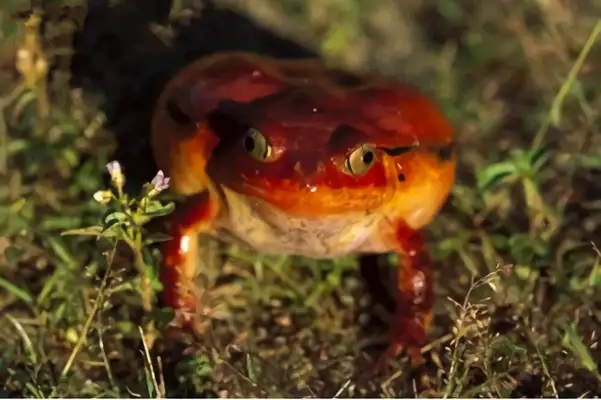
Antungili Red Frog, a hunter with rabbits, never looked everywhere for food. Just sit down patiently and wait until the insects pass by and swallow it. They are trained to feed with bait but never eat anything other than insects, thories or worms. Usually the bait is cricket. If you go to the wild in the summer, you can bring back grasshoppers, moths, etc., even for the New Year. Cricket is covered with calcium powder and vitamins before feeding, but not every meal. Adult tomato frogs can be fed once a day or, if they are not fed with a sling, they must watch the cricket be eaten before leaving. Cricket and tomato frog can't stay the night. Cricket has sharp teeth, sometimes on the skin of a frog, which causes infection, and crickets that are not finished must be removed. When cricket is no longer available, it can be fed to barley worms, which are more readily available on the domestic aquarium market than crickets, but not for long. Young red frogs in Antonjili are unable to eat crickets in their adult form or in their adult form, and are unable to purchase fliers in the country at present, so they can only be fed with yellow powder. However, yellow powdered worms, like barleys, have indigestionable shells, but they often grow skinless. Newly decorated insects, white, digestive, calcium and phosphorus high. It is best for young frogs with small mouths to eat, but there is a need to raise more yellow powders and look for skinless individuals every day. However, the yellow pollinator can no longer be used after several skin strippings, and it is time to buy new ones.
After maturity, the male frog is thinner and the female is fat. Males tend to be orange red and have sharper eyes, and females are more popular than males. Female frogs can lay their eggs one year after birth, while male frogs take two to three years to mature. In nature, they lay their eggs in the places where the rain flows after the heavy rains, so they call on the frogs. Thousands of eggs can be laid at one time, and the eggs are washed up like ponds, hatched three days later and turned into frogs for more than 45 days. As a result, research on reproduction also produces changes in the dry and wet season, as in the case of breeding horns, but heavy rains are difficult to imitate, so currently imported artificial breeders reproduce in semi-field areas of tropical countries of similar origin. But even if they cannot reproduce, it will be easier to see, after all, the tomato frog is a long-lived species of frogs, about 15-20 years. A brief description of the Red Frog species in Antonily.
Antungili Red Frogs are mainly located on the eastern coast of Madagascar and feed on insects. Owing to the narrow geographical distribution and increasing damage to the habitat, the wild size of tomato frogs, combined with their relative power in the pet market, poaching has been difficult to control and is now protected in appendix I to the World Convention for the Conservation of Endangered Species of Wild Fauna and Flora. The red frogs in Antonjeli generally sell larvae, and many climbers buy larvae for some time and discover that their tomatoes will have two colors. One is pretty red, the other is yellow. But most of the reptiles want to have a red tomato, so let's start with the biggest difference between tomato frogs and females. The male tomatoes are yellow, and the mother tomatoes are beautiful red. That is why it is necessary to select the mother when selecting the larvae in order to produce the red tomatoes.
Chinese literary name: Antungili Red Frog
Latin name: Dyscophus antongili
Section: Toad Section
Region: Madagascar, north-eastern coast
Food: Insect-like Andungili Red Frog character
The male population of the Red frog Antungili is 60-65 mm and the female 90-95mm. If threatened, the body will swell as if it were an enemy. Tomato frogs are good-looking, but don't touch them. They have defensive toxins in their pretty skins that can cause severe pain to the offending. Male tomato frog (tomato frog) is 60-65 mm long and weighs about 410 g; female frog is slightly larger, 90-135 mm long, weighs about 230 g and points of conservation for antungili Red Frog
Antungili Red Frog is a frog living in a tropical marsh area, usually with a length of 8-10 cm. The market can see from 2 cm of larvae to 10 cm of lyceum, which is generally more organized. Like all amphibians, they still don't like sports, but they're good at digging. Often half the body is buried in a pit of its own made, with two backslides being a solid and powerful excavation tool. When the pit was dug, he sat on his buttocks and then sat down. The space for raising the red frog Antungili is as wide as possible, with two thirds of the area and one third of the water reservoirs, as they are not ready to jump and are not covered. In fact, I think it should be a little bigger, because in such an environment they are still perceived as urgent. The low materials laid for them are cleaner, and the fear of impurity leads to bacterial infections in the digging of pits. A mixture of sterile soil and sterile bark was initially used and was then simply replaced by fresh moss. It would be preferable not to use compressed-packed mosses in flower shops because they contain excessive preservatives. A few nests of birds were simply used on the landscape plants and buried directly into the mats with the flower pots. The mood was good and easy to manage. Several shelters were built with small logs and pebble towers, which were also popular. Crude weeds were also planted in the ponds, and small fish were placed to test water quality. Biological filtration systems have also been installed to reduce pressure on water exchange. The light uses a 40-w-year-old herb halogen lamp, which is suitable for slow-growing plants but not bright.
The more beautiful things are in nature, the more poisonous they are. In the event of further shock to the tomato frog, a microtoxic liquid may be circulated in the body, although the skin of the exposed person is harmless. But it's not good to enter the eyes and mouth. So, when the hand touches the tomato frog, do not rub your eyes, remember to wash your hands and then eat. Environmental Requirements for Red Frogs in Antonjili
Red frogs in Antonjili love the environment at 23-30°C, so winter must heat up and summer must cool down a little. Because of the variety near the equator and living in the marsh area, the temperature is sometimes 1-2°C in one or two days. But winter is never cold, and less than 20°C does not feed, and long will lead to death. As for humidity, of course, it must not be less than 80%. Unlike the frogs on the grasslands, sometimes they prefer to take a bath. As a result, reservoirs are necessary, which also reduces the burden of poor moisture control. Once the humidity has dropped sharply, the tomato frog can at least take refuge in a pool. Don't look at them with short limbs, swimming and diving. The space for raising the red frog Antungili is as wide as possible, with two thirds of the area and one third of the water reservoirs, as they are not ready to jump and are not covered. In fact, I think it should be a little bigger, because in such an environment they are still perceived as urgent. The low materials laid for them are cleaner, and the fear of impurity leads to bacterial infections in the digging of pits.
A mixture of sterile soil and sterile bark was initially used and was then simply replaced by fresh moss. It would be preferable not to use compressed-packed mosses in flower shops because they contain excessive preservatives. A few nests of birds were simply used on the landscape plants and buried directly into the mats with the flower pots. The mood was good and easy to manage. Several shelters were built with small logs and pebble towers, which were also popular. Crude weeds were also planted in the ponds, and small fish were placed to test water quality. Biological filtration systems have also been installed to reduce pressure on water exchange. The light uses a 40-w-year-old herb halogen lamp, which is suitable for slow-growing plants but not bright. Antungili Red Frog Feeder.
Antungili Red Frog, a hunter with rabbits, never looked everywhere for food. Just sit down patiently and wait until the insects pass by and swallow it. They are trained to feed with bait but never eat anything other than insects, thories or worms. Usually the bait is cricket. If you go to the wild in the summer, you can bring back grasshoppers, moths, etc., even for the New Year. Cricket is covered with calcium powder and vitamins before feeding, but not every meal. Adult tomato frogs can be fed once a day or, if they are not fed with a sling, they must watch the cricket be eaten before leaving. Cricket and tomato frog can't stay the night. Cricket has sharp teeth, sometimes on the skin of a frog, which causes infection, and crickets that are not finished must be removed. When cricket is no longer available, it can be fed to barley worms, which are more readily available on the domestic aquarium market than crickets, but not for long. Young red frogs in Antonjili are unable to eat crickets in their adult form or in their adult form, and are unable to purchase fliers in the country at present, so they can only be fed with yellow powder. However, yellow powdered worms, like barleys, have indigestionable shells, but they often grow skinless. Newly decorated insects, white, digestive, calcium and phosphorus high. It is best for young frogs with small mouths to eat, but there is a need to raise more yellow powders and look for skinless individuals every day. However, the yellow pollinator can no longer be used after several skin strippings, and it is time to buy new ones.
After maturity, the male frog is thinner and the female is fat. Males tend to be orange red and have sharper eyes, and females are more popular than males. Female frogs can lay their eggs one year after birth, while male frogs take two to three years to mature. In nature, they lay their eggs in the places where the rain flows after the heavy rains, so they call on the frogs. Thousands of eggs can be laid at one time, and the eggs are washed up like ponds, hatched three days later and turned into frogs for more than 45 days. As a result, research on reproduction also produces changes in the dry and wet season, as in the case of breeding horns, but heavy rains are difficult to imitate, so currently imported artificial breeders reproduce in semi-field areas of tropical countries of similar origin. But even if they cannot reproduce, it will be easier to see, after all, the tomato frog is a long-lived species of frogs, about 15-20 years.