Designation: PET5838
English name: Introduction to the Zebra Finch mountain pearl species
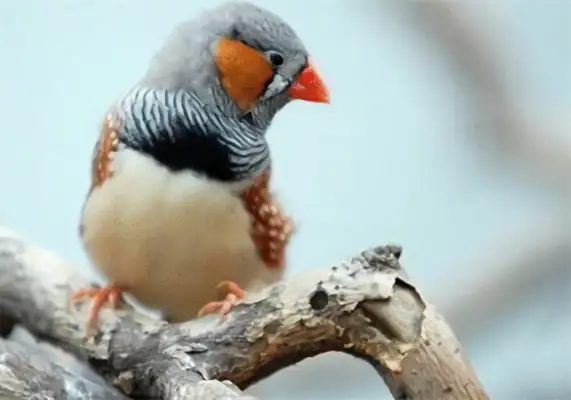
The pearls of the mountains, alias the Pearlbird, and the little garbling, she looked attractive and tender, as though his name were attractive, and the feathers were like the pearls. China, which was introduced by Australia around the 1970s and 1980s, now breeds a variety of species such as camel colour, white colour and color.
Chinese literary name: Snacks (Golden Mountain Pearl)
Latin name: Poiphia gutta
English name: Zebra Finch
Don't call it "The Strawbirds, The Birds, The Birds, The Pearls."
Two words: Zebra Finch
Context: Animals
Gate: Pipeline gate
Amen: vertebrate Amen.
Programme: Birds
APA: Today ' s APA
FREEDOM: FREEDOMS
C: Plumcock
Group: Waxed Birds
It's from the grasshopper.
Region: Characteristics of Golden Hills in Eastern Australia and Eastern Indonesia
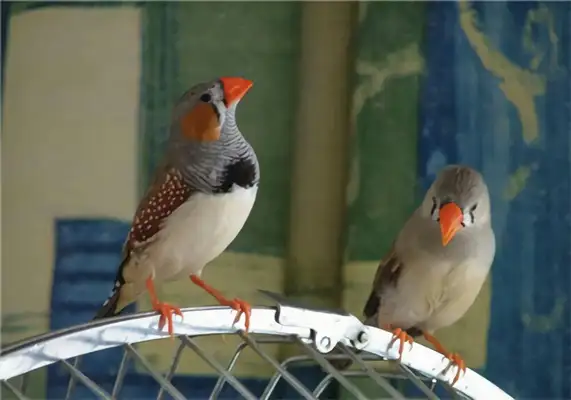
The gold mountain pearls are not coloured in colour, but we have to admit that the softer feathers are not beautiful, especially those that are like pearls and blue and gray, and that is a word of “beaut”.
Gold Mountain pearls are about 10 centimeters long. The female and male feathers are clearly distinguishable and easily identifiable. The head of the pearls is blue and gray, with black feathers on both sides of their mouths, with white eyes first, between their mouths and their black feathers, as if they were “tear marks” at the moment. Throat and chest gray blue, blue, gray brown with back, shoulder and wings. Flying feathers are dark and brown, with short tail feathers, mostly black, often covered with long tails covered with covered plumes, which are also known as zebra freckles. The mouth is red, and the trace and foot are red.
The male, on both sides of his chest and on both sides of his neck, has a small white dot in the form of pearls, and is also known as pearls, pearls or pearls; the female is dim, on both sides of his chest and with two chest-free red feathers and little white dots. The male's throat is coloured to the upper chest and has wave-shaped black stripes and black and white stripes, adding some value. The female larynx has no wave-like black threads, and the gold-mounted pearls have been artificially selected to produce white and camel-colored varieties whose mouths and feet are still red. These species of females and males can distinguish from the colours of their mouths. The male birds are many of the colours of bright reds, glamorous, light-eyed females and poor ones. The white species are known as “white pearls” and the camel-coloured species are also known as “camel pearls”.
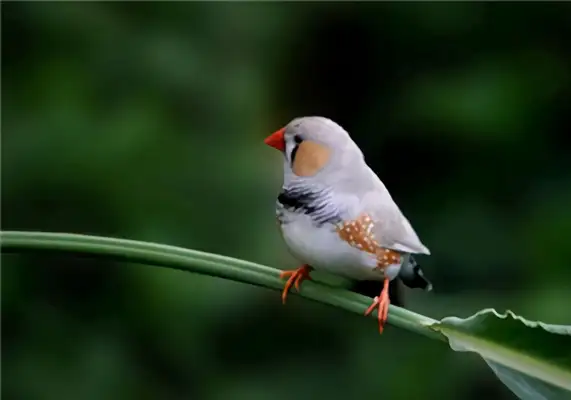
If you want a little bit of a beautiful and lively bird, the Golden Mountain Pearl bird is definitely the preferred bird. Not only do they have a lot of merit, but they are easy to breed, but they are not hard to feed.
Artificial gold pearls can be raised in canary cages, canaries, canaries, canaries, embroidery cages and metal cages. Because of the small size of the bird, the cages are approximately 1 to 2 mm in diameter, with a length of 10 to 12 mm in length, with a stick of 10 to 11.0 mm in diameter. The Yingzhou feeder ' s preference for the use of dry roots or twigs is said to improve the health of the birds and reduce the incidence of disease, which is to be compared with future practices in the breeding of caged birds.
Gold Mountain pearls love baths very much, and the temperature of the water is around 30°C. However, in addition to the reproductive years, the tank is supplied with adequate bath water. The pearl bird is very cold, and in winter the temperature will increase and the room temperature will be around 15°C. The pearls of Jinshan feed the food.
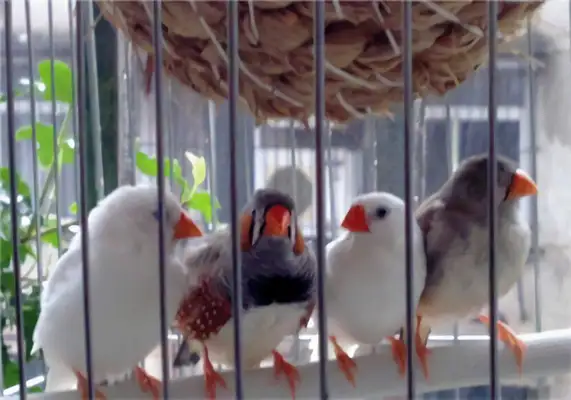
Gold mountain pearls can be raised either individually or in pairs, of course, in groups, as long as space permits, not only for viewing but also for reproduction. Pearlbirds are relatively healthy, not susceptible to disease, dysentery, productive and generally rearing successfully.
Gold Mountain pearls feed on a daily basis with shelled millet and can also be fed with a mix of tarts of 63 per cent, 27 per cent and 10 per cent. Egg-purified rice is fed to young birds and breeding times. The supply of green leaves, fruits, etc., such as fresh oilseeds, and mineral feed such as ink fish bones, shellfish powder, gravel, etc. should also be added, as appropriate. Feeding young birds can consider drying out the bubbling rice directly and feeding it to the birds.