Designation: PET5029
English name: Razor-backed Musk Turtle
Character: Fragile
Origin: South Mississippi to Texas.
Vulnerability: pneumonia
Life: around 50 to 80 years
Price: Usually between 150 and 350, the price is related to size. Overview of the species of musk turtles
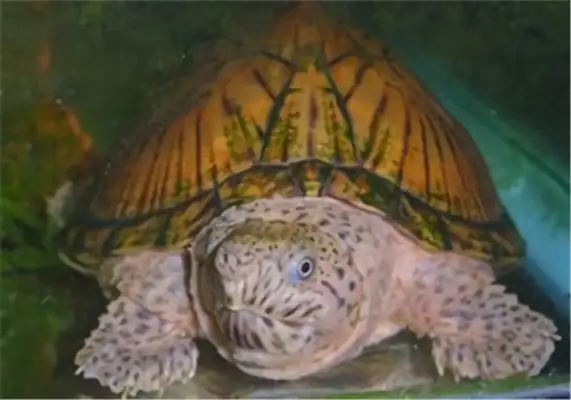
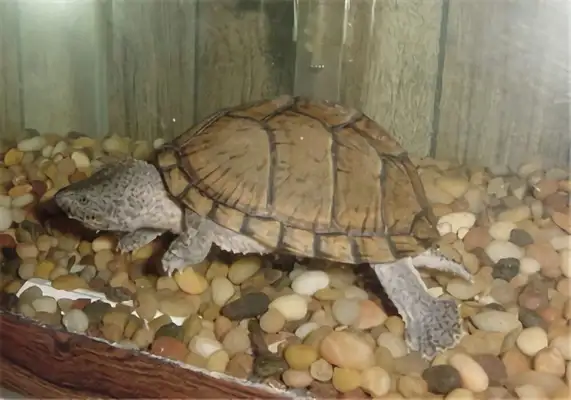
The knife-backed tortoise is called the little razor, which is a turtle with a strange backnail that looks like an elliptical egg from the top and a triangle roof from the face, so the turtle friends prefer to call him a razor. It's a common species of egg turtles. It's simple, lively, likes to interact with humans.
What is called musk is, in fact, a stench released to protect itself and deter the enemy. Unlike other musk turtles, musk turtles are shy and rarely bite or release stench. The musk turtles were active between March and November and were often sunken. In some good habitats, the population density of an acre can be over 100, and in these places more turtles may be caught than fish when fish are baited.
Chinese name: Musketeon Turtle
Alias: Razor
Latin literary name: Sternotherus carinatus
English name: Razor-backed Musk Turtle
Classes: reptiles, turtles, turtles
Origin: South Mississippi to Texas.
Living environment: Swamps, or streams and rivers with slow current speed, soft bottom, abundant aquatic vegetation.
Length: 10~14.9 cm
Price: Razor turtle prices are moderate in egg turtles, usually between 150 and 350, with specific prices associated with size. Knife-back musk turtle morphology.
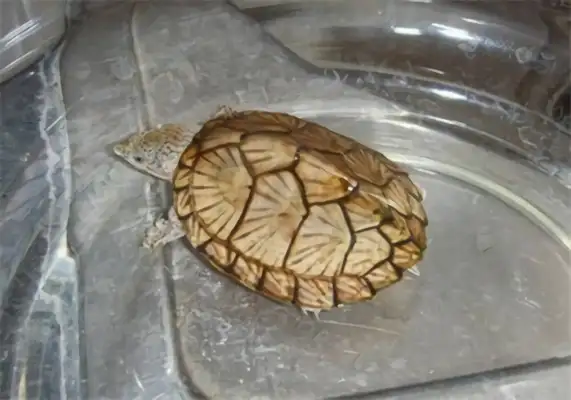
Her most characteristic is the shape of her back armour, which, in many cases, does not depend on the color of her back, the characteristics of her head, etc., to judge the razor turtle at once, which is the most easily identifiable type of egg turtle.
The vests have a clear elasticity and form steep slopes. The shields are light brown to light orange, with small dots or radioactive stripes of dark colour and dark dark edges. These patterns may fade off the old turtles. There are only 10 of them because of the lack of larynx. The ligature joints with a single form of a chest shield and abdominal shield. The nostrils are slightly tubed. The chin has tentacles.
Unlike other musk turtles, the species is shy and rarely bites or releases odor. They operate between March and November and are often sunken. In some good habitats, the population density of an acre can be over 100, and in these places more turtles may be caught than fish when fish are baited.
What is called musk is, in fact, a stench released to protect itself and deter the enemy. This, however, occurred on newly captured wild individuals, with little chance of smelling it under artificial farming. Knife-backing tortoise care knowledge
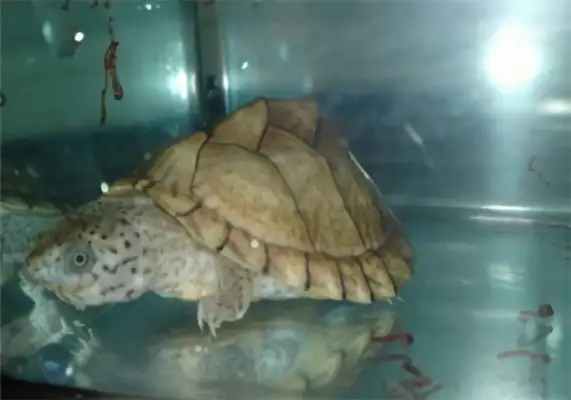
It is not difficult to buy and raise musk turtles, and perhaps this is the main reason for their popularity, as well as to mix them with other turtles when they are raised. This article will make a brief introduction.
I. SPECIFIC PROBLEM OF THE WORK-BORK TORTURE
Regardless of the species of turtles, health is the first element, so whatever the taste, the choice is first to be healthy, then to look at it, and what does it depend on? The best thing to choose is the whole product, which is non-facing nails, wrong nails, broken fingers, rotting tails; the next color is preferred to the red one; then the black dots that connect the back armor shield to the shield are many and large, the black dots of the head are large, round, evenly distributed; and finally, the high backs are chosen, which looks better.
II. The way the sword and the musk turtles are raised
1. Space: 30 gallons of aquarium size is sufficient for a musk turtle. If more than one turtle is raised, the feeder is required to adjust the size of the site accordingly. It is always better to have multiple separations whenever possible. These turtles are very moving and they will make full use of space.
2. Water quality: Stronger filters are recommended, as these turtles are always dirty to eat and often endanger water quality if not adequately filtered.
3. Escaping: Because of the shyness of this turtle, it is proposed to add rocks and aquatic plants that can provide greater security, especially for young children.
4. Consistency: If there is sufficient space, the musk turtle is suitable for co-rearing. The turtles, the turtles, the donut turtles are all good choices when raised together. Sword-backed musk turtles can live well in deep water, and these sunbacks like it, so often live together as long as they are not too different in size. Sword-backed musk turtle living environment
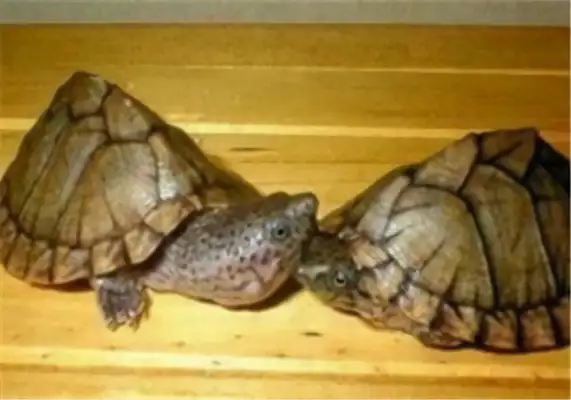
The musk turtle likes the deep water environment, which is a very watery tortoise, so the depth of the water is a more important issue when setting up the breeding environment, and secondly, other things that need to be laid in the environment, such as hiding from caves, tans, etc.
I. RESOURCES IN ENFORCEMENT
Sword-backed musk turtles tend to be more water-dwelling, and they prefer larger waters than those that are very close to relatives. The musk turtles can live well in deep water. It is important to provide adequate back-burning opportunities, although very little sun. A spotlight can be placed above their backs.
The tan area can be constructed from rocks reaching the surface of the water, while for larvae, the preferred aquatic plant is floating. In a natural state, a knife-backed musk turtle is more shy than other musk turtles, and the use of river pebbles as a base seems to give turtles a little more sense of security.
Livestock environment
II. Epidemic placement during reproduction
1. Tortoise ponds: The best living temperature is between 18 and 32°C, and the water depth of the feed environment should not exceed 50 cm. The pond shall be divided into deep water, shallow water, land and water tan. The feed table is located in the shallow water zone by the pool, with a 20-degree tilt on its side and 10 cm in water to facilitate observation of turtles.
2. Eggregation grounds: On land not far from the water surface. The spawning grounds should be equipped with a turtle house, and dark light should facilitate the laying of eggs. 20-30 cm thick sand mix (by 1:1 sand, 0.5 ~0.8 mm in diameter) with humidity of 5-8%. What's the point?
The musk turtle is more edible and prefers some meat food, so we can choose some small fish, shrimp, skinny meat and, of course, food to feed and keep it nutritionally comprehensive. The main concern in raising musk turtles is anorexia.
After hibernation, the most vulnerable conditions are “post-hypnotic anorexia”, dehydration, inability to open eyes, weakness of limbs, oral inflammation, respiratory disorders, skin disease, weakness due to lack of vitamins, cold, etc. After hibernation, the temperature and humidity are slowly increased daily, followed by fresh fruit and vegetables, such as tomatoes, bananas, tarts, etc., where the turtles are fed to smaller insects or fish, and even fresh livers.
Normally, normal feeding should occur after one to two weeks; calcium powder and vitamin supplements on feed would allow turtles to recover faster. If more than three weeks have passed and food has not yet begun, the feeding is about to take place. On the other hand, oral inflammation and skin diseases are treated in a daily manner with medicinal water, while they are administered in dry conditions. And feeding vitamin C to sick turtles. Respiratory disorders are treated by gradually increasing temperature and humidity, which can even be slightly increased and maintained for a week by the same day. The cure for cold, which increases temperatures to about 29-30 degrees Celsius, reduces humidity and maintains it for a week, while feeding vitamin A, C, E to the infested tortoise, is poorly treated and can turn into pneumonia.
Finally, all food is fed together. If food is too monolithic and has been fed for some time, especially tortoise food, the stork turtles are reluctant to eat or eat less because, like humans, they like good food. It's good food and mouth.