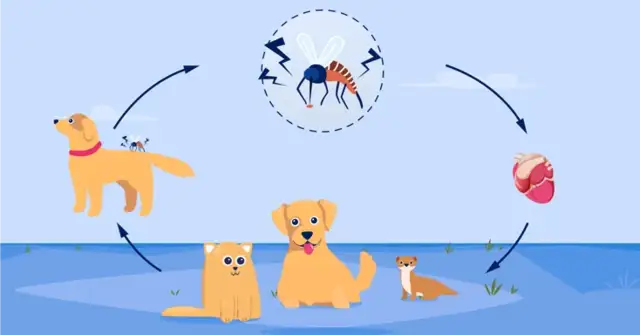
In this guide, we will explore in depth the means of transmission of filariasis, its impact on pets, and discuss proactive strategies to ensure the safety and health of our furry friends. By learning relevant information and taking proactive measures, we can provide pets with the best way to combat this dangerous disease.
Catalogue 1. What is filariasis? 2. How is filariasis transmitted? When should I begin to prevent filariasis for my pet? 9.3. Where does the heart filariasis come from? 9.4. What stages does the pets have infecting the heart filariasis? What is filariasis?
Cardiofilariasis is a serious and potentially life-threatening disease affecting pets (mainly dogs, cats and ferrets). Cardiofilariasis is caused by a parasite called a helix. The disease is known because the worm is mainly parasited in the heart and lung artery of infected animals. How's filariasis spread?
Cardiofilariasis is transmitted mainly through infected mosquito bites. Because dozens of mosquitoes can be parasiteed and transmitted, filariasis can be detected globally. Here's the reason for the global spread of filariasis: changes in weather trends missed filariac to prevent dosage of pets.
In the past, filariasis was mainly found in the southern and south-eastern parts of the United States. While these warmer areas still have high infection rates, there are no states without filariasis, and areas with relatively unheard filariasis tend to have “hot spots”. Wherever you live, keeping your pet away from this disease is essential.
Once mosquitoes spread parasites to your pets, it may take several years to cause an apparent clinical disease, but during that time your pet’s health will be compromised. What does a heart worm look like?
Cardiofilarias are long and thick and are usually compared to pasta. The female filaria can grow to 10 to 12 inches, while the male filaria can grow to 4 to 6 inches.
It is worth noting that filariasis in pet objects cannot be detected through the naked eye. They live in the heart and pulmonary artery and cannot be seen from pet faeces. Blood tests by veterinarians are the only way to diagnose filariasis. Dog filariasis.
The severity of filariasis depends on the number of filariasis, the degree of activity and health of the dog, and the short duration of the infection. In the early stages of the illness, your larvae may not have any symptoms at all or just occasionally cough slightly. In the case of acute heart filariasis, dogs may experience fatigue, continuous coughing, breathing difficulties and even fainting.
You may have heard a lot about the disease and have insisted on preventing filariasis for your dog. But do you know that cats and ferrets are vulnerable to this disease? Although dogs are the ultimate hosts of filariasis, many other species are also affected; the development of filariasis in these species varies, but can be significant.
It is important to take precautions to protect your furry friends from filariasis. To understand effective strategies to prevent filariasis in dogs to ensure their long-term health. Cat filariasis.
Cats and ferrets react slightly differently from most dogs to filariasis. Because they're usually small, they don't need many insects to make cats and ferrets very sick. Cat symptoms range from mild to quite severe, including sudden fainting and death.
Cardiofilariat symptoms are similar to those of dogs, but usually appear earlier because of their smaller size. It's a good idea to focus on the energy, appetite and breathing of your furry family members, and it's a better idea to make sure that they prevent filarias all year round!
In order to protect your cat animals from this disease, priority is given to preventive measures. Understanding practical strategies for the prevention of cat heartworms to ensure the long-term health and happiness of cats. Prevention of pet filariasis
The treatment of filariasis may be difficult for your pet cat or dog; the treatment may be long, expensive and there is a risk of complications for your larvae. In addition, there are currently no approved treatments for filariasis infections in cats and ferrets; the treatment of these pets focuses mainly on stabilizing their condition.
Fortunately, all three pet filariasis can easily be prevented! Prescription filariapreventants, such as Heartgard or Revoltion, can be introduced every month as long as the pet is 6-8 weeks old. Because mosquitoes can easily enter our homes, even pets that are mostly indoors should be prevented throughout the year. Your vet can help you choose a product suitable for your cat or dog and discuss regular inspections with you.
Regular testing and monthly preventive medication are the best way to keep your pets away from this expensive and dangerous disease. Patient filariasis.
Since many pets may not exhibit visible symptoms, detection of filariasis at an early stage is a challenge. However, as the infection develops, symptoms may become more visible. The following are some common filariat symptoms that require attention: mild coughing, with increased fatigue and reduced appetite and weight over time
Cardiofilariasis is different in cats. Cats can be faint, convulsed or difficult to walk. Unlike dogs, coughing is not typical of cats. The severity of infection can vary, leading to different disease manifestations.
If you suspect that your pets may be suffering from filariasis, it is essential to seek help from the BetterVet vet in a timely manner. The disease can worsen over time, thus emphasizing the importance of early detection. You can arrange patient visits or easy virtual veterinary video consultations to resolve your doubts.
Remember, filariasis is not directly transmitted between animals. If your pet is infected with a filaria, it won't spread to other pets without mosquito bites. However, it is important to note that mosquitoes may be infected with many pets in shared areas or households. Cardiofilaria test.
Diagnosis of filariasis takes only a few drops of blood and can be completed by quick and simple blood testing. During home visits, our Dr. BetterVet will take samples and examine them under the microscope.
Even if your pets don't show signs of heart disease, the ACA recommends that they be tested every 12 months. This is because if your pet already suffers from filariasis, the medication to prevent filariasis can cause harm. That is why preventive drugs require prescriptions to ensure the safety of pets.
The test process is simple and fast and usually results are available within 24 hours. Blood tests detect specific filariate proteins called antigens. If your pets have filariasis, these antigens will appear in their blood. Conclusions
Cardiofilariasis seriously endangers the health and well-being of our pets. It spreads through mosquito bites, causing serious problems for dogs, cats and ferrets. Periodic detection of filariasis, even unsymptomatic pets, also contributes to early detection and rapid intervention.
The use of different forms of ecstasy prophylactics is effective in preventing ecstasy. Whatever your pets live, making prevention a priority throughout the year will ensure their long-term health and happiness.
In BetterVet, our experienced veterinarian provides comprehensive care for your love. We provide easy home visitation services, including heart filariasis testing and personalized preventive drug advice. We're committed to ensuring the safety of your pets. Don't risk your pet's health -- an appointment with BetterVet today for a veterinary examination to give them the best protection against filariasis. When should I start preventing filariasis for my pet?
Heart worms are best prevented from starting when the pets are young, about 6 to 8 weeks old. Please consult your vet to determine the best time to start taking precautions. The early start will help protect your pets from filariasis and ensure their overall health. Where did the filaria come from?
The infected mosquito spreads heart filariasis. Although infected mosquitoes can bite humans, we are not natural hosts of filariasis, and larvae die after injection. Cardiofilariasis mainly affects dogs, cats, ferrets and other wildlife. Once the infected mosquito bites once, the animal becomes infected with the heart filariasis. What stages does a pet have infestation of the heart worm?
First, the infected mosquito must bite your pet and bring the larvae into the pet. The larvae then pass through the tissue and gradually enter the blood. Finally, mature filariasis settles in the large vessels and heart of the pet, where they grow and reproduce. If treated in a timely manner, filariasis can worsen and may lead to serious illness or even death.