No.: PET3445
English name: Beveren
Vulnerability: ballworms
Life: An overview of the species of Bivalent rabbits around the age of 8
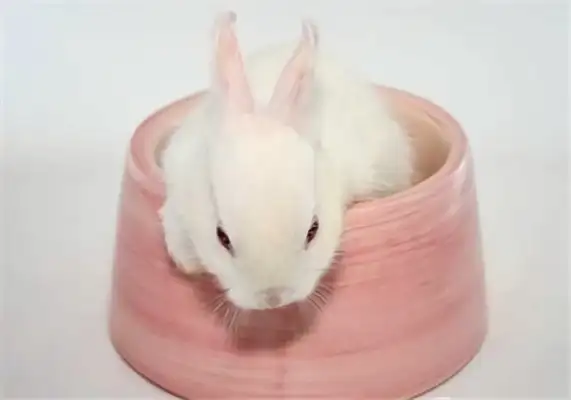
It's not much to raise than Warren's rabbits, it's a smaller pet rabbit variety, but it's not obvious, so it's not a lot of breeding, and it's hard to find so-called purebreathers in my country, so if you like rabbits, you might consider some other species.
Chinese name: Beverly Rabbit;
English name: Beveren;
(a) Context: the animal community;
(a) Gate: vertebrate door;
Programme: Lactation programme;
(a) Headings of rabbits;
Section: Rabbit Section;
(a) A rabbit;
(a) Varyn Rabbit:
(b) Reproduction: birth;
(a) Practising: they were found in Antwerp in the 19th century, in blue, and white and black were the last to grow and the rarest species;
Body characteristics: Pet rabbit, with a standard weight of 8-12 pounds, is one of the large rabbits. An ear of `V' type and not less than 4.75 inches, while hair is between 1-2 inches;
Food: Herbs. It's more like a Wallen Rabbit.
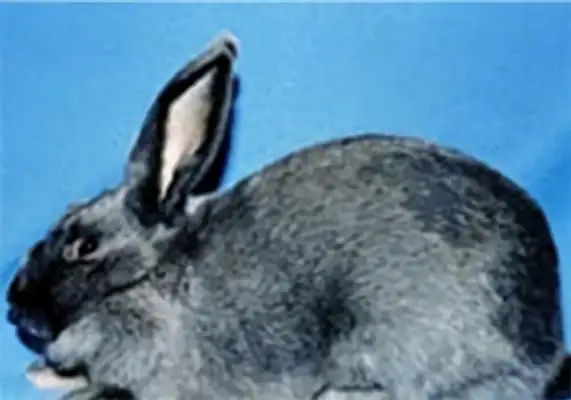
The white and black varieties were slowly discovered, with the white and black skin colours of the BJB being the highest in blue. The BJB was straight, V-shaped, wide but relatively small, a small pet rabbit variety, which was popular.
I. THE LOOK OF BIVRON'S RABBITS
More long ears than Warren ' s rabbits (more than a few times wide ears); short tails with thick tails, much longer than front limbs. Lives on the ground, running with a wide nostril and running with sufficient oxygen; young rabbits have hair, eyes, ears, hearing, running soon, commonly known as rabbits. They were born with no hair, closed eyes, no hearing, and only seven days before they grew hairy, open their eyes and hearing and needed maternal care.
ii. The color of the eyes of the Bieran Rabbit.
The color of the rabbit's eyes is related to the colour of their furs, black rabbit's eyes are black, gray rabbit's eyes are gray and white rabbit's eyes are transparent. The bloodline in the eyes of the white rabbit reflected outside light, and transparent eyes showed red. Little rabbits with grey, hair and eyes are gray; little rabbits with black, hair and eyes are black. The little hare is non-coloured, its eyes are colourless, and the red we see is the color of blood, not the color of the eyeball, so its eyes are naturally red. It's a BJ knowledge.
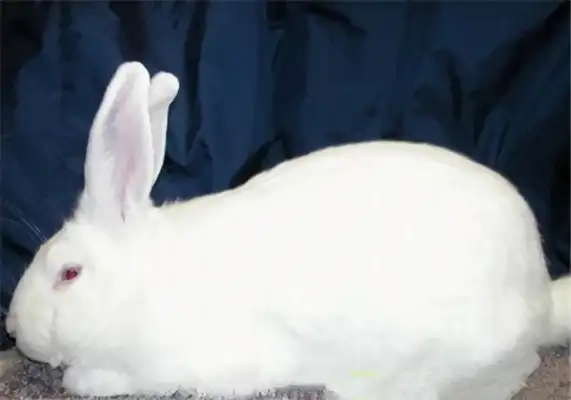
As a small species of pet rabbits, it is important to take care of the details when raising them, such as choice of appliance, choice of food, etc. Having learned about them, it is not a difficult task to raise a baby rabbit.
I. Preparation of items
Rabbit cages, water basins, food basins, foot mats, toilets, etc. are all necessary for rabbits to be raised, and owners need to be prepared in order to prevent the presence of rabbits at home. Rabbit cages are best chosen for professional rabbit cages, not too small, at least to ensure that rabbits have a certain amount of space. If the bottom of the cage is wire, the master will have to have another foot pad.
II. Preparation of Bivalent Rabbit food
They must be provided with rabbit food and, in addition to rabbit food, the owner can prepare some vegetables and vegetables for rabbits. It is important to note that rabbits are not allowed to eat vegetables and fruits with piped water, as this may cause rabbits to run thin, and the supply of fruits is controlled in good quantity, which would otherwise be detrimental to their health.
III. PURPOSE OF BIVALLEN RABBITS
Rabbits are night-eating animals that eat much more at night than during the day, and the owner needs to ensure that there is sufficient food in the night-eating basin and that sufficient water is prepared. Rabbits do not have the guts, and many irritation scares them. In order to avoid adverse irritation, rabbits need to grind their teeth, so the owner can prepare a wooden stick for rabbits to grind their teeth.
Some of the masters responded that rabbits do not like a tooth grinder, and this is a simple time to provide it with enough pasture, which can help it to grind its teeth, a once and for all. Bieran Rabbit Living Environment
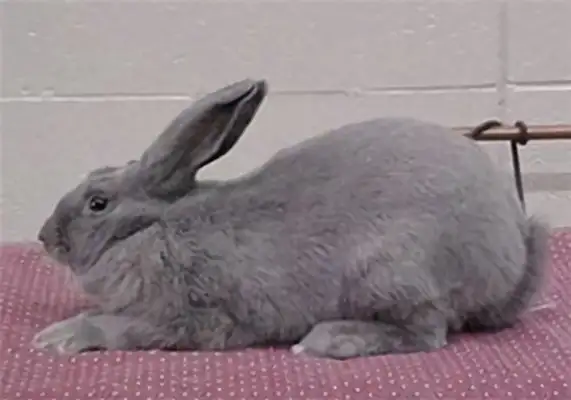
The most important thing about the raising of the Warren Rabbit is putting in place a reasonable living environment. How can it be achieved that the Bjorn Rabbit prefers a dry, ventilated, temperature-appropriate environment and is always clean? It's not that hard.
I. Temperature control of the BIVAC
One of the characteristics of the Bearon Rabbit is that it is afraid of heat, and the heat of the summer is bad for rabbit growth. Thus, summer breeding management focuses on cooling and cooling. Outdoor hare cages must be built in a sand shed or by planting shade trees, melons, etc. Indoor cages must be ventilated and equipped with electrical fans. When room temperature exceeds 35 °C, the floor of the Bivalent Rabbit House shall be cooled with cooling and the cascading of the cask shall be filled with cold water, both cooling and securing water. Unconditional foster families are not scheduled to reproduce during periods of great turbulence. The high-temperature season should be a full-body hair cut for the Bichlane Rabbit, with as high a temperature as possible in case of heat and heat.
II. Environmental and Food Health of the BIVAC
Clean up, clean up, wash the floor and bottom of the cage, and reduce the fungus so as not to turn the feed acid and eat the food. Mosquitos and flies are often eliminated and mosquito bites are prevented from cutting new hairs and new-born rabbits. Summer feed, mainly green feed, should be properly fed to the finer feed, feeding time, breakfast early, late dinner, rabbits eating better when the weather cools, and 2 per cent salt water to keep the rabbits nutritious and to maintain the acid balance. It's the Bjorn Rabbit.
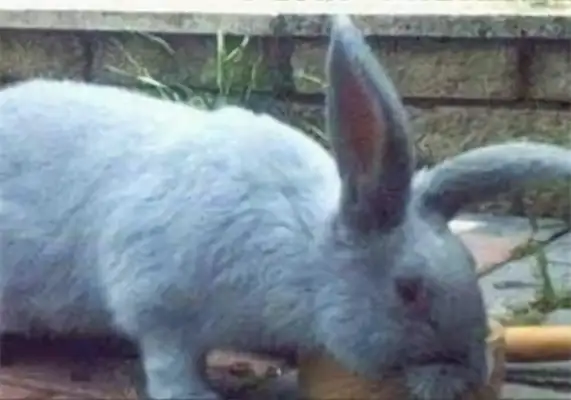
Beacon is a perfect herbivore, and for a Beacon, hay is better for food than fresh grass, and some rabbit food is a good option. Some of the owners add ham sausages to their snacks, which is a very incorrect act. There are many food taboos for Wallen Rabbits, and the next is the best diet for Wallen Rabbits.
I. Slow change.
Bivalent rabbits already have digestive capacity for regularly fed feed, and sudden replacement of feed can be unadapted and prone to gastrointestinal disease. Therefore, the replacement of feed is gradual and gradual. At night, it accounts for more than 75 per cent of the total. It is therefore important to pay attention to the need to feed and water the hares at night.
ii. Don't break the grass.
There are many microbes in the appendix to the Warren Rabbit that have a strong ability to decompose crude fibres. However, for short periods of time, the feed enters the gastrointestinal bowels and feeds the herbs without interruption in order to prevent the fracturing of the herds, the encircling of the cavity and the causing of the cavity. Each adult rabbit fed 0.5 ~1.0 kg of grass or grass per day. For the Rabbit, the adult rabbit is fed four times a day, and the juvenile rabbit is fed four to six times a day, 70 to 80% of each time, and cannot be overfed or overfed to prevent diarrhoea and abdominal swelling.
iii. Feeding matching material
Forage needs to be properly matched and not given to a single feed. The nutrients in the daily foods of the Bivalent Rabbit are 10 per cent each for coarse protein, 5 per cent for fat, 2,800 kilocalories per kg per day for digestion and 10 per cent for carbide. Reference formulations: 28 per cent for wheat, 15 per cent for beans and barley, 50 per cent for maize, 20 per cent for rice, 5 per cent for fish powder, 5 per cent for vegetable or cotton bread, 1.5 per cent for growth and 0.5 per cent for salt. 100-150 grams per adult rabbit day. If the feed is fed unconditionally, more juicy feed such as soybeans, bean cakes, beaks, corn and carrots should be added.