The original Chinese military visual network.
Military dogs,
There is a special group in the barracks.
They are soldiers with no words.
A loyal partner.
They're so skilled.
It's worth it.
But it is the power that counts.
Search and rescue, blasting, making enemy samples.
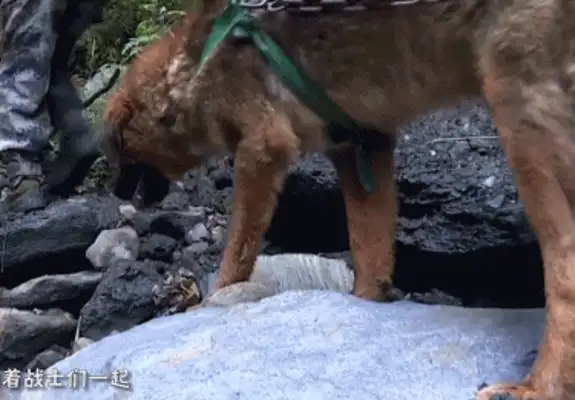
They're disciplined and disciplined.
In the military,
The dogs have gone beyond animals.
It's the brothers who fought together in battle.
What kind of dogs are they?
Two Ha can go to war?
How do you make dogs follow orders?
This is the Assembly Hall.
Let's talk about the dog.
01
How do you choose the type of dog?
The main types of dog selection are Dutch sheepdogs, Rotweiler dogs, Dubin dogs, Labrador dogs, Belgian sheepdogs and Kunming dogs. These types of dogs are more suitable for training as work dogs in terms of character, operational ability and desire.
02
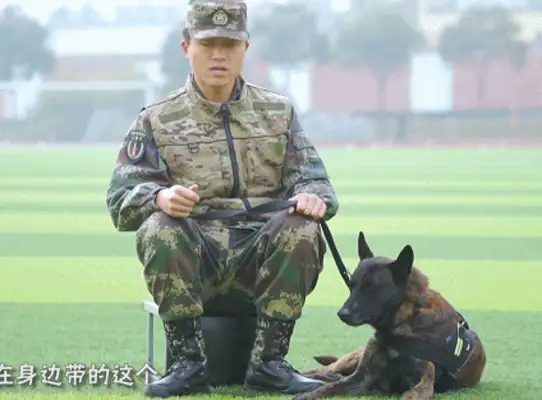
What specialties do dogs need?
In addition to the consideration of dogs, as a qualified work dog, there is a need to pass many tests in terms of the ability to smell, the ability to bite, the ability to search and capture.
Netizens asked: "Hashiki, Blanche, are smart, why are they not in the ranks of dogs?"
The two-hundred-ha-ha-ha-ha-ha-ha-ha. Because of its heavy weight and its ability to run.
The pastoralists are not violent compared to the existing military dogs, and their capacity to bite is weaker.
03
Daily training for dogs
When dogs are younger, they begin to train in basic subjects and are also subject to them. As sitting, sleeping, standing, coming, barking, moving forward.
When dogs are older, practical courses such as explosive detection, search and rescue, and bite training are required.
Netizens ask: "How can you train your pet dogs like this?"
The training of dogs is mainly a reflection of conditions. Dogs are more greedy, using food or playful objects to induce them to do what they need, and then reward them and repeat them every day.
04
What is the daily work of the dog instructor?
In day-to-day training, instructors are trained with dogs. The training of instructors consists of theoretical guidance and practice, and the training of military dogs consists of subservient, specialized and adaptive projects.
05
What are the rations for dogs?
The main rations for dogs are feed, cans and eggs.
06
All the dogs have their own protective gear.
The dogs also have appropriate combat equipment such as goggles, bulletproof vests, bulletproof vests, etc. They can be used in non-war operations, such as seismic and geological disaster relief operations.
07
Where are the dogs when they retire?
When dogs reach a certain age, they leave their jobs. What's the most important thing for netizens is what happens when they retire?
When older dogs are discharged, the majority will remain in the unit and remain under the responsibility of their own trainers. However, training is no longer carried out on a regular basis, and instructors will accompany them for walks, sports, and they will be well managed and raised.
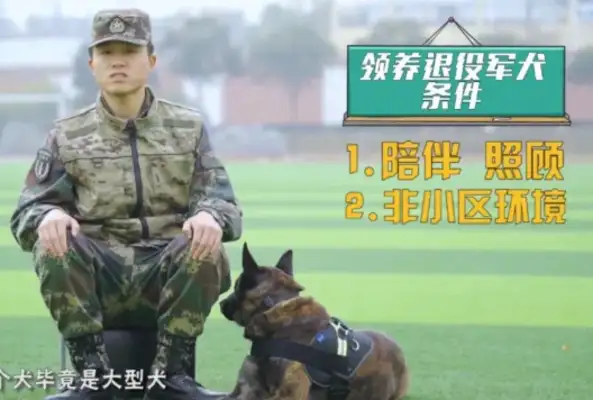
Netizens ask: Can volunteers adopt retired dogs? What are the conditions for adoption?
Volunteers may adopt ex-military dogs, subject to strict conditions: one, with certain conditions, with patient care and company; and two, with a non-district living environment.
08
A dog trainee known as the "most painful" of the entire army.
Behind the enemy's pompous bites and raids are the silent contributions of trainers and trainers.
The dog training officer is expected to focus on a dozen kilograms of protective clothing as a target, provoke the dog in various ways, induce the dog to bite him or her violently and act as a presumed enemy in dog training.
Specialized training equipment, such as sleeves, bite suits, jackets, slings, helmets, etc., will be used to protect the training of trainers, but sometimes they will be injured.
It is with such unheard and selfless dedication that a large number of “bloody” dogs have been bred by trainers and facilitators who dare to “do” with dogs.
They...
He is a loyal, silent comrade.
It's a highly qualified soldier.
About the dogs,
What else do you want to know?
Please leave a message.