Designation: PET6324
English name: Kea
Character: Curiosity, trust.
Origin: New Zealand
Vulnerability: respiratory, digestive and parasitic diseases
Life: 14-year profile of parrots
Is a macaw really pecking sheep? Yes, they do peck sheep, and they eat lamb. The macaws were said to be less violent at first, and they were good friends with sheep, who ate parasites on sheep. But it's hard to see, when a macaw pecks a sheep's skin, they find it so good that they start eating it. Whether or not there is a basis for this statement, we can be sure that the parrots do love to peck sheep, and it was the pastoralists who gave them such a name. Parakeet morphological characteristics
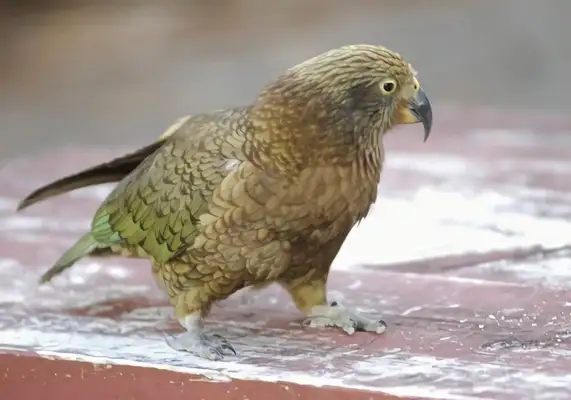
In comparison to many parrots with gorgeous feathers, parrot peckers (their colours are mostly olive green) and their destructive personality, New Zealanders have never been too fond of such parrots. On the ground, where macaws are often found, people take protective measures to prevent them from causing damage to their homes, cars, etc.
The macaws belong to the large parrots, and some individuals can even reach 50 cm. Usually they do not fly in the blue sky, but they do so mostly with ground activities. The macaws do not walk like humans on the ground, and those who have seen them know that they leap forward, and because they jump like clowns and live on mountains, they are also dubbed as clowns on mountains.
Parakeet morphological description
Length: 45-50 cm.
Weight: 800-900g.
Hue: mainly olive green, black-coloured sides.
Head, neck: Yellow green, feather stripes with dark radiation.
Right now and behind: dark brown feathers.
Boobs: Light brown green.
Abdominal: Light brown green.
Back: Orange red below, black brown at the tip of the feather.
Wings: The inner side is orange red and the internal side is yellow.
End: The tail is blue, the tip of black and orange yellow in the middle of the feather.
Bronze: Grey brown, long bends.
Iris: Dark brown.
In addition to what has been said above, parrots also have a certain degree of morphological variation based on sex and age, such as female parrots whose beaks are less bent than male and young birds with more visible yellow in their eyes. Parakeet care knowledge
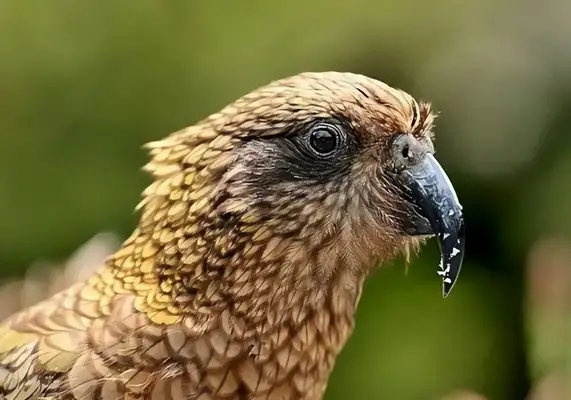
A macaw is not uncommon, and it is not easy to get a macaw, but many do not want to raise such a bird, because the macaws are noisy and destructive, and they need a large room to raise, the most important of which is that they are expensive, a factor that, without adding up, has already been met by many. But if you really want to do this, you do the following:
I. Preparation of strong cages
The macaw may be more destructive than you can imagine, and if the cage is not strong enough, the macaw may soon tear it apart. Apart from cages, nest boxes must be strong enough. Feeders can regularly provide branches for macaw-peckers so that they do not focus all their attention on cages and nest boxes. Moreover, cages must not be too small, otherwise macaws may have problems of various kinds.
Scientific feeding
Feeders do not provide macaws with single food over a long period of time, which is detrimental to their healthy growth. A macaw can eat a lot of food, and the master can choose food that suits them and that is easier for you to feed. If there are concerns that they will suffer from malnutrition, experts can be consulted on how to feed.
III. Reproduction
Since there are few self-employed parrots, there are fewer cases of successful reproduction, although this does not mean that they cannot be successfully produced under artificial breeding conditions. A macaw can normally lay up to four eggs, with an incubation period of about one month.
IV. OTHER ISSUES
1. The parrots come from cold high mountains, so they are not afraid of cold;
2. Parrot peckers can be fed;
3. Regular bathing is possible. A macaw-pecking environment.
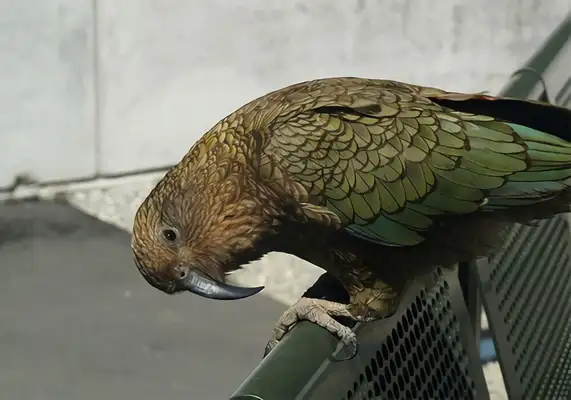
It has been the long-held belief of many that parrots can only be seen in New Zealand, but the presence of parrots is now also found in places such as Australia. The macaws do not live in a privileged environment, and in order to adapt to the cold in high mountain areas, they all have large feathers. In addition, because of the limited food available in the mountains, macaws need to keep abreast of fresh food in order to obtain adequate food, which is one of the reasons for their curiosity.
Peasants are less likely to settle in one place; they are nomads who struggle to find more food in nomadic life. Sometimes they appear near residents ' homes because they have the food they want, but residents are reluctant to see them because they always cause trouble to residents, such as pecking doors, windows, etc.
As more and more people go skiing or climbing in their habitat, many can see them. Instead of letting the macaws leave, human beings find that tourists here can bring food to them. It should not be assumed that the macaws receive food from tourists without destroying their cars, tents, etc., and that they will remain intact.
The small number of macaws that are artificially fed is one of the reasons for this situation. Other reasons include the destructive power of macaws to the extent that few can hold them, and the high cost of raising them. A macaw pecker.
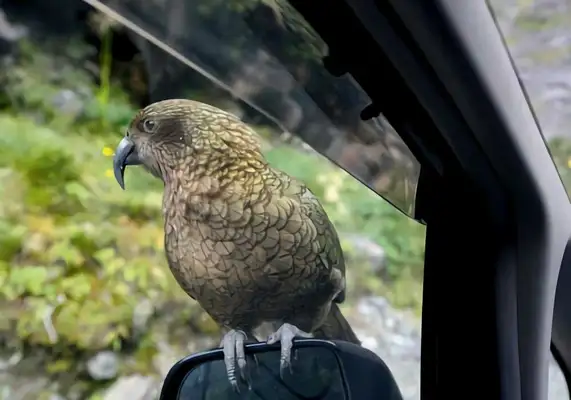
If you think a macaw is eating lamb, you're wrong. Because they live in worse environments, they can't miss anything as long as they have something to eat. Since macaws are generally active on the ground, many of their foods can be found on the ground, such as leaves, buds, insects and even rotting meat and some human residues.
In fact, when it comes to feeding, macaws are never vague, and in addition to the food that can be found on the ground, they look for what they can eat in rocks, snow floors, bushes. Of course, fortitude alone is not enough, and if animals are found that can be hunted, they immediately become alert to fast and accurate access to food. In order to find more food, macaws have a heavy curiosity, and once they find something new, they have to come up and see if it's useful for them. For example, macaws find that human garbage in ski areas contains something to fill their stomachs, so they do not hate humans visiting their habitat.
The macaws attack the flock, so they are repugnant by some, and they even hunt directly, leading to a sharp decline in the number of parrots, who are now listed as vulnerable species.
If artificial farming is to take place, it is important for the feeders to be careful not to give them a single diet, which could result in malnutrition among parrots. In addition, the macaws' chewing power is amazing, so the feeders have to prepare some branches for them to bite.