Sensitivity of dogs to food refers to an allergy of dogs to certain foods, food additives or certain ingredients in foods, which can occur in dogs of any age, although the proportion of dogs under one year of age suffering from this disease is relatively high. So what's the symptoms of canine food allergy? How do you know if the dog is sick? Please look down with Dr. Claw.

I. What are the characteristics of canine food allergies?
One, the greatest characteristic of canine food allergies is that they have non-seasonal itching symptoms that can easily be associated with fleas that have a distinct seasonal itch. There is a distinction between allergies, and dog allergies are more likely to be distinguished from heteogenesis, since although most heteogenesis are seasonally agitated, there are exceptions, for example, where heteogenesis is not seasonal. Non-seasonal itching can be more painful than seasonal itching, because seasonal allergies are only itching in a given season of the year, and not seasonal itching is possible throughout the year, considering how scared the dog is!
The location of the disease is often in the ears of dogs, claws, groin, armpits, face, neck and vagina, and there are often red spots and rashes in the areas where the disease occurs, while the itching leads to dog scratches and self-biting, which is accompanied by signs of stripping, scratches, skin twitches, corsets and skin skin-colouring.
3 The food allergies of dogs are also prone to infection or proliferation of regenerative fungus and Maras, i.e., sepsis and Marascitis. In addition, there are other skin diseases that may be repeated, such as leachitis.
About 25 per cent of cases of dog food allergies cause gastrointestinal symptoms such as vomiting and diarrhoea.
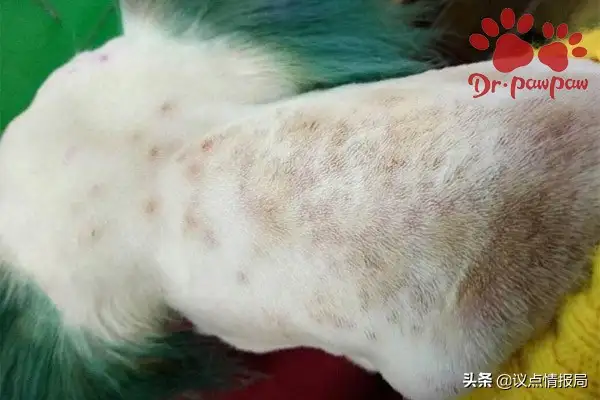
II. How to diagnose canine food allergies
Diagnosis of canine food allergies is also a common method of diagnostic identification:
1. First, by identifying the diagnosis, scavengers, Maratheli, sepsis, contact dermatitis, flea allergies and some other isophiles are excluded. This identification can also provide the basis for identifying both the primary and the secondary diseases of the disease, as well as for post-dog treatment and management.
Laboratory examinations: some parasitic diseases are eliminated through skin skin-skinning tests and the infection of pathogenic microorganisms, such as cytology, e.g. cytology, masella, etc.

3 In addition, surveys are needed based on the dog ' s medical history and life history to understand whether the dog ' s itching is seasonal or non-seasonal, whether there are some highly sensitive substances or components in his life, and to examine the location of the dog ' s itching distribution, etc.
Since the symptoms of heteoporitis and food allergy are almost identical, the distinction between these two diseases is difficult and needs to be slowly eliminated.
There is usually a need to distinguish between exposure to dermatitis, although it is easier to distinguish because exposure to dermatitis tends to be in a thin spot of hair, and where it occurs, there are primary red spots.
Dr. Claw's introduction to the dog's food allergy dermatitis reminds the owner to take the dog to the pet hospital in time for a diagnostic treatment, which would be easier and more effective, regardless of skin disease, early treatment, and less suffering, and we all know how painful it is to keep itting!