Designation: PET6087
English name: Midget Sucker Catfish
Origin: Overview of Brazilian elf species in South America
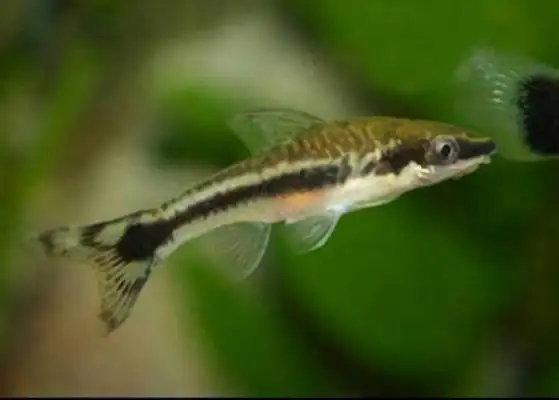
Pixie fish have 4-6 centimeters and are known for their ears and ears, and pixie fish, which eat grass, do not. Because of the small size of the pixie fish, which can swim into very narrow spaces, they are also raised as scavengers in aquariums.
English name: Midget Sucker Catfish
Type: temperate freshwater fish
Origin: Brazil, South America
Forms of reproduction: the outer shape of the eggfish
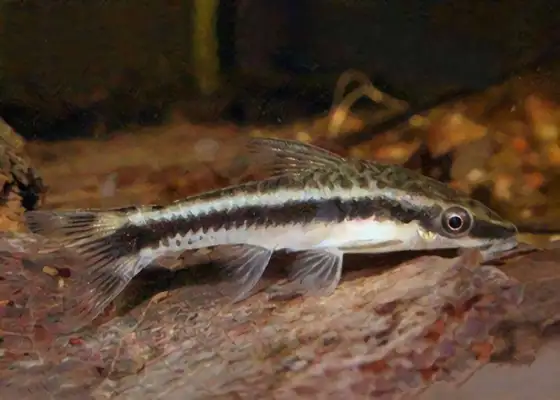
The elves are very gentle in character and can mix with fish of the same kind. Because the young elves are small enough to swim into small spaces to eat clean mosses, fish friends tend to feed her as a scavenger in aquariums.
Pixie fish have a size of about 4 to 6 centimetres, originating in south-eastern Brazil, South America. Brown gray body, with a penetrating stripe from eye to tail handle. The fish prefers to lick various moss algae in aquarium with a suction on his mouth. In the absence of moss algae in aquariums, it is highly likely to cause death among elves. Pixiefish breeding environment
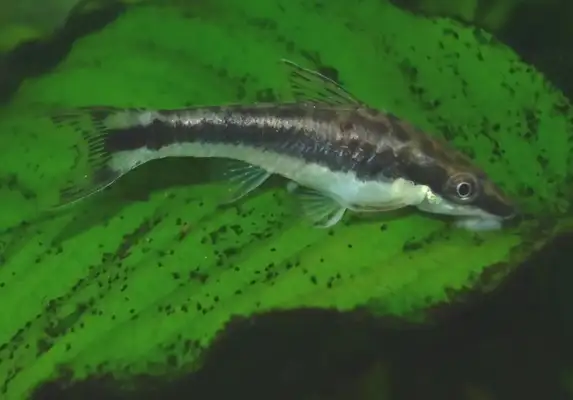
Pixie fish are not easy to feed, and there is no need to set up sunken wood for them in aquariums, because pixie fish do not need to suck wood to get plant fibres or other materials found on them.
Pixie fish are cheap and resilient, and although they are far less able to clean than helicopters and snails (snails), they work harder, grow around 3CM, have a basic 60 casks of two to three, and have increased the proportion of large casks. It is important to note that the elves like weak acid water and need to buy it back with a brief transfer process. Adaptation is fast. Pixie fish.
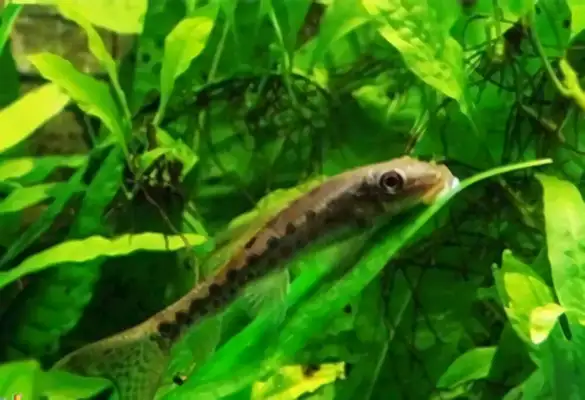
Pixie fish feed mainly on algae, and the lack of algae in aquariums can easily cause death. And the elves don't act like catfish like a scavenger, and they don't eat algae.
Some of the catfish eat waterweeds, but little elves do not, and are small enough to swim into extremely narrow spaces and eat pure moss algae, while also draining the most disturbing snail eggs in aquariums and thus controlling the number of snails, which is, indeed, “the scavengers in the scavengers”. Pixie fish are sensitive, so cleanup performance is not very efficient. But compared to the black-line flying fox, it is not obscurantist and focuses on algae.