No.: PET2198
English name: Western Pond Turkle
Nature: timidity
National origin: The West Bank, the United States of America, is the majority, and the western Nevada Mountains are all distributed.
Vulnerability to disease: Decay
Life: Overview of rocky turtle species, 80-100
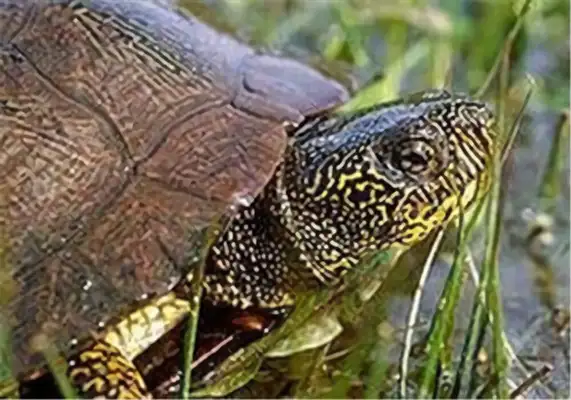
Sea turtles, also known as California turtles, are a more widely distributed category of turtles in the United States, which look like meteoroid turtles and therefore belong to the same kind of turtles. Sea turtles are relatively timid in character, preferring to live in rivers in the wild and have greater ability to swim.
Chinese literary name: Sea turtle
Chinese aliases: North Zephyr, Zephyr, California Zephyr
Latin name: Clemmys Marmorata
English name: Western Pond Turtle
Context: Animals
Gate: Pipeline gate
Amen: vertebrate Amen.
Programme: climb
Tortoises.
C: Turtles
Yes: Tortoise
Castes: Stoned water turtles
Region of distribution: The West Bank, mainly in the United States, is the west of the Nevada Mountains.
Reproduction practice: The production of eggs can be carried out twice a year, with 5-8 eggs at a time. About 70-80 days can be hatched.
Habitat: used to live in river and stream areas. (c) Vegetated ponds and small lakes. They can also be seen in marshes, slow streams and reservoirs, and occasionally in soda areas.
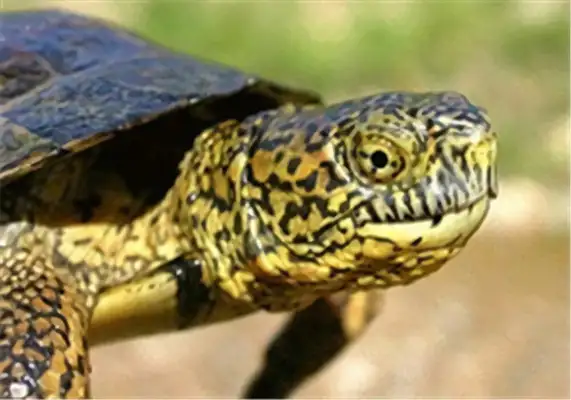
Appearance characteristics: smooth, small and wide, olive-to-tan; 13-15 cm back.
Eating: In terms of eating, the scavenging turtles are carving over meat. Salmon water turtle morphological characteristics
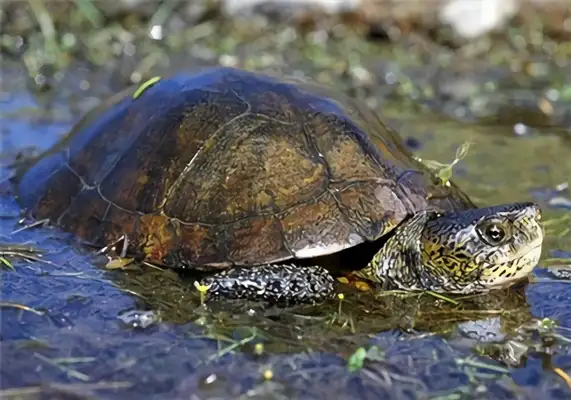
Stoned water turtles may be one of the most biased of the turtles, but their appearance is not very specific, and, given the high cost, the number of people raising them does not appear to be large, but there are some differences, and the coloring of their backs is not obvious.
I. Appearance characteristics of the rocky water turtle
The stoned turtle is 3 1/2 ~ 7" (8.9 ~ 17.8 cm). They are smooth, small and wide, they are olive-to-tan; they are often coated with a net of dark, small spots, and they are dispersed from the heart of the shield. The abdomen have light yellow, with no chain joints; and may have dark brown or black stains along the edge of the shield. Male dents in the abdominal abdomen.
There are two sub-generic species of rocky water turtles, with well-developed triangle shields in the northern sub-species at the bridge, spread from British Columbia to the south to the Gulf of San Francisco and the western part of Nevada. The sub-generic shield in the south is small or even missing, from the Gulf of San Francisco south to Baja California.
II. Purchase of graphite water turtles
Stoned water turtles are more expensive because they are rare, and a young turtle can sell $300 at a reptile show in the United States, twice as expensive as a larger star-point turtle. But outside, the stoned water turtle should be a relatively simple species of the same species. This is one of the reasons for the relatively small number of markets. Knowledge of rock-lined water turtle care
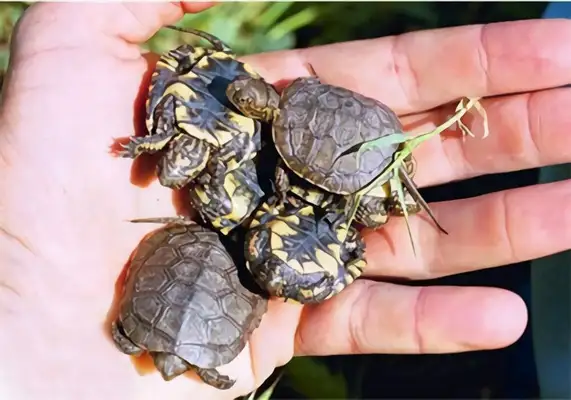
Sea turtles, also known as california turtles, have been questioned by scientists in their classification until recently, when scientists studied their classification under the sea turtles, along with meteorite turtles and European sea turtles, so they are called California turtles.
Sea turtles are native turtles in California in the United States, with the West Bank being the main distribution, quite different from other American turtles concentrated on the East Coast. Mainly in California, there are small communities in Washington and Oregon, Nevada and Baja California, which are part of Clemmys, just like star-spot turtles, and which are of four categories, along with the largest carving turtles, Clemmys insculpta and the smallest predator, Clemmys muhlenbergii. These four members, due to their small number, belong to the high-priced hot turtle species in the water turtle market. In the United States, where federal protection is available, most of the sales are made by artificially produced individuals.
With regard to another classification: according to the 2003 reclassification of United States expert scholars, only star-point water turtles are left among the members of Clemmys. Stoned water turtles, together with another North American turtle, the meteorite turtle Emidoideablandingii, were incorporated into the Emys, which belongs to the European turtles, while wood sculptor turtles and profiteer turtles were newly codified as Glyptemys. Such an amendment should be more appropriate. In particular, in the case of rocked water turtles, it does resemble meteorite turtles or European turtles, and it is reasonable to say the same. Sea turtle living environment
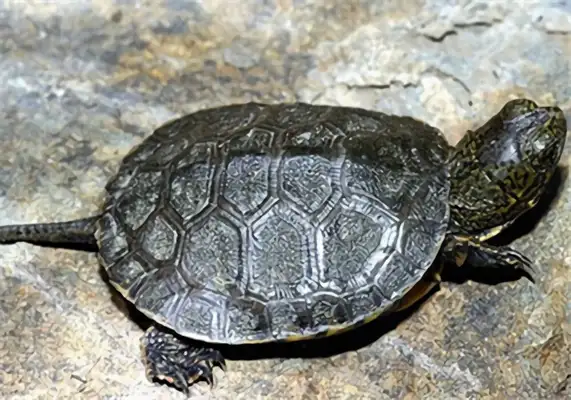
Seal turtles are more watery turtles that can provide deep water when raising them and ensure the quality of the water, while, in order to rest and to sunen their backs, they are provided with a comfortable tan. In later breeding, you will find that tanned turtles are very fond.
I. Living conditions for rock-marked water turtles
(c) Vegetated ponds and small lakes. They can also be seen in marshes, slow streams and reservoirs, and occasionally in soda areas. They are often seen alone. Once disturbed, they leap into the water. In order to compete for a suitable tan site, one tortoise may stretch out its neck, open its mouth and reveal the outer yellow jaw and its microred interior, challenging another tortoise.
II. RESOURCES OF STILLACH TREATERS
Now we know that sunburn is the most representative behaviour in the life habits of stone-grained water turtles, and that in their natives they will be exposed to sunlight on their floats, and in months of lower ambient temperatures, sunbathing to increase their body temperature is a necessary basis for their vitality. So when they're raised, they'll have to be provided with a sunscreen platform and a good sunlight, and you'll find that they spend most of the day in sunbaths. If indoor rearing does not provide sufficient sunlight, it can be replaced by a lamp, but it is desirable to provide a three-base light source to ensure good color temperature and light. They're not shy breeds. Stone turtles like bright environments. The point of stoned water turtle breeding.
Crude turtles are less difficult to raise and are less selective in their choice of food, which can essentially be described as easy-to-breed varieties, providing turtle food and some meat food, and occasionally eating vegetables, with attention to the diversity of food and ensuring comprehensive nutrition.
I. ELEMENTS FOR RESPONSIBILITIES
The choice of the food is relatively broad, but it is still concentrated on herring, which can be provided by fish shrimp insects or molluscs. During the rearing process, pens find the acceptance of shrimp to be high, believing that it is home-grown and home-grown, which originates from rocky turtles, that the vegetation of the water is quite abundant in raw water, and that the proportion of shrimp is high, so the preference for this food is added.
II. The difficulty of raising stone-grained water turtles
On the edible side, the gravitational tortoise is carving. Cricket breadworms, refrigerated red bugs, fish shrimps are the staple foods, vegetables, fruits are acceptable, and water turtle feed is also very popular. It's basically well-nourished turtle species, but they're timid in their inner self, so it's best to plant a turtle nest to hide. It is also not difficult to distinguish males, with male tails coarsely dented, female tails small and abdominally flat.