Title: PET 1949
English name: Varanus Rudicollis
Origin: Overview of rough iguana species in southern Thailand, Myanmar, Malay Peninsula, Leo Islands, Borneo, Sumatra, Gbarnga
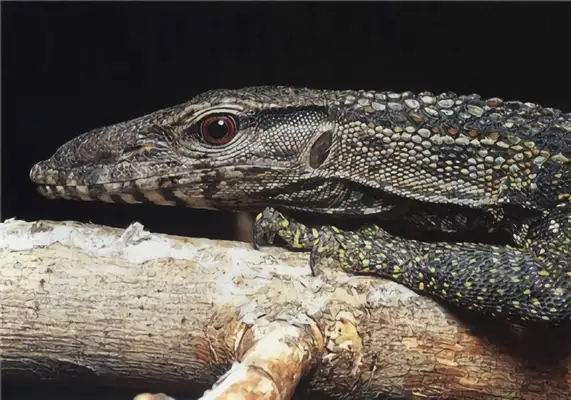
The greatest characteristic of the coarse iguanas is that they have long kisses and are likely to grow round as they grow up, and that the coarse iguanas will become like the mouth of a beast. All coarse iguanas can grow up to 146 cm.
Chinese name: Coarse lizard
Foreign name: Varanus rudicollis
School name: varanus
Eatability: Insects operating from the surface
Distribution: Southern Thailand, Myanmar, Malay Peninsula, Leo Islands, Borneo, Sumatra, Gbarnga Island rough iguana
Coarse iguanas are more characteristic of their kisses, and they are also very large in size, with a full size of 146 cm in size and a full size of approximately 25 cm in size. The long kiss of a coarse iguana will grow round and round as the mouth of a beast. The larvae ' s colour is predominantly grey, with visible dark stripes and yellow spots; after growing up, it turns to dark colours and even to black individuals in parts of the region. Colossal lizard breeding environment
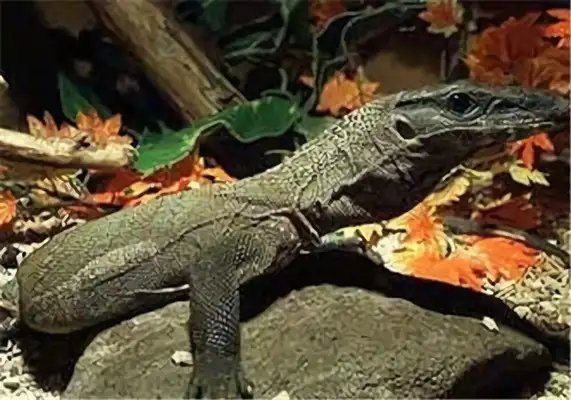
Coarse iguanas are mainly located in southern Thailand, Myanmar, Malay Peninsula, Leo Islands, Borneo, Sumatra and Gbarnga. The size of a coarse iguana can be 146 centimetres, and if you want to raise people, care needs to be taken to prepare them for a suitable breeding environment.
Once any alienity is detected in a wild environment, the rough iguana climbs into a tree and hides in a cave. The whole larvae is about 25 centimeters long, most of which are hidden in the soil, and when touched with their hands, they respond in the form of false death, which, among the great iguanas, is an independent subdivision. I'll give you some food.
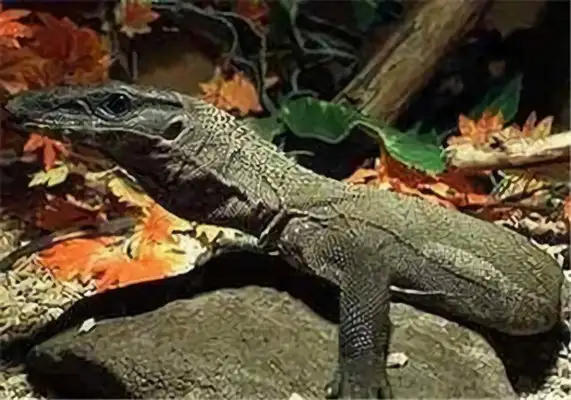
The larvae have a total length of about 25 centimetres and are in a state of false death when touched with their hands. Large, ferocious iguanas will also seek shelter as soon as they detect an anomaly. So it's very important to domesticate coarse iguanas. So, what's better for them when they're raised artificially?
Crude iguanas in wild environments are fed mainly by insects, spiders, scorpions, crabs and other arthropods, frogs or frog eggs that operate on the surface. Artificial breeding of coarse iguanas can also be used as a reference, although care needs to be taken to disinfect the food so as not to infect the coarse iguanas with bacteria and viruses, causing unnecessary trouble.