Designation: PET5159
Vulnerability to diseases: white spots
Life: An overview of the Hanahan species 4-5 years
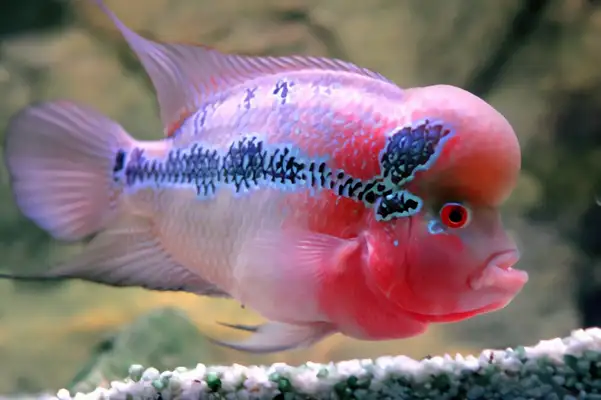
Hana Rohan is an improved species of fish from Malaysia and a very common species of fish. Hanahan is an improved breed of mixed seven-colored blue-fired macaws and Mexicans developed in Taiwan. And since Hanahan's appearance is as prominent as that of Rohan, he is known as Hanahan.
Maximum length: 42 cm
Section: Tzu Chi
Water temperature: 26-28°C
PH: 6.5-7.2
Fulfilled.
Common diseases: osteoporosis, head hole disease, decomposed fragrance
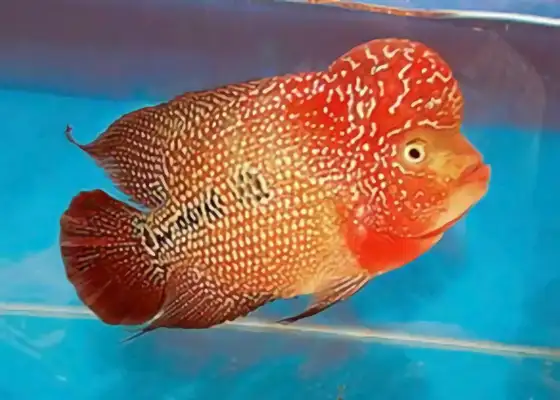
Hanahan is now the more common species of fish viewing, and they are modified by mixed labour. Fish friends raising flowers need to pay attention to the pattern of mixed breeding, which requires special attention because of the aggressive sexual nature of the flower.
Faohan is named for his colour and uniquely shaped head. They do not exist in nature and are artificially modified. Flour fish, first cultivated in Malaysia, Thailand and Taiwan, are now raised by fish lovers around the world. The size of the Faohan is large, with slightly different varieties, with a maximum size of 42 centimetres and 18 centimetres and a height of 10 centimetres; the general size is about 30 centimetres and can be considered to be large. Especially its huge forehead, like a birthday star, is unique. The flowering environment.
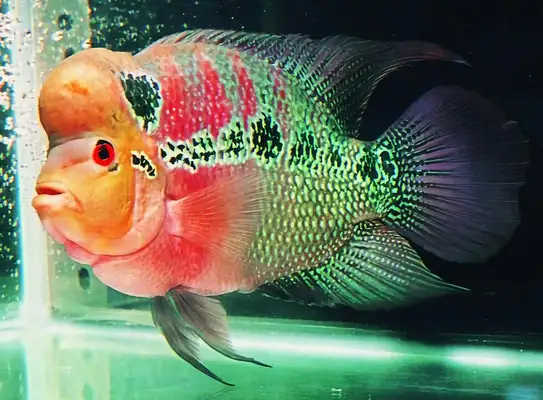
As Hanahan is a very popular species, the prevalence rate is now very high. The largest size can be 42 centimetres, so it is important to raise flowers not only in combination but also in terms of the size of the aquariums. The requirements for water quality in Hanahan are not stringent, but water is not readily available to feed.
Fish must feed first, and it is necessary to keep the flowers well. The water of Rohan, which produces flowers, should be of sufficient oxygen content and uncontaminated. Water containing trace elements, generally normal clean and transparent water, mineral and acid alkalinity will have little impact on the lifestyle of flohan. Only indicators such as oxygen content in water, temperature and harmful gases in water often do not meet the requirements for the survival of Hanahan and affect its growth. Such water must be treated to increase oxygen content in the water and to settle hazardous substances.
Most flowers now use piped water, most notably low oxygen and chlorine. The simplest way is to store it for exposure, which normally takes about three days. And it's very effective to filter activated carbon to remove harmful substances such as chlorine gas from the water. There is no preference for the chemical use of chlorine gas, so that water can't be taken care of. For first-time fish casks and water, the first-time fish casks have to be treated with the first casks.
The most important factor in raising flowers is the stability of water quality, the recent purchase of flowers and the growing of flowers, sometimes with small heads, sometimes with significant changes in the colour of fish, and sometimes with condensed fins, although due to a variety of factors, the most important is the unstable quality of water. There's no need to care about the PH value of raising flowers. There's no problem with raising flowers in normal running water. The placement of coral sand and volcanic rocks in water can contribute to the stability of water quality and provide a host environment for the sale of fungi in water. It is conducive to water purification. Here's some food.
The special feature of flohan lies not only in their physical characteristics, but also in the fact that the fish cannot reproduce in the same species and can only be grown through hybrids. So, while Hanahan is now widespread, there is also a need to pay attention to sound science of feeding. Hanahan is not picky about his diet, and insects, oxen pellets, shrimps, earthworms, redworms, artificial feed, etc. can all be bait to feed them.