In 2019, an 11-year-old grey dog named Kelly (a hound) was diagnosed with cancer, which was not long ago, but is now abated by a new vaccine, and is again alive.
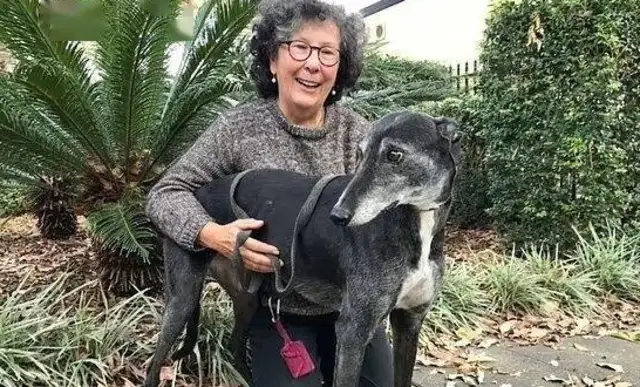
Scientists at the University of Sydney treated the dog and used cancer samples for individualized treatment. Treatment combats cancer through an immune system that stimulates dogs, which is also being developed to treat human cancer.
Kelly was one of 300 dogs who received injections. Injection not only removes cancer in the body, but also prevents its recurrence.
According to the Veterinary Cancer Association, 47 per cent of dogs die from cancer, especially those over 10 years of age. And humans have the same chance of cancer as dogs.
The vaccine was developed by Dr. Christopher Weir, an immunologist at the University of Sydney, who has been studying this treatment for at least three years and who has recently seen Kelly's work results.
In 2019, the dog owner, Jennifer Wiesel, found a lump of swelling under Kelly ' s chin and was eventually diagnosed as lymphoma, an invasive and deadly cancer for dogs.
Like humans, Kelly has endured several rounds of chemotherapy, hoping that radiotherapy will save lives.
Wiesel knew that the chances of a beloved pet surviving from a deadly disease were extremely low, but when the dog was vaccinated against Weir, everything changed.
In a statement, Weir said that thanks to the first test, we now know that vaccines are safe." It appears to be effective for several different types of cancers, especially fat cytomas and lymphoma.”
Dr. Weir uses vaccines as an immunotherapy therapy, which is also considered the most promising way to treat human cancer.
Oncological biopsies are removed from dogs and then frozen or immediately disposed of. The sample was then combined with the Advax, a solution that enhanced antibodies and T-cell immuno-responses against co-injecting antigens.
According to researchers, this treatment is much cheaper than chemotherapy, which costs more than $10,000 per dog. However, the most promising result was found on dogs who had received chemotherapy prior to vaccination.
In its statement, the University of Sydney stated that, while separate chemotherapy can prolong survival, it often does not save animal life. Dr. Weir hopes that his vaccine will eventually provide a cheaper, safer and more effective treatment option.
Vessel said that the vaccine had her with Kelly again. She said, "I wasn't going to do this because I didn't think it would survive." But now it looks good, and she's worth it... it's our family."
“I appreciate the opportunity to participate in this experiment. It's a blessing."
Kelly's treatment is similar to that designed for humans by researchers at the University of Chicago School of Molecular Engineering in Prizren.
The vaccine also uses the patient ' s own tumor cells to program the immune system to detect and attack cancer cells in the body.
The results were published in the journal Scientific Progress on 24 March.
Professor Melody Swartz, who led the study, stated in a statement that this is a new strategy for immunotherapy. “It is likely to be more effective, cheaper, safer than many other immunotherapy. This is a truly individualized treatment that has the potential to overcome many of the problems posed by other treatments.”