Title: PET3307
English name: Pionus Fuscus
Origin: Northern South America
Vulnerability: diseases of digestive system, respiratory and eye
Life: 30-year profile of dark parrot species
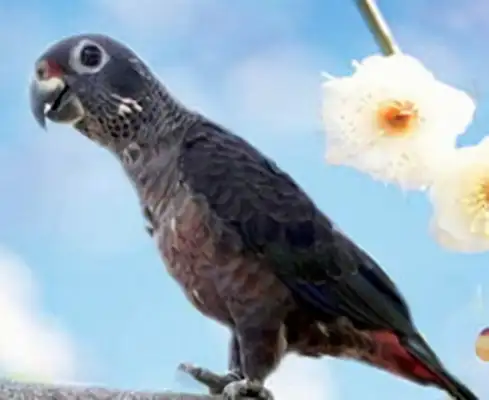
Dark parrots are mainly found in forested areas, coastal lowland forest areas, low-tree plains and, at times, agricultural areas for food. It is located in northern South America, including Venezuela, Colombia, Guyana, Suriname, French Guyana and northern Brazil. Before the late 1970s, the number of dark parrots in the parrot cage community was very small, and it was not until the 1980s and 1990s that a significant number of wild birds were exported from Guyana to Europe, yet the mortality rate of wild parrots was very high, and the majority of dark parrots imported into Europe, even if they survived only a few weeks or months, are still small; heavy forest logging and habitat destruction have led to a significant decrease in the number of communities of parrots, although there are also few international cages; they are mainly located in low-lying rainforests, moist forests in hilly areas, coastal forests, tropical savannahs, farming areas, etc., and do not prefer to live in open land; in areas where Venezuelan communities operate from sea level to 1000m, their communities are located in areas along the border between Venezuela and Colombia, where they are located at 1200 to 1800m above sea level; and in clusters, especially in areas where concentrations are more frequently found outside breeding periods, mainly on branches.
Chinese literary name: Dark parrot
Latin name: Pionus fuscus
Don't call it a dark parrot, a dasky parrot.
Context: Animals
Gate: Pipeline gate
Programme: Birds
Look: Parakeet.
Section: parrots
The Parrot of Pyonnis
Type: Dark parrot
Asian: Afro-Asian
Named by: Müller, 1776
English name: Dusk Parrot ' s foreign appearance
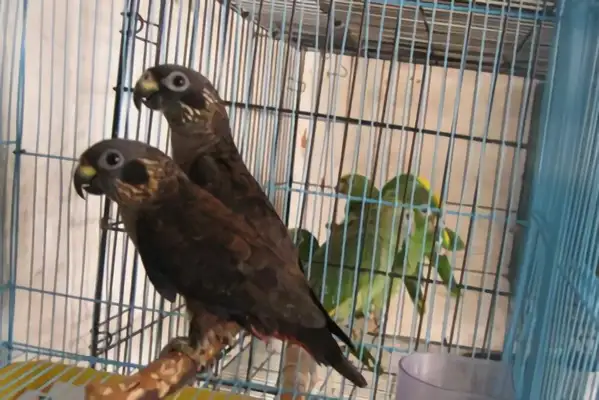
Dark parrots belong to a small pie-onnis parrot, which is more noisy and less tolerant. The dasky parrots are less common than the other four common Pioneers. The color of the macaws' feathers is darker than that of the blue blue-fined parrots, with dark red and grey brown as the main color. Although the light is low and it looks dark, the special feathers of the dasky parrot and the blue-blown parrot need to be in a place where the light is abundant in order to be able to perform their beautiful hymn. And there's a simple way to distinguish between a dasky parrot and a brass parrot: The macaws' beaks are black, and the beaks are yellow, unlike the blue-fined parrots' beaks. The dasky parrots have no species. The Amazon River basin, located in the north, is widespread.
The dark parrot is a small Pyonnis parrot, 24 cm long and weighing between 200 and 212 g. Dark parrots are less common than the other four common Pioneers. The color of parrot feathers is darker than that of blue-blown parrots, with dark red and gray brown as the main tone. Although the light is low and it looks dark, the distinctive feathers of dark parrots and blue-coloured parrots all need to be in a place where the light is abundant in order to be able to perform their beautiful hymn. And there's a simple way of discerning between the dark parrots and the blue-blown parrots: the black beak of the dark parrots, with yellow spots on the beaks, is not exactly yellow. Dark parrots have no subspecies. Dark parrots also earned themselves the title “Small Eagles of parrots” because of the dark colour of their natural feathers. The English name Dusky “Dizzy”, which is an expression of its subtle colour. The dark parrot's Japanese name, "Little parrot." Dark parrot breeding characteristics
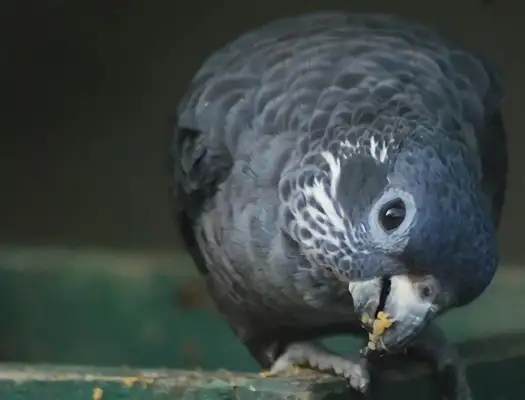
Dark parrots are the most lovely and charming species of Pionus members, except for the three rare Pionus parrots, the Coral-Billed Pionus, the Plum-crowned parrot and the White-head parrot, which many consider to look like small falcons; and, like the general Pionus parrot, the dark parrots have a quiet, friendly, gentle personality and are well suited to domestic pets. The concentration of dark parrots, especially outside the reproductive period, is more commonly found in the group of birds, mainly for feeding purposes. Dark parrot is a very cute and charming category of Pionus members with a quiet, friendly, tame personality that suits domestic pets.
Owing to the wide distribution of the species, which is not close to the Vulnerable Critical Values criteria for species survival (areas of distribution or fluctuations of less than 20,000 square kilometres, habitat mass, size of populations, fragmentation of areas of distribution), population trends are stable and therefore assessed as species without a existential crisis. However, dark parrots are included in the World Conservation Union (IUCN) 2013 Red List of Endangered Species, ver 3.1 - Low Risk (LC). Dark parrot breeding environment
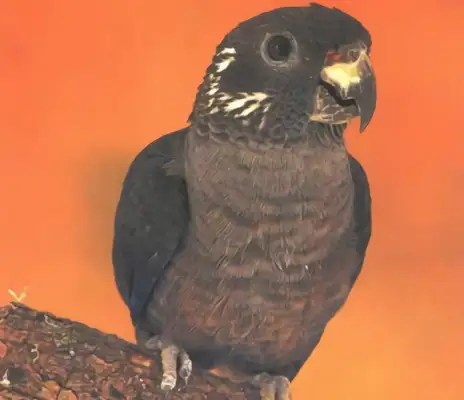
When dark parrots are introduced, they become more shy and sensitive, and, like other pionus parrots, more attention needs to be paid to environmental sanitation when raising them in order to prevent respiratory diseases caused by fungus infections, and they need a sufficient amount of vitamin A, because the lack of pionus parrots often leads to diseases of digestive systems, respiratory tracts, and eye. Because of the small number of cages, reproductive outcomes are less common, reproductive cages do not need to be too small, because they can lead to obesity, multi-protein and vitamin A food during reproduction, normally yielding approximately three to five eggs at a time, taking 26 to 28 days to hatch, and chicks grow in about 70 to 80 days, possibly two or three times a year. Dark parrots live mainly in low-lying rainforests, humid forests in hilly areas, coastal forests, savannahs, farming areas, etc., rather than in open and reclaimed lands.
Before the late 1970s, the number of dark parrots in the parrot cage community was very small, and it was not until the 1980s and 1990s that a large number of wild birds were exported from Guyana to Europe. However, the mortality rate of wild parrots is extremely high, and the majority of dark parrots imported into Europe have survived only a few weeks or months, so they are still small; severe logging and habitat destruction have led to a significant reduction in the number of dark parrot communities, although the number of inter-national cages is not significant. Dark parrot feeding requirements
When dark parrots are introduced, they become more shy and sensitive, and, like other pionus parrots, more attention needs to be paid to environmental sanitation when raising them in order to prevent respiratory diseases caused by fungus infections, and they need a sufficient amount of vitamin A, because the lack of pionus parrots often leads to diseases of digestive systems, respiratory tracts, and eye. Because of the small number of cages, reproductive outcomes are less common, reproductive cages do not need to be too small, because they can lead to obesity, multi-protein and vitamin A food during reproduction, normally yielding approximately three to five eggs at a time, taking 26 to 28 days to hatch, and chicks grow in about 70 to 80 days, possibly two or three times a year. Dark parrots live mainly in low-lying rainforests, humid forests in hilly areas, coastal forests, savannahs, farming areas, etc., rather than in open and reclaimed lands.
Before the late 1970s, the number of dark parrots in the parrot cage community was very small, and it was not until the 1980s and 1990s that a large number of wild birds were exported from Guyana to Europe. However, the mortality rate of wild parrots is extremely high, and the majority of dark parrots imported into Europe have survived only a few weeks or months, so they are still small; severe logging and habitat destruction have led to a significant reduction in the number of dark parrot communities, although the number of inter-national cages is not significant.