Designation: PET5487
English
Origin: Northern Argentina, Uruguay, Paraguay, and Southern Brazil.
Vulnerability to disease: Decay
Life: 50-60 Overview of the species of snakes and turtles in South America
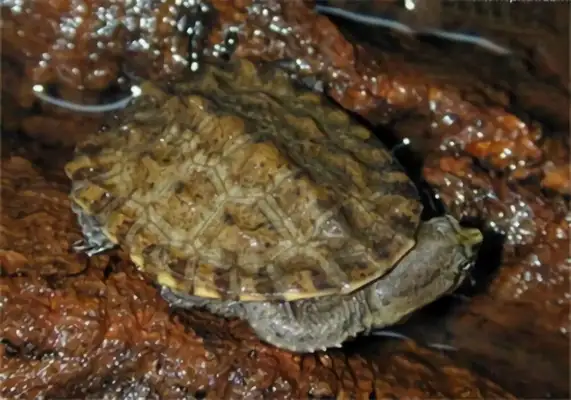
The South American snake-back turtle, an Argentine snake-neck turtle, has always been the preferred species, but because it is small and difficult to raise, many people want to raise them without trying to start, and it is expensive in the market.
Chinese name: South American snake neck turtle
Alias: Nailback turtle, Argentinian snake turtle
English
Latin name: Hydromedusa tectifera
Context: Animals
Gate: Pipeline gate
Amen: vertebrate Amen.
Programme: reptiles
APA: Aerobics
Tortoises.
C: Snakes and turtles
It's a fish turtle.
Speces: South American snake neck turtle
Geographical distribution: Northern Argentina, Uruguay, Paraguay, and Southern Brazil.
Reproduction: Eggs.
Practice: When they hunt for food, they are very similar to dead leaf turtles, and when they see food, they rush forward and swallow food and water together. For them, such feeding is a pleasure. Therefore, live fish should be used as feed. No more sun.
Characteristics: Most turtles have very small neck shields, located between the first and second edge shields, but South American fish turtles are different, with larger neck shields, in the back of the first and second edge shields, and in the front of the first vertebrae. The bright colours of the neck and the varied stripes are among the reasons preferred by the pet turtles.
Eating: Eating fish, shrimp, and occasionally receiving very small amounts of artificial feed. Characteristics of the morphology of South American snakes
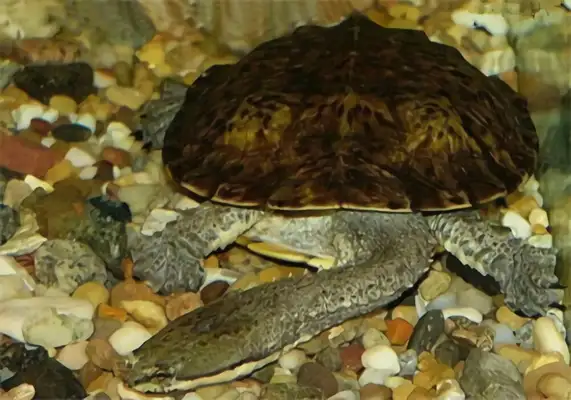
The South American snake neck turtle, like all the species in it, has a long neck, which cannot be condensed into the shell. The difference is that the neck of the South American snake neck turtle does not have thorns, so it looks smooth, its backs are stale, like a rock.
The tortoise casings of South American snakes bear strong dragon bones, with yellow-coloured, yellow-coloured, nearby, black or yellow spots, slightly longer necks than other types of turtles, and a thinly long tail. The shape of a South American snake's neck turtle is similar to that of a common snake's neck turtle. The average female individual is greater than the male one, up to a maximum of 40 cm. According to modern scientists, snake neck turtles are the oldest reptiles available. The main characteristic of a South American snake-back turtle is that it has very strong crust, and when it is attacked it can pull its head, tail and limbs back into its shell, with long necks and rough, rough turtle shells, especially young species.
Most of the South American turtles have very small neck shields, between the first and the second edge shields, but the nailbacks are different, with larger neck shields, in the back of the first and the second edges, in the front of the first vertebrae. The bright colours of the neck and the varied stripes. The female is bigger than the male. The male abdomen are dented in the centre of their abdomen, the anal shield is less engraved, the tail is longer, the excretion cavity is farther away from the back of the manure; the female abdomen is flat. South American snake-back care knowledge
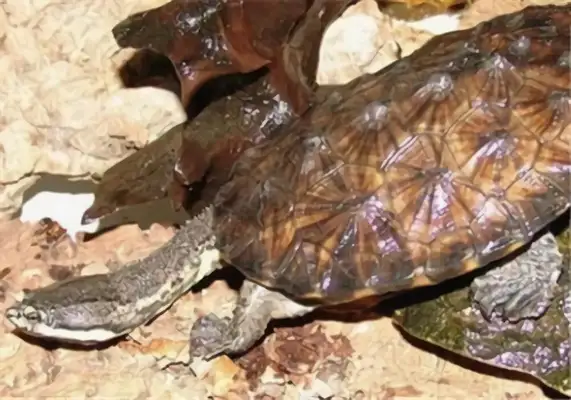
It's not as weird as it looks, but it's very gentle, but when you're hunting, you can see a quick side, and it's usually fatal to food, like a fast bullet.
I. Catching characteristics of South American snakes
South American snakes hunt for food, similar to dead leaf turtles, by ambushing or sneaking close to a surprise attack, with their mouths wide open in front of the head and large necks open, as if a pocket full of prey had been loaded into it, while their neck muscles had been plunging forward with their mouths and swallowing food and water. The necks of South American snakes are more than two times longer than those of ordinary turtles, making the catch relatively easier.
II. Effective characteristics of South American snakes
A South American snake's neck turtle would be a very good turtle. When they hunt for food, they are very similar to dead leaf turtles, and when they see food, they rush forward and swallow food and water together. For them, such feeding is a pleasure. Therefore, live fish should be used as feed. No more sun. They like fish, shrimp and occasionally very little artificial feed.
III. Reproduction of South American snakes
The breeding season for South American snakes is not widely observed, but it is assumed that they will lay eggs by the spring river. Its eggs are approximately 34 x 22 mm, white and fragile. The newly hatched turtles are approximately 34 mm long, with more wrinkles on the back than on the adult body. Like most turtles, people do not know the method of artificial reproduction, so there are no cases of successful breeding hatching. The living environment of South American snakes
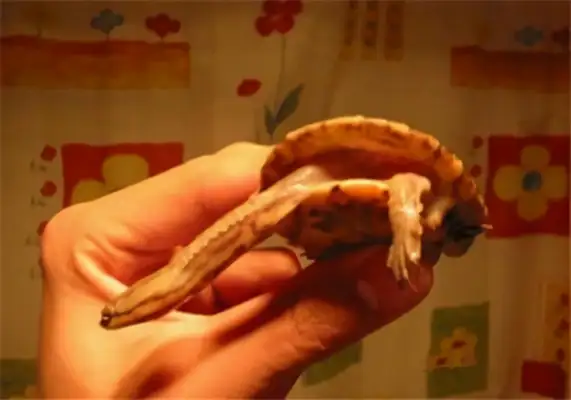
The South American snake-neck turtle, one of the more difficult species to raise, also known as the Argentine snake-neck turtle, is difficult to maintain because of the high environmental requirements of the South American snake-neck turtle, especially in the summer, and the fact that excessive water temperatures can also cause manicure.
I. Living conditions for South American snakes
The rearing boxes for South American snakes can be set at 70-80 per cent of the total area and 20-30 per cent of the total area on land. This is somewhat different from the rearing of flat-headed and tattooed snakes, since the South American snakes are species that prefer to go up to shore to tan and therefore need to provide land. On the land side, a few large stones, sunken logs or bricks can be chosen as completely water-free land, with a bold addition above the land, with a gill light on the land, and with the use of the reptile UV light tube, which, as it climbs up to the land in a sunbath, can give it heat and UVA/B like nature's sun, although the gill + reptile UV light tube is a substitute for sunlight, but is still far from good. The water level can be increased to a depth of 1 to 3 times the length of its crust.
II. Appropriate temperature for South American snakes
The appropriate temperature for raising a South American snake-neck turtle should be 18-25 degrees, but in the summer, water temperatures tend to rise to 30 degrees or more. If the water is too hot, their crust is prone to crust decay, presumably because the crust of a South American snake-neck turtle is less resistant to fungus, and while the water temperature is warm, fungi in the water are rapidly growing, which is detrimental to the crust of a South American snake-neck turtle, so there is a need to reduce water temperature in the rearing box. The point of South American snake neck turtle breeding.
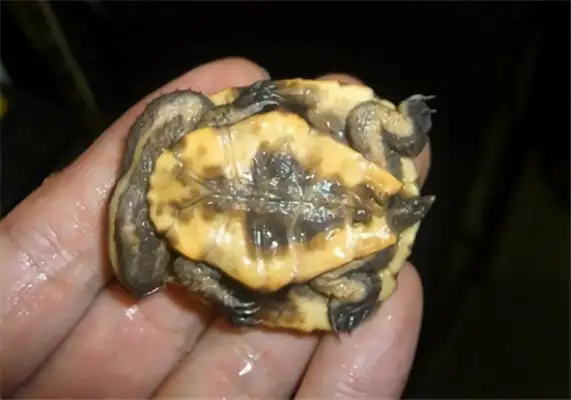
The difficulty of raising South American snakes is mainly in preventing disease, which is the most susceptible and difficult to treat, so how can it be ensured that they are not ill?
In the wild environment, where a variety of aquatic insects, snails, small fish, etc. are the main foods, artificial rearing can feed red meat, internal organs, shrimps, earthworms and, occasionally, turtles. The whole process is interesting when it eats in a way that resembles a large crocodile or a dead leaf turtle and waits in disguise for the prey to come near and then suddenly strikes quickly to swallow it.
The shape of a South American snake's neck turtle is similar to that of a common snake's neck turtle, but its backnails are a little rougher than their backs, a little more like crocodile turtles. South American snake neck turtles do not like the sun, so they place a cover on the container when it's in the sunlight. Care should be taken to maintain water quality and water temperature in the artificial breeding of South American snakes. In general, the water temperature suitable for a South American snake's neck turtle is between 18 and 25 degrees, and diseases such as turtle nails and rotting nails can occur if water quality is not clean or too high.
A lot of turtles think South American snake-neck turtles are easy to rot in, very bad breeders. Indeed, they are better suited to live in more acidic water, which helps to contain the growth of fungi, and can reduce the de-skinning of South American snakes, provided that the above requirements are met and that, in addition, the turtles are regularly washed once with soft-haired toothbrushes, while the South American snakes are better fed.