Title: PET3311
English name: Enhydris Chinensis
Vulnerability: anorexia
Life: Overview of Chinese water snake species, 10-15
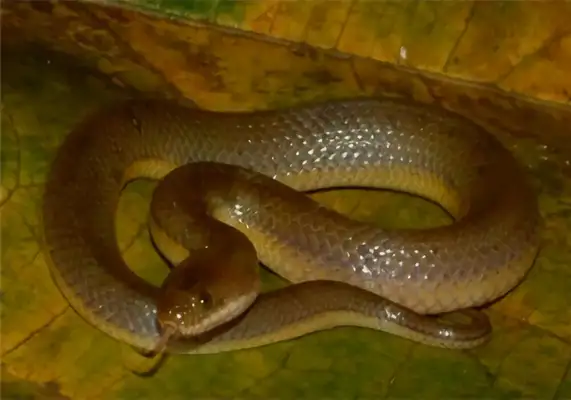
The Chinese water snake, commonly known as a mud snake, is by definition born in China. Like a place with a water source, living in water for years. It contains a rich EPA component and is a major component of snake oil.
Chinese water snakes are national “triple” (good, economic and scientific) for animal protection, while Hunan province is also a priority for animal protection and does not allow trafficking or food.
Chinese literary name: Chinese Water Snake
Chinese alias: Tang Water Snake, Mud Snake
Two words: Enhydris Chinensis
Area: Animal
Door: vertebrate door.
Amen.
Scramble
APA: Diapsida, APA
I've got eyes.
ANA: Snake
Section: Snake Section
Water snakes
Chinese water snakes
Distribution: Characteristics of Chinese water snakes in Viet Nam, Taiwan and mainland China
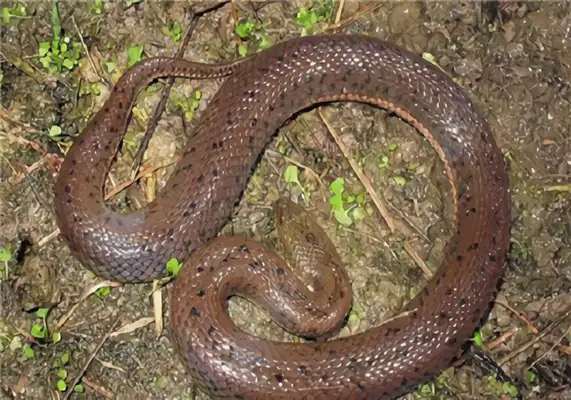
The average Chinese water snake weighs about 150 g or more and the maximum individual size is over 750 g or about 60 cm. Chinese water snakes have a bigger head and stomach, and their diet is amazing. It's a non-venom snake.
The back of the Chinese water snakes is dark ash brown, with irregular black dots, light yellow on the abdomen, black spots on the back, and slightly flat on the tail. The black dots scattered in a slightly vertical line, with black on the first side and white on the second and third rows; and yellow on the abdomen, with black spots on each abdomen. Torn cylinder, short tail. Single syllables, right and right syllables, nostrils back; small eyes, 1 forward, 2 behind, 1 颞鳞2; upper lip scale 7 (8, 9), 3-3 (4, 5) Slips smooth, rows 23(25)-23(25)-19; abdominal scales 139-155; diaphragms; bottom scales 38-51. Chinese Water Snake Living Environment
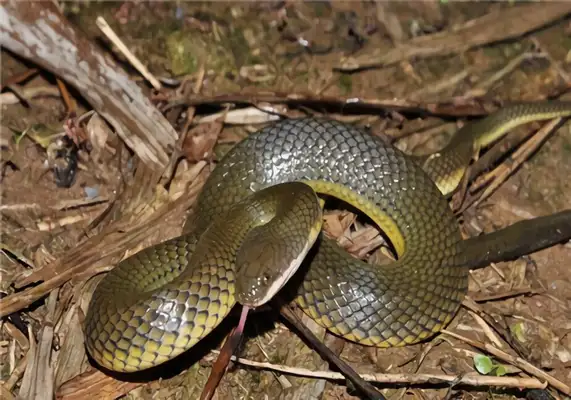
In the wild, Chinese water snakes prefer to live in places with water sources such as rice fields, ditches, etc. They are seen during the day and night, and many Chinese water snakes suffer from food poisoning as a result of large quantities of pesticides and fertilizers often applied by farmers. Agricultural land is being reclaimed, habitat is shrinking and so on.
If there's a family that breeds the snake, we'll love it. Chinese water snakes prefer deep water environments that can grow in poor water quality. In 3-10 m2 of ponds, the parent ratio is 1:3. The pool must be 30 cm deep and 30 cm deep and be properly fed into dry straw or other dry grass, regularly changed, water quality is kept clear and easily observed, and the food source of snakes is abundant during reproduction, and once the child is produced, he or she should be separated within half a day and put into a transition pool.
Hydra, by definition, is aquatic or semi-aquatic. Thus, the arrangement of water sources in farming is a key element. It is important to maintain sufficient and clean water sources during the fishing season. Every 7-15 days during the summer season, the pool is completely cleaned up to avoid the presence of impurity in the water that causes intestinal inflammation and undue trouble. Chinese water snakes raise knowledge
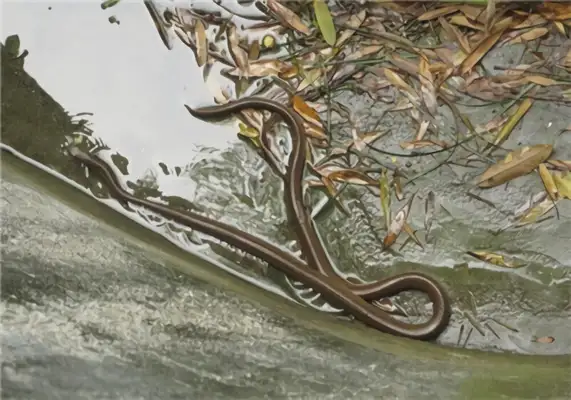
China ' s water snakes usually grow up to two years before they reach sexual maturity. They reproduce in the form of eggs, usually in April-July of each year. Precious snakes are fed with dried eggs, yellow and yellow rice, red worms, etc. They'll eat more when they eat independently. So it's relatively good.
Feeding: mud snakes are edible, individuals are fed more to yellow powders, earthworms, worms and beetles, eel fish, large snakes are fed to various animals, dead animals, fish shrimp, etc. They can also feed snakes with black light.
Management: The dyke can grow various kinds of guacamole, but not pesticides, and the pool can grow white or deep rice in appropriate quantities. High-temperature seasons, frequent changes of water temperature, drying of grass into water temperature during low-temperature seasons, listing specifications of 150-500 g, relatively few mud snake diseases, and, once the mud snakes are found to have new drugs of special use for fish-loved treatments, individual body-watch diseases are cleaned up with new jel. Pesticides cannot be allowed into water. We're doing rat-proof work around the farm. Once a person has been bitten by a snake, the sprouts are removed and the wounds are washed with water, oil and water, and treated in hospital.