Designation: PET4681
English name: Introduction to the species of the Propyrhura auricollis gold parrot
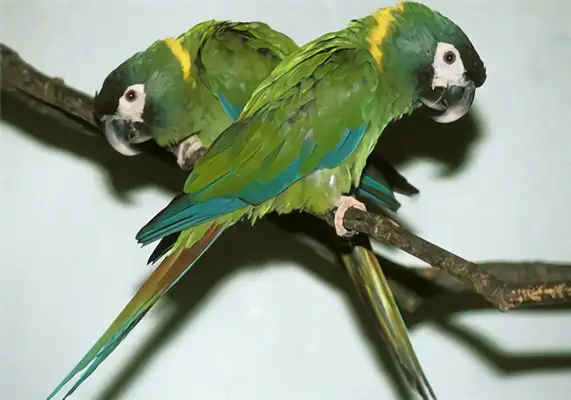
The macaws are medium-sized parrots, which are generally difficult to distinguish between females and males. They are less destructive than large parrots, and they have no other fights. It is important that they learn more language and are one of the best parrots for pets.
The macaws prefer to live in different types of areas, including woodlands, wet forests, agricultural areas, etc. They are mainly located in central Brazil, eastern and northern Polynesia, northern Paraguay and north-western Argentina.
Chinese literary name: Parrots
Latin name: Propyrhura auricollis
Don't call it a yellow collar parrot.
Two words: Primolis auricollis
Context: Animals
Gate: Pipeline gate
Programme: Birds
Look: Parakeet.
Section: parrots
Family: Nautilus
by Propyrhura
Asian: Cassin, 1853
Named by Cassin, 1853
English name: Yellow-Collared Macaw
English name: Golden-collared Macaw gold parrot morphological characteristics
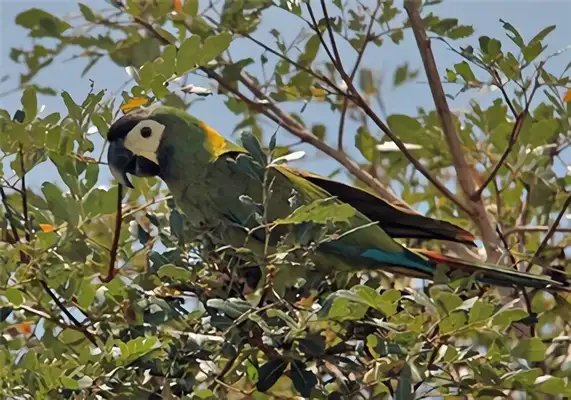
The look of the macaws is very similar to that of the other parrots, and the body is almost green. The adult macaws are approximately 41 cm in size and should weigh between 240 and 250 g. The chicks are like parents. However, their beaks are grey, iris gray, light gray legs and red neck ties.
The head to the neck is blue, with a horizontal yellow feather on the back of the neck; the main flying feather is blue, with a visible green roll side on the secondary feather, with olive yellow on the inside of the wings; the feathers above the tail are red brown, the tip is blue and the edge is olive yellow on the inside; the beak is a bit yellow; the rainbow is orange; the face of the naked face is white; the eye is first paddy yellow; and the leg is pink. A macaw living in gold-collar.
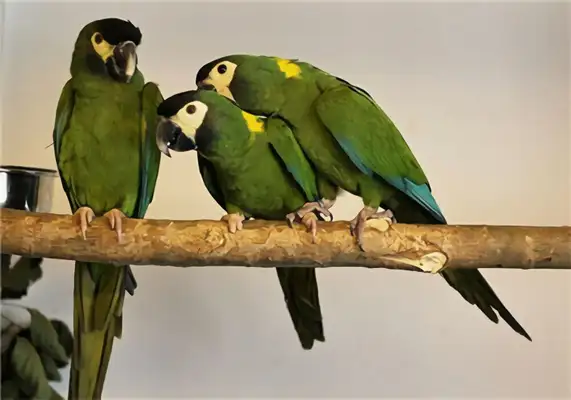
As the owner of a qualified gold-collar parrot, you should not have thought of the price of the parrot before you raised it, but rather of the basic knowledge of the parrot: how they live in the wild, or how they behave and what they like to eat.
The macaws live mainly in different types of areas in the wild, including woodlands, humid forests, agricultural areas, and humid forests in the Argentine tropics and subtropicals, and dry forest lands in Bolivia.
The bigger the parrot cage is? Otherwise, too big a cage would occupy a lot of space and make cleaning difficult. When selecting cages, the length and width are minimal to the extent that parrots can turn unobstructedly, can be higher, and can easily climb, and parrots naturally choose larger cages in order not to break tails. Because of the strength of the macaw's bite, it is preferable that both cages and utensils choose stainless steel. In addition, a number of wood blocks for parrots could be added to the cages for play, stringing, ropes, etc. The pet store would sell and make itself better, and care would be taken to choose non-toxic, harmless and round-tangled material processing. It'll keep the parrot from getting bored while you can't be there. Of course, toys are always new and better, and parrots are picky. A macaw of gold.
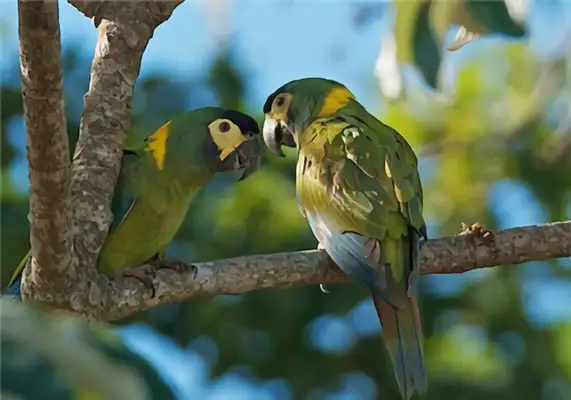
How can a very lively, very friendly macaw not be noisy? Of course, before you choose to breed, you believe the feeder is psychologically prepared. The macaws need expert identification in the identification of females and males.
The macaws, mainly based on foods such as fruit, seeds, nucleus, and sprouts, occasionally find food in grain fields or in jade fields.
The spawning season for the macaws is December in Argentina. The nest is located in a tree hole 20 metres above the ground. Usually, three or four eggs are produced, with an incubation period of approximately 23 days, after which the young bird leaves the nest seven weeks later.
It is fast enough to adapt to the environment without fear of human beings and quickly to trust the master, to be sensitive to the environment during adaptation, to become strong and then to provide fresh branches for its bite, and to raise birds with hands that are not too noisy and attractive. The success rate of the macaws is increasing, and there are successful and stable reproductive results internationally. After their first breeding, the macaws tend to be stable and productive species. They are highly receptive to nests of various types, are not sensitive to breeding times, and feeders are not aggressive when inspecting nests, usually producing 3-4 eggs in one chamber, with an hatching period of about 25 days, and have grown feathers around 10 weeks.