Designation: PET6124
English name: Yamabaki ogon
Origin: Japan
Vulnerability to diseases: albino disease, rotting tail disease
Life: Overview of Golden Wall Varieties 6-10 years
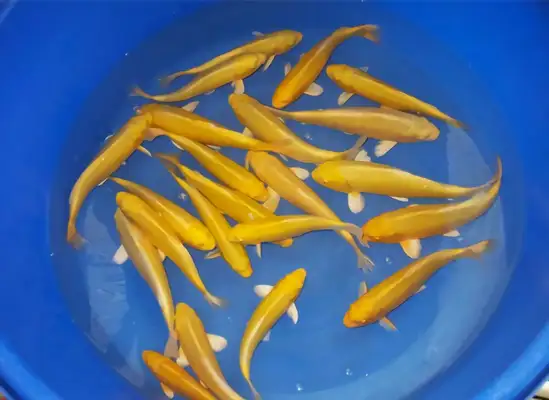
Golden Wall is the golden Wall, very special. Owing to the special characteristics of the Golden Wall, many people tend to feed them as windfish. Since gold walls are meant to generate money, there is also a good claim to be placed in a good place.
Chinese literary name: Golden Wall
Swimming capacity: strong
Latin name: Yamabaki ogon
Context: Animals
pH: Microalkalinity, PH 7.2 ~ 7.5
Area-specific; weak
Climate zone: temperate zone, cold zone
Eating: Miscellaneous
Geographical distribution: Japan
Food: fleas, earthworms, floating algae
Forms of reproduction: the outer shape of the pebbles of gold
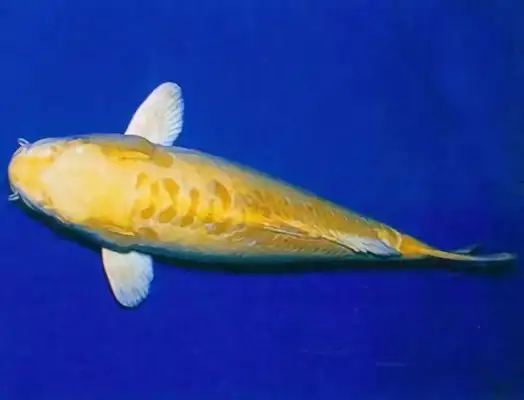
The Golden Wall can be said to be well known by many, and because of its unique colour, many business people use it as a fish. So what kind of wall can you call the Golden Wall?
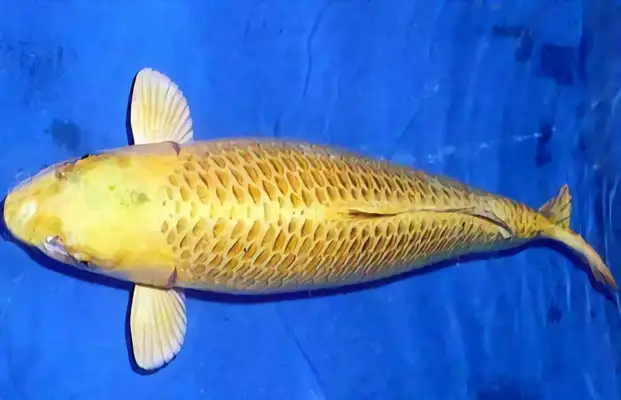
The golden wall, known as the golden wall, is a breed cultivated by the great father and son of Aokizawa, Japan. The main varieties are mountain-blowed gold walls, platinum walls, grey gold walls, etc. The gold wall requires a strong light on the head, and the front end of the blades is luminous, which is described as a “plain” and light yellow. The Golden Wall is full of gold. Its body is full of single gold and yellow, and its slabs are organized and its body is shining like gold. Golden Walling Environment
It is important to keep an eye on the layout of the breeding environment, from water quality to water temperature to the containers to be raised. The water quality of gold walls is particularly important, and although it is not difficult to raise them, attention must also be paid to the principle of water exchange for gold walls.
The time of stabilization of the gold wall is closely related to water temperature. At spring and autumn festivals, water is suitable, water is green, algae are growing well in the water, and water quality is preserved for longer periods of time, using the method of water exchange, usually two to three days at a time, and all water is replaced by approximately 15 days. During summer holidays, water is warmer, algae flourish, generally greener for about three days, and green water for summer festivals tends to lead to scalding tails, so the water is replaced by total water exchange for three to five days. Water is warmer in winter, algae grow slowly in water, and the water color becomes green for longer periods of time, often using water exchange methods. The total period for water exchange is approximately 1-2 months, and the total period for water exchange is long enough to transfer part of the green water into the new water in order to maintain stability in water quality. The water quality is clarified once and for all when aqueous boxes, with a water circulation filter, are raised in the home and usually open for five to six hours a day. During seasons when water temperature is appropriate, water exchange can also be used to maintain the stability of water quality, as well as to keep it fresh, while stimulating the appetite of fish. The gold wall.
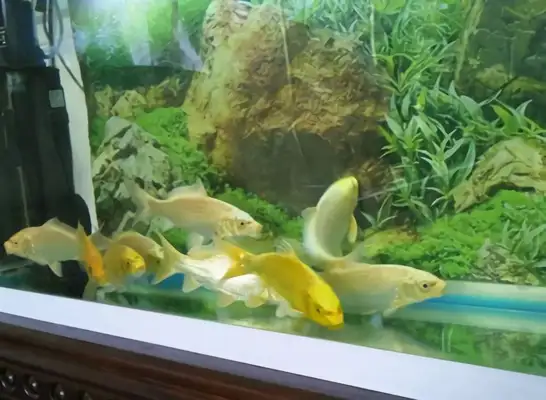
Artificial gold-breeding walls seek to keep gold-coloured, not only in the environment, but also in the principles of baiting, so that scientific baiting and feeding habits can make gold walls more beautiful.
One-year-old gold boulders, which consume approximately the same amount as the head; two-year-old gold boulders, which consume about half the size of the head; and more than three-year-old gold boulders, which consume about one third of their head size. Households can feed their fish once a day with a drop of about 7-8%. Productive observation of fish breeding, spring and autumn festivals, water temperature is appropriate and sufficient bait levels are maintained. New water has just been replaced, a little less bait has been dropped in the first day or two, and when the water turns green, it must be fed in quantitative amounts to feed the gold wall. Gold walls during the breeding season, with a drop of 1/2-1/3 from normal bait. Weakly ill fish, 2/3 less than normal. For fish to be transported over long distances, they are to be replaced by new water, with a one to three-day cut-off.