Designation: PET1703
English name: Rhacophorus bipicactatus
Country of origin: India, Myanmar, etc.
Vulnerability to disease: aqueous disease
Life: An overview of palm leaf palm frog species for about 10 years
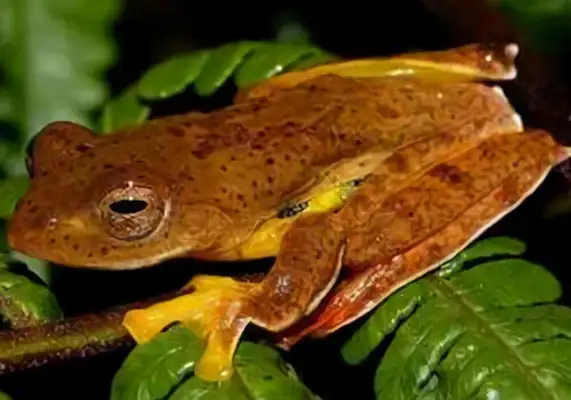
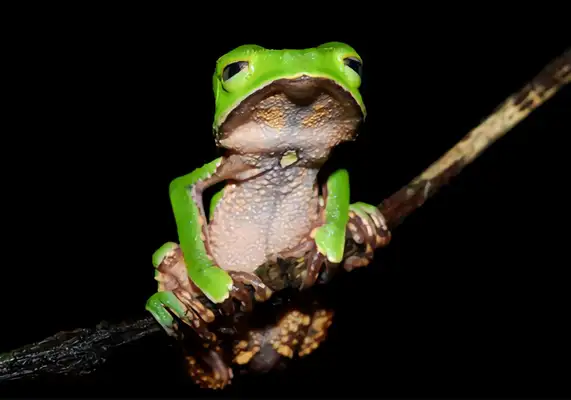
Brown leaf palm frog, one of the tree frogs, Latin called Rhacophorus bipunctus. There are more than 200 frogs in the tree frog section, and one of them is the brown leaf palm frog. Like frogs, palm-leaved frogs are found at best in the tropical and subtropical regions of Asia and Africa, where you are supposed to locate and look for them more specifically, India, Myanmar, Malaysia, etc.
The brown-leaved frog doesn't have any other aliases or nicknames, so maybe you don't have any impressions of that kind of frog in your head, but you must be familiar with their relatives, like the black-haired frog.
There are few brown-leaf palm frogs in the country and it is difficult to find much relevant information on the Internet, and if you are interested in such frogs, there may be other ways to get information (e.g. through consulting experts, etc.).
Brown leaf palm frog.
Context: Animals
Gate: Pipeline gate
Amen: vertebrate Amen.
Programme: amphibious programmes
ANALYSIS: SLUE ASPECTS
Objective: No tails.
AA: New Toad
Section: Frog Section
From Rhacophorus
Castes: A brown leaf palm frog breeds a brown leaf palm frog.
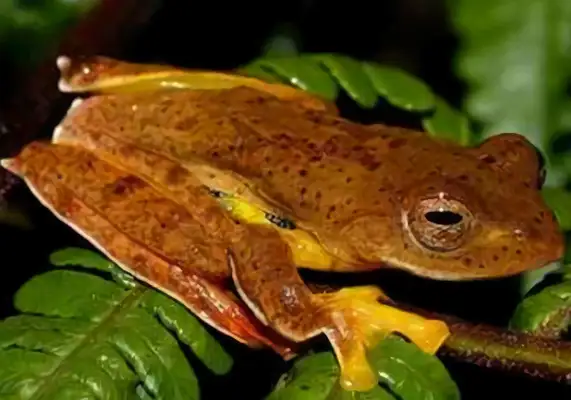
Although we have some 30 species of tree frogs, palm-leaf frogs are not found in the country, generally in Malaysia, India, Myanmar, etc. Like other tree frogs, the palm-leaved frogs use the forest as a habitat, and in order to adapt to life in such a habitat, their fingertips are drawn, so that even if they leap through the trees, they can fall steadily on the branches.
In addition to the suction, the brown-leaved frogs are absolutely well adapted to their environment: Their bodies are small and they are free to move in the forest; their rear limbs are long and strong and can leave quickly in the face of natural enemies.
In addition, a brown leaf palm frog has the same skills as a chameleon -- they change color. When they are close to branches or leaves, they are usually green or light green; when they are on land, they make themselves look close to earth. Such a special survival skill would allow the palm-leaf to escape the eyes of the enemy and seek more chances for survival.
Some friends with knowledge of the frogs know that the eyes of the frogs are large, but they have always shown little interest in static things and, naturally, the palm-leaf frogs. As a result, no matter how delicious it is, as long as it's still, the palm-leaf frog will turn a blind eye. A knowledge of brown leaf palm frogs.
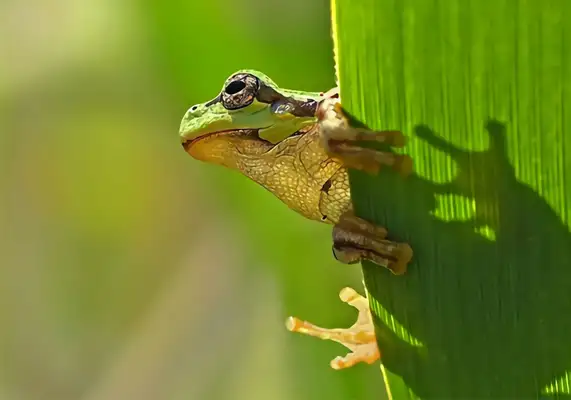
Tree frog.
In order to do their job of providing care to palm-leaved frogs, feeders must first give them a good environment to survive. The conservation of palm-leaved frogs cannot simply leave them to self-destruct in their troughs. The choice of plants, the setting of floors, and the control of temperature and humidity are all problems that feeders have to face, but only by doing so can the brown-leaf frog grow healthy.
When a frogtray is installed, the feeder needs to control the density of the frog in the tank, rather than raising too many palm-leaf frogs in the same tank at once, otherwise they are likely to have problems due to the high density of the frogs, for example, when the number of brown-leaved frogs is too high, the volume of their excreta will increase significantly, and these excreta are likely to cause cross-infection between frogs.
Brown-leaved frogs will also often go into the water, so feed is mainly prepared in advance for a basin at the bottom of the tank. The water in the basin is also periodically replaced, and it is important to avoid the fact that the water has been contaminated but has not been replaced, and the contaminated water is also extremely damaging to the palm-leaf frog. When changing water for palm-leaf palm frogs, care needs to be taken that tap water is treated with chlorine.
It is normal that brown-leaved frogs sometimes chirp on trees, and the feeders need not worry. In addition, the frogs depend on the trees for their livelihood, and their spawning sites tend to choose the branches above the water, and when the fertilized eggs become small, they fall into the water to continue their lives. A brown-leaved frog.
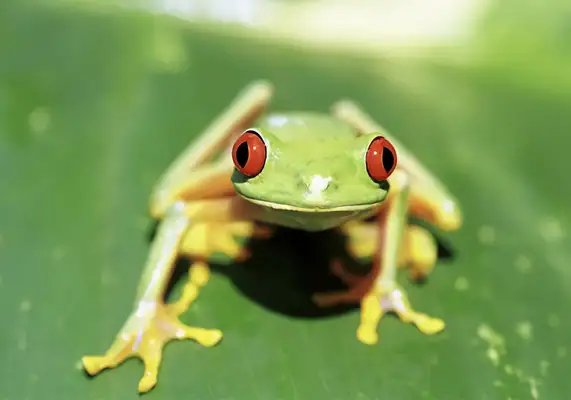
Tree frog.
In order to improve the lives of brown-leaf palm frogs, they are primarily fed with their trachea. The raising of palm-leaved frogs does not include only the conservation of frogs, but also a particularly important task — plant conservation. Because of the natural environment in which palm-leaved frogs survive, feeders are advised to grow appropriate plants. Plants need to be cautious from the outset because otherwise they are likely to cause inconvenience to the work that follows.
The method of choosing plants is to ask the seller what kind of plant they will use, and the feeder will simply follow the painting. In general, the feeder may, as far as possible, choose to plant plants with larger and thicker leaves. Before raising palm-leaf palm frogs, it would be advisable for the feeder to ascertain that the plant is in a stable state of growth and that, if it is new, it is not suitable to place the frog in a frogtray.
When raising brown-leaf palm frogs, the feeder may be able to smell the odour that flows out of the frog ' s cask for some time, the main source of the odour being its excrement. In order to minimize the stench, the feeder needs regular cleaning of the frogtray. In fact, there is another benefit in regularly cleaning up the excreta of frogs — ensuring a better environment for plants and a lower mortality rate.
Because the brown-leaved frog prefers a darker environment, a frogt can be pasted with black paper. However, given that plants require a certain amount of light, the feeders do not place the frogt entirely on black paper. When plants die of atrophy, the feed takes the dead plants out of time and replaces them with new plants to prevent problems with palm leaf palm frogs due to environmental pollution. Brown leaf palm frog breeding requirements
Tree frog.
The brown-leaved frog has never been interested in static food, but if the food is living, the situation becomes completely different, and the brown-leaved frogs lock their targets first and then wait for a perfect hunt. In general, palm-leaved frogs rest during the day in relatively dark places to preserve their physical mobility at night. If they do not want to change their habits, the feeder can feed the palm-leaf frog at nightfall.
For brown-leaf palm frogs, beetles, earthworms and even fly bugs are their ideal foods, but when they float or climb from the front, brown-leaf frogs immediately stare at them, and if they are dead, palm-leaf frogs do not even look at them. Thus, in order for the palm-leaf frog to eat well, the feeder can raise some beetles or earthworms of his own, if he is able to do so.
In addition to the food mentioned above, the feeder can buy bread worms to feed the palm leaf palm frog. Brown leaf palm frogs do not have to feed on a daily basis, usually two to three times a week. Each feeding can be adapted to the size and size of the frog. Because the palm-leaf frog will not continue to feed when it is full, the feeder can find patterns in the long-term breeding process that can help the feeder to better feed the palm-leaf frog.
Sometimes the feeder may not be interested even in giving food to the palm-leaf frog, when the feeder is able to hold the food around their eyes, and most of the palm-leaf frogs use their mouths to feed. And if the brown-leaved frog is more picky, then the feeder may have to think of ways to stimulate their appetites, for example, by changing the type of food.