No.: PET6475
English name: An introduction to the hoplobatrachus tiger-striped frog species
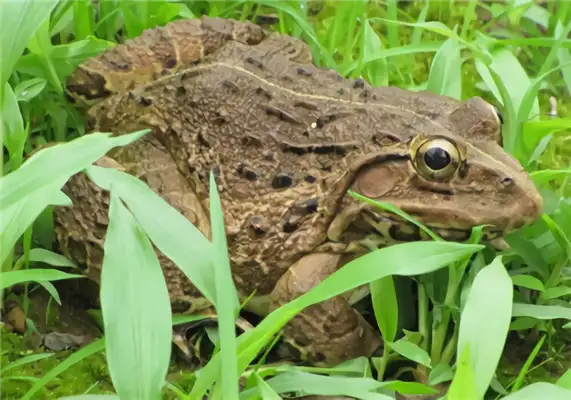
Hoglobatrachus tigerinus, alias a buffalo. The female is a little bigger than the male. Their heads are so big and they're called Asian frogs. It is famous because the stripes on the tiger-striped frog appear to be slightly like tiger skin.
Chinese literary name Tiger Frog
Chinese alias:
Two words: Hopebatrachus Tigerinus
Area: Animal
Phylum Chordata
Amphibia
Anura.
Toad Section Ranidae
It's: Tiger Frog.
Speculation: Hoplobatrachus Tigerinus
Distribution: See South and South-East Asia, China ' s South-West and South-China regions are more widely distributed. The character of the tiger-tweed frog.
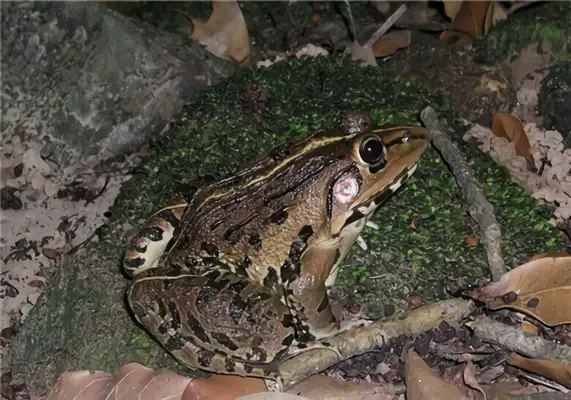
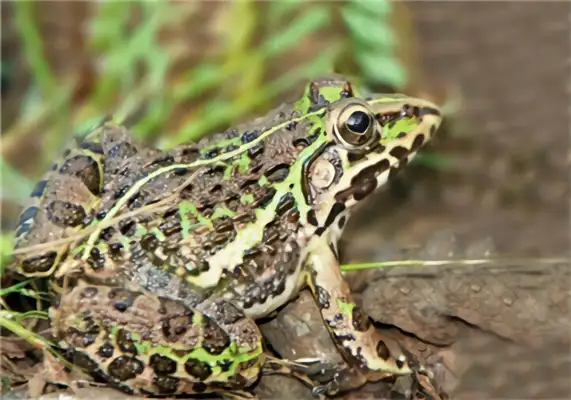
The female is larger than the male, and the adult can grow up to 12 cm. The ideal weight should be between 250 and 500 g. The skin is rough, with dark and irregular stripes on the head and side, and dark and irregular stripes on the head and side. The back is a little brown in yellow and green, with ten rows of vertically organized leather, which spreads small pellets.
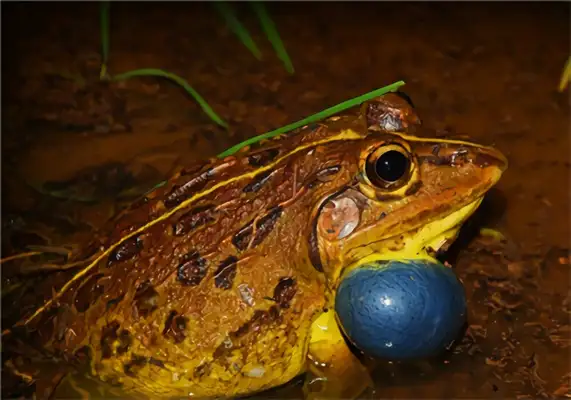
The abdomen of the tiger frogs are white and there are irregular stripes, as well as grey brown spots in the stomach and chest. Back and back limbs are covered. As these stripes look slightly like tiger skin, they are famous. The toes are round, the toes are full. Large front limbs, well developed, grey. The male has a voice bag. Priority is given to animal protection at the national level II.
Head Feature
The head of the tiger-striped frog is generally triangleed, with no clear line between the head and the body manager. The tip of the head reduces resistance while swimming and allows for rapid movement. The mouth is very wide and is generally rarely open except for predators. The eyes are on the back or on both sides of the head. Above and below.
There are eyelids, connected to the eyelids, as well as transmuted translucent membranes that cover the eye while diving. The entry and exit of gases is controlled by the presence of a nasal valve on the outer nostrils, which can be opened at any time. The male abdomen have a pair of light blue cystals on the side of their abdomen, known as the acoustic scrotum, which is a resonator that expands their throats to sound like barking dogs and acts as an attraction to females.
Physical characteristics
There are two limbs in the body. The lower limbs, each with four toes, serve primarily to support the front of the body and also assist in the feeding and swimming body balance. The back limbs are long, each with five toes, and the toes are gills, mainly swimming in water and driving when the land jumps. The body was yellow and black. Tiger-tone frog living environment
Tiger-treading frogs belong to the second category of national protection animals. It is generally prohibited for the protection of animals by the State, and it is illegal to raise animals without permission. So how do we raise these frogs for some breeders?
Tiger-edged frogs prefer to live in a quiet breeding environment, and the water quality of tiger-led frogs must be safe from pollution. The most appropriate growth temperature is 22°C ~ 28°C for tiger-led frogs, which can cause death at temperatures below 4°C or above 35°C. The hibernation begins when the temperature is less than 12°C and ends at 16°C in spring. In the same year, the larvae were raised for six months (May-October) up to about 150 g. The nutrition and flesh of tiger-striped frogs are comparable to those of wild thorn-striped frogs, which are less numerous and more difficult to cultivate and are replaced by tiger-striped frogs.
Winter-over-winter ponds: Water conservation must be good at the time of construction, otherwise the low level of dry water during the winter season and the drying up of the pool can result in large-scale deaths of tiger frogs due to lack of water or freezing. It would be preferable to build hot sheds in the Senbe region, but not necessarily warm. It would be preferable to use a cement pool with a depth of more than 1.5 m, with a water level around 1 m, with a rest platform in the middle of the pool, which accounts for about one quarter of the total area, or with a simple rest table floating above the surface. There are hidden facilities at the bottom of the pool, such as straw, rubble, mackerel, etc., to hide and sleep with the tiger-frog.
Tiger frogs live in caves during the day and should therefore have hidden places inside the pool, such as planting aquatic plants or placing rubble and bamboo drums under the pool. In the management of young frogs, who are most afraid of shock, strong light and are particularly sensitive to changes in the surrounding environment, care must be taken to maintain the quietness of the pool environment and to avoid strong light and exposure during the day. Tiger-tale frogs raise knowledge
In order to ensure the healthy growth of tiger-led frogs, they must be raised in a timely manner to clean up their food and excreta, replace pool water, maintain fresh water quality and reduce the incidence of disease. Sanitation is the first step in ensuring their health, and diet is the most critical, and of course these requirements are the first condition for the success of the breeding of tiger-tread frogs. Here's what we're looking at.
Frog particles fed are appropriate in size to be able to swallow; they are smooth on their surfaces, absorb water softly, are free of excessive salt, grease and odor, are fully nourished and contain more than 38 per cent protein.
In order to combat the heat, the heat should be cooled by adding water, quenching a pool, setting up a sunshield and spraying cold water, while the cooling of winter water should be kept warm and protected against freezing.
Teeny frogs have a habit of eating small amounts of the same number of frogs at once, and in two to three months' time, large individual separation is required.
Single, negative protection measures alone are difficult to solve because of market demands. Actively exploring the techniques of breeding tiger-sniffed frogs, developing them and meeting the market ' s needs to complement protective measures are the most positive and mutually beneficial policies. To this end, research has been carried out on the artificial breeding of tiger-striped frogs, which show that the tiger-striped frogs are fast, growing fast and can take static food without domestication, and that artificial reproduction is simple and an economic animal suitable for breeding.
The breeding period for tiger-led frogs is from May to August. It undergoes in vitro fertilisation in water, hatches the eggs and becomes larvae, with a series of larvae characteristics adapted to life in the water, and changes in morphological characteristics as the stage of development changes, with the larvae being transformed into a frog and then transferred to land life, so its life history includes the three stages of eggs, larvae and frog.