No. PET411
English name: C.mccordi
Origin: Guangxi
Vulnerability: molluscs, fungi
Life: 20-30 years
Description of species of 100-colour closed-hull turtles
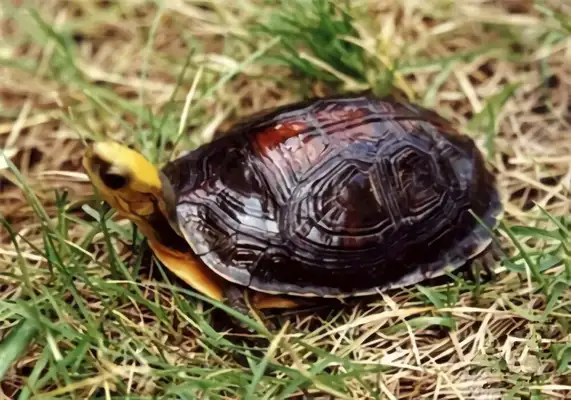
The 100-colour closed-hull turtle is a closed-hull fresh water turtle, also known as the McNugget. The country is located in Guangxi and none abroad. It's a rare and precious watch turtle. Named in August 1988 by C.H. Ernst on the basis of specimens purchased from west of 100 colours near Yunnan.
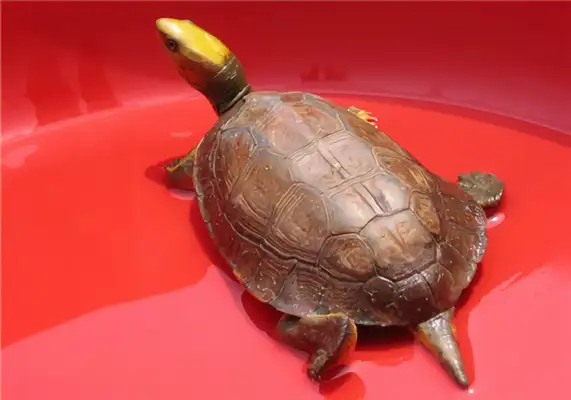
The back is in an elliptical hemispheric shape, the mid-ridge rises prism and the back armour is brown red; the abdominal bottom is yellow, with large pieces of black, which closes; the head is yellow, with a pair of oranges on the black side, and the neck is orange, with very bright colors. Turtles are chronically consumed and are believed to be of medical value and expensive, stimulating large-scale capture. Samples of this model are purchased from the market and are difficult to find in the field because of their known wide distribution.
Context: Animal Animalia
Gate: Chordata Gate
A: Reptilia
Tortoise Testudines
Section: Tortoise Emydidae
Yes: Cuora
C. mccordi 100-coloured turtle morphological characteristics
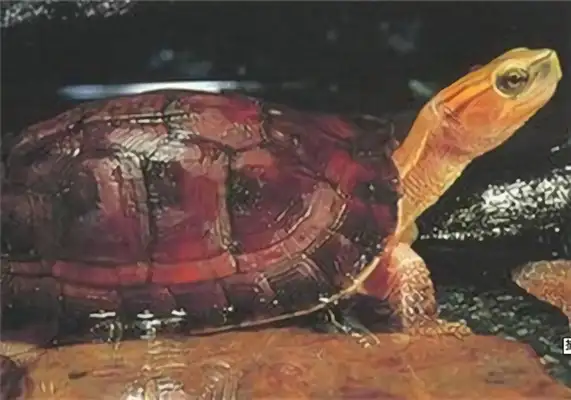
The 100-colour closed-hull tortoises are red red brown, uplifted, approximately 130 mm long and have a low elasticity in the middle line. It is yellow on the edge of the abdomen, with one piece of black stain covering almost most of the abdominal nails; it is connected with a tenor and half of the abdominal nails, which can be completely closed to the back. The fore limbs are stubbed and the back limbs are stubbed. The fingers and toes are stubble. Head yellow, with a yellow orange wake-up tattoo. It's our own kind.
The 100-colour closed-hull turtle's back is about 130 mm long. The back is raised with a low ellipse in the middle line; the upper abdomen are larger, the front end is rounded out and the back end is thin, with a ligature attached to the back of the back, as well as between the chest and the abdominal shield, which can be completely closed to the back of the abdomen, with the longest abdominal greath, with the shortest giraffe and complete anal giraffe.
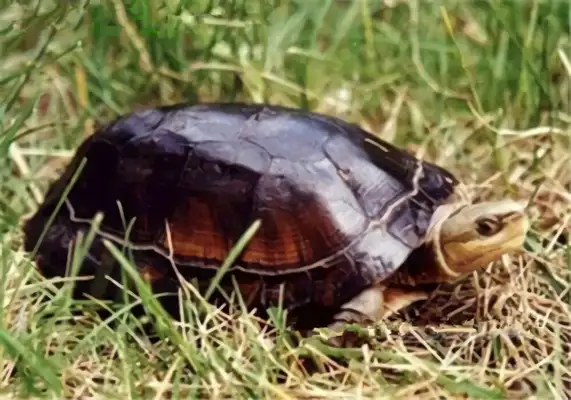
The head size is moderate, narrow, the kiss is slightly higher than the upper beak, the upper beak is flat. The limbs are moderate, the front limbs are covered, the back limbs are covered and the toes of the toes are covered. Red brown on the back, dark brown or black near the guilds, yellow on the side of the acetal, with visible black spots on the abdomen. Green on the head, yellow on the side of the head, orange on the side of the eye, black on the side of the eye, and black on the side of the eye and nostrils; iris or yellow on the side of the neck; orange on the side of the neck and yellow on the side of the neck. Yellow tail, black thread in the back. Knowledge of 100-colour closed-hull turtle care
Information on the life and reproductive habits of 100-colour closed-hull turtles is not yet available. According to William P. McCord, the 100-colour closed-hull turtles have hatched 50 turtles each time they lay, usually 1-2.
Biology: The new description is based on 12 specimens, all purchased from the local population and not recorded in their habitat.
Estimated quantity: No exact data available. The distribution is currently known to be small and small.
Risk factors and the current situation: turtles are chronically consumed and are believed to be of medical value and are now expensive, stimulating large-scale capture. Samples of this model are purchased from the market and are difficult to find in the field because of their known wide distribution.
Rotation status: Mr. William McCord in the United States raised 3 males and 8 females.
Existing protective measures: None.
Further protective measures should be taken: it is recommended that the Guangxi Autonomous Region prioritize the protection of wild animals by the centenary closed-hull turtles; that capture and sale of wildlife be strictly prohibited; that efforts be organized to investigate the extent and quantity of the species; and that biological conservation studies be conducted to provide a basis for further development of effective protective measures. A 100-colour closed-hull turtle living environment
Having a turtle, which is nothing but sunlight, temperature, food, and so on, looks at its natural environment before raising any turtle. It's possible to analyze what kind of environment this turtle needs.
I. Temperature
The 100-colour field is characterized by high temperatures, abundant sunlight and abundant rainfall, but unevenly distributed. Heavy summer rains, flooding, drought in spring and autumn and freezing in winter. When I was in the job, I was in the flat-sum aluminium industry in the 100-colour flat-column district, where I lived for more than a year, where summer was hot, but cooler and sooner or later, cooler than the burning city and colder in winter.
In other words, the temperatures of the 100-colour turtles are highly adaptable and resistant to a certain temperature so that friends in the South can feed directly. Friends in the North need to pay attention to the two temperatures, from October to November and from 15 November and from April to June, because of the lack of heat and the long-term low temperatures, and the need for appropriate additional heating light or protective heating, i.e. a guaranteed temperature of 22 degrees and water temperature of not less than 22 degrees. If you're looking for farming, you can set it a little higher. Like 25 degrees.
Water depth
This is one of the areas of greatest concern and easier access, although 100-color is a water turtle, as is the case with all the closed shells, but in terms of size, 100-colour and yellow edges, and 100-colour claws, which means that it is not a very watery turtle, and in short, half-water turtles are enough.
This is a two-part, inhospitable environment, which is like a yellow-skinned environment, and a large land mass, plus a small water, must be careful to put something in the water, not to roll over when it's in the water, especially when it's in the community. In a warmer environment, water is slightly more, or even more, dominated by water, mainly using water heat, to keep it warm, but water must be shallow, with rocks in the water, a bit of a slope, and it cannot be desired to cause the death of the turtle, after all, with its thick back and hard to turn. The point of 100-colour closed-hull turtle breeding.
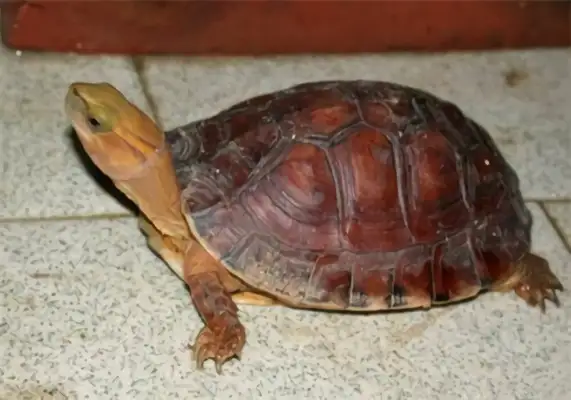
The 100-colour closed-hull turtle is a closed-hull fresh water turtle, also known as the McNugget. The country is located in Guangxi and none abroad. The 100-colour closed-hull turtle is a rare and precious watch turtle. The abdominal bottom is yellow, with large black pieces that close; the head is yellow, with a pair of black orange wake-ups, the neck is orange and the colour is very bright.
The diversity of the food of the 100-colour closed-hull turtles is a permanent theme that can be used to unfreeze shrimp with high-quality turtle food, sometimes with a little milk white. Some food that may be contaminated is not paid for.
The 100-colour closed-hull turtle eats vegetable foods such as fish shrimp, earthworms, yellow powder worms, snails, pickles and guacamole vegetables, barley, maize and sorghum. Artificial feed: mainly feed fish (>80%), shrimp, insects (e.g. breadworms, earthworms, etc.), slugs, snails, etc.