Title: PET3708
English
Character: lively
Origin: Africa
Vulnerability to disease: decomposition
Life: 50-60 years
Price: Description of species of African leatherback turtles
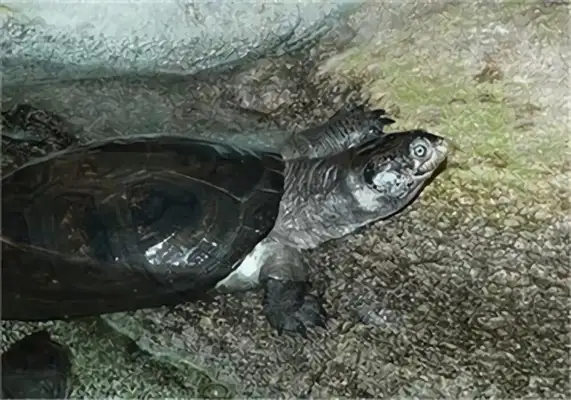
African leatherback turtles are one of the species under the side-crystal turtles, and they don't look easy to distinguish from, they're black and gray, and they're not colorful enough to attract attention and affection. The number of people raising African leatherback turtles is low, and therefore the market is rare.
Chinese name: African Prism Turtle
English
Latin name: Pelusioscarinatus
Geographical distribution: Africa
(c) The manner of reproduction: the spawning, which can produce 1-9 eggs for about 65-86 days, can hatch naturally. 3-4 eggs per year
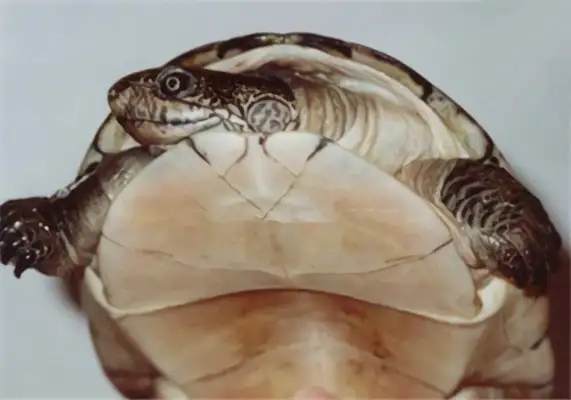
Appearances: back armor high, grey, black tail, sawn teeth; abdominal acetal yellow, often with black edges; prominent kisses with two short beards for the head of the chin.
Classification by species: turtles
The most widely distributed of these are found not only in the African continent, but also in the island of Madagascar, where the most widely spread average-side turtles not only span almost the entire distribution of the African-side turtles, but also cross the Red Sea to the south-west of the Arabian Peninsula, becoming the only existing Asian sub-proximity of the tortoises, as well as the most existing northerly. Characteristics of the African Prism Turtle Form
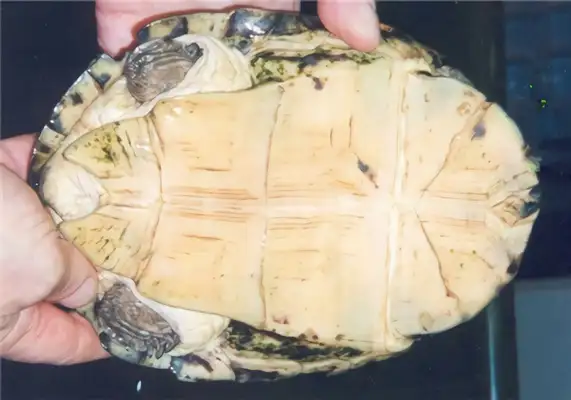
African leatherback turtles are a branch of the African side of the neck turtle, with black, flat and larger backs, an unrecognizable turtle that is less visible on the market and less expensive to breed and less well known.
African leatherback turtle shells are flat, gray or near black. Armours are usually milky. The tortoise has an angle in the center of its shell and has sawn teeth on its outer edge, but it disappears as it grows older. Their skin is close to the color of the turtle shells, with red marks on the neck and lower. The male has yellow marks on both sides of his head, but the female does not, and his tail is long and thick.
Africa's leatherback turtles are one of the world's most moderate water turtles, and they are very elegant in swimming and feeding. They are well adapted to the rearing environment and are happy to take food from the hands of the feeders. In the 1970s, they were once in the best position, and today they are listed in Appendix II of CITES. The decrease is due to the trade in pets, the loss of habitat and the consumption of these large turtles and their eggs by indigenous peoples. African Leatherback Turtle Conservation Knowledge
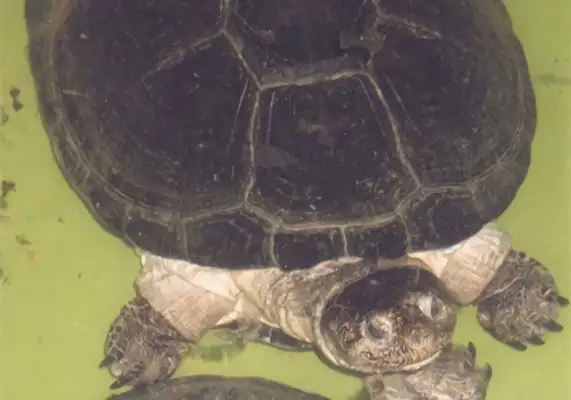
African leatherback turtles are not difficult to raise, usually a semi-aquatic turtle, so that when raising, they provide an environment where water coexists with land and do not disturb it, and the choice of food is as diverse as possible.
I. CONTEXT OF LIFE
African leatherback turtles are the most widely distributed turtle species. It's a small, semi-aquatic turtle. They usually live in water ponds. In the dry season, they go into the bottom mud to sleep through drought. They are therefore highly resistant to changes in the environment and food, and highly populated, and highly healthy water turtles. However, most imports are of wild individuals, with more frequent dehydration or turtle-lace injuries.
II. Livestock
In general, Africa's leatherback turtles are impregnable turtles, with a high level of food appetite and a high level of food consumption, with common shrimp herbs as their main staple, and insect earthworms as welcome foods. They even work together to feed small birds or reptiles in water, and feed them well with general water turtle feed or fish feed. Vegetables can also be fed occasionally. The tolerance for low temperatures is higher than for the general tropical turtle category.
III. Reproduction patterns
Females are easily identified, their male size is smaller, their tail is thick, their female turtle is large and their tail is small. Africa's leatherback turtle is a multi-yielding turtle, with female turtles producing several eggs per year, averaging 10-15 eggs per nest. Females were able to lay their eggs in a pit of almost the same depth as their nails, thus avoiding the high temperatures caused by the strong sun. It is worth mentioning that the eggs of the mosaic-backed mackerel in Africa are laid with a wet slime on the outside and will become very hard to protect against water and insect eating. Newborn turtles are darker and strong and fast growing. African Prism Turtle Living Environment
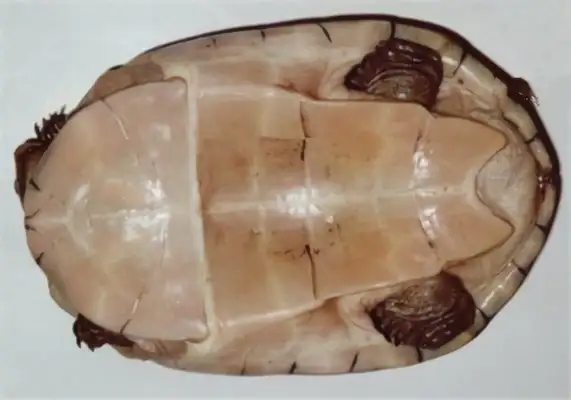
African leatherback turtles are less environmentally demanding, and African leatherback turtles like sunbacks and swim, and their backs are large, so it requires a relatively large environment that guarantees both the scope of activities and adequate rest.
I. RESOURCES IN ENFORCEMENT
Due to the size of the species and the high level of sunscreen, it is necessary for larger individuals to have reliable sunscreen sites. It is highly hydrogenic and can climb out of the water only when it is sunken and spawned. Strong heat lamps and UVB lamps are also necessary for these mild-side neck turtles. They are healthy, but sensitive to low temperatures. Water-sink heaters are required outdoor facilities and must not be less than 60F.
II. Recommended breeding environment
For smaller males, at least one 100 gallons of water tank is required, while for larger females, 160 gallons is required. They're good at swimming, so it's better to have large sites like ponds and ponds. The water needs to be as deep as possible as the turtle can get out.
III. Whether or not to live with other turtles
The African leatherback turtle is mild and usually able to stay with other South American turtles in close proximity to other breeding requirements. African Leatherback Turtle Feeding Point
The fact that African leatherback turtles are impurity and the choice of food in the field is complex makes it necessary to provide relatively abundant foods in the context of artificial farming and to ensure that changes in water quality are taken into account when feeding animal feed.
I. Food options for artificial rearing
Tortoises eat a variety of invertebrates, fish, granular turtle feed and fish feed. And a lot of aquatic plants. Tortoises are edible and are accepted if they are given particulate feed and protein. Food for high proteins does not need to be provided on a regular basis for the adult body. A small amount of grain feed can be fed once or twice a week, with a significantly higher percentage of ground turtle feed than water turtle feed (the latter containing higher proteins). There should always be sufficient aquatic plants and green leaf vegetables in the tanks, as well as diversity of varieties.
II. Attention to feed
Although African leatherback turtles eat all kinds of food, the constant feeding of cheap and low nutritionally valuable foods can lead to malnutrition and must be particularly careful. Africa's leatherback turtles require large quantities of calcium and should be fed with large amounts of calcium. The recent introduction in the market of nutritionally balanced feed for turtles is reassuring. Once in a while, fresh food such as boneless fish, snake meat, mice and so forth will be the favorite of African leatherback turtles. Feeding fish, meat chips alone leads to malnutrition and requires the addition of water soluble nutrients.