Designation: PET564
English name: philairei
Character: Wimble
Origin: Argentina, South American region; Brazil; Uruguay; Bolivia.
Vulnerability to disease: Decay
Life, 30-year-old, 40-year-old heiside turtle species.
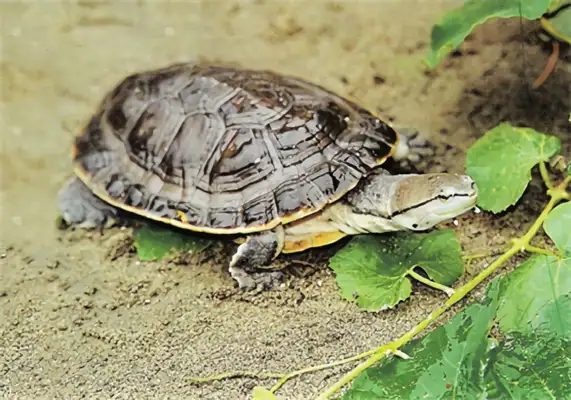
The Hirsch turtle, also known as Hilari, is a side-necked turtle, a species that is more affected by ambient temperatures, whose state of life is highly correlated with temperature, and which is difficult and difficult to raise, and is therefore not suitable as a primary turtle.
Chinese literary name: Hillary Tortoise
Chinese aliases: tortoises; tortoises; tortoises.
English name: philairei
Two names: Phrynopsnbsp philari
Context: Animals
Gate: Pipeline gate
Programme: climb
Tortoises.
C: Turtles
Yes: Tortoise
Cyclops.
Distribution: Argentina, South American region; Brazil; Uruguay; Bolivia.
Appearance characteristics: Black wires on both sides of the heath's nose, eyes and head have been extended to both sides of the force (some individuals have a black line fracture), with a pair of tentacles under their chins.
Reproduction habits: Heidex turtles are aquatic animals with multiple spawnings; generally, the first spawning occurs at the earliest in mid-May and at the latest in the first half of June, during the days before and after autumn, and during the period between man and summer.
(b) Lifestyle: Residency in vegetation, soft grass, marshes, lakes and ponds. More activity occurs during the day, with natural habitats in the waters of the Amazon tributary, watery marshes, etc.
Eating: Heidex turtles are carnivorous, with a variety of foods to be fed by hand: riverfish, shrimp, milk rats, snails, earthworms, crickets, corn worms, small non-toxic frogs, and small amounts of seafood and shellfish. It's a feature of the Greek turtle.
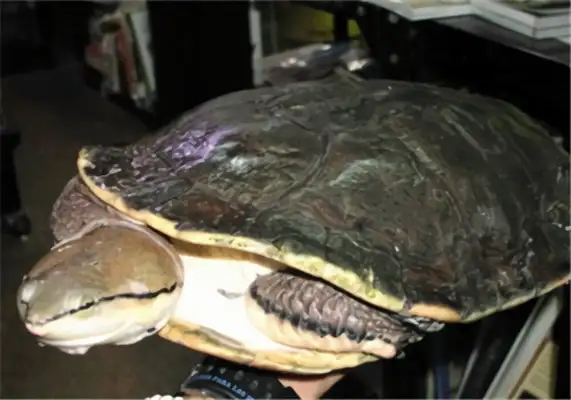
The Hirsch Tortoise is a relatively large species of water turtles, and the back armour is not as round as the normal water turtles, and the hexer turtles' backnails are condensed, their necks are longer, and the whole look looks weird, and as the body grows, they turn round.
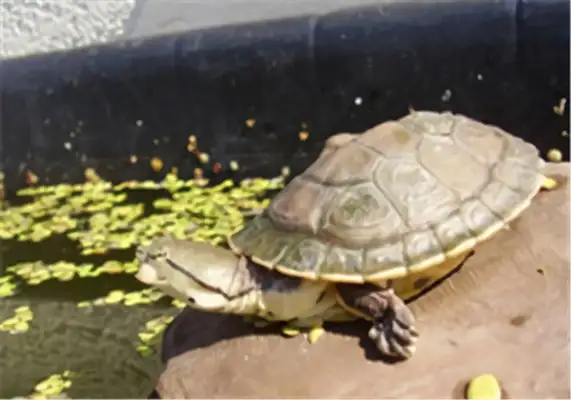
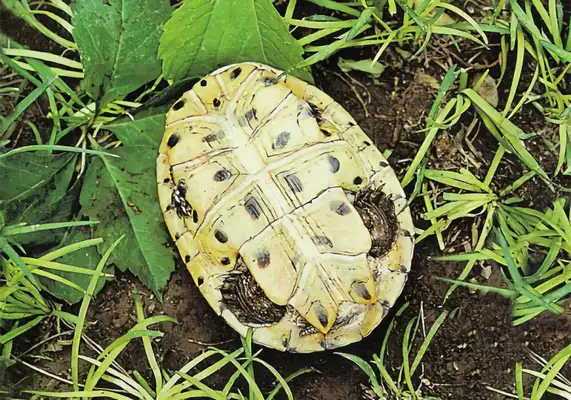
Heidelium turtles have an elliptical tan on their backs, flat on the top of their backs, light yellow on their edges, and round black spots on each of their abdomen. The abdomen are yellow, each of which has a black irregular spot (shaped in circular shape, heart shape, etc.) and the congeals separate their throats but not completely separate them. Larger, flater, slabs, grey on top, a black stripe from the nostrils, through the eyes, through the drumming membranes, and extended to the neck, the throat, and the abdominal milk white, with a pair of black-and-white tangles in the centre of the jaw. The back of the limbs is grey, the abdomen are white, the fingers and toes are well developed, the front limbs are five claws and the back limbs four claws. Short end.
The gender division of the Hizzi turtle is based mainly on body-shaped differences. The males are big, have long limbs and have thick tails. She's big and short. The heath turtle is the largest of the medium-sized turtles, with a back armour of up to 40 centimetres. The rate of growth is fast, so the daily intake of bait should be moderate; otherwise, the turtle's back is susceptible not only to appearance but also to cartilage. Heathlord Care Knowledge
The growth of the Hirsch turtle in nature is self-regulating to adapt to changes in temperature, such as flight from sunlight, hibernation, etc., but in the case of artificial breeding, the conditions do not make the turtle self-regulating, which makes it difficult to control the master temperature.
Heather turtles are thermogenic and are sensitive to changes in ambient temperature. Its diet, activities, etc. are influenced by ambient temperatures. Owing to the limited heat produced by the metabolism of turtles, they lack control mechanisms to retain the heat in their bodies. In order to overcome this deficiency, the Hirsch Tortoise relies on finding cold or hot places to control temperature fluctuations on a daily basis.
The physical and mental health of turtles can be assured only if the artificial small ambient temperatures of the turtles are consistent with natural habitats. Temperatures are generally 27 ~ 38 °C for tropical turtles, 20 ~ 35 °C for temperate turtles and lower ambient temperatures for semi-aquatic turtles. Some of the die temperatures of the Hizzi turtles are around 5°C above the appropriate temperature limit. When temperatures are low, turtles are inactive (matrix voltage).
For the purpose of breeding turtles to be fed artificially, they should be protected against excessive or large fluctuations in ambient temperatures. When temperatures are around 10°C, the Hirsch turtle begins to hibernate. Temperature rises to about 15°C, and the hexie turtles start to operate, and some can even start eating. It is customary for the feeding and activity of turtles to be normal at 25°C. Temperatures around 30°C are the best feeding, activity, growth temperatures for turtles. So, in the country ' s Mid-Range downstream region, the months of April to October each year are the feeding and activity period for turtles; the months of November to March of the second year are the hibernation period for turtles. The Hexling Turtle Living Environment
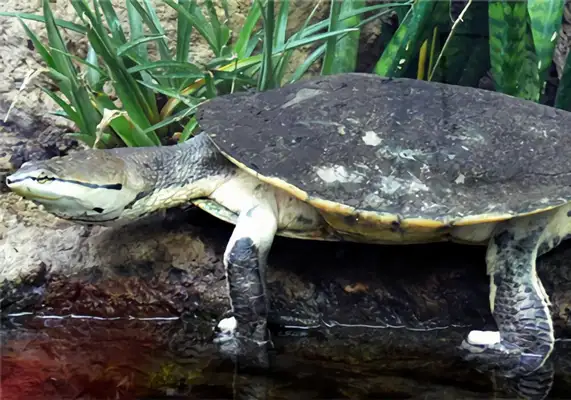
It is more demanding for the environment, which is usually a large, long turtle, so it is first to choose a large enough container to feed, and secondly, to adapt to the behaviour of the turtle for the environment.
I. HEZE TORTURE CONTEXT
Since the form of the hexium turtle can grow to 35 to 40 cm, and the water is very watery and dynamic, the preferred is, of course, a glass tank that compares squares, which are easy for turtles to move and to see. The larvae water level is not too deep, more than 2 to 4 times the back of the mantle, and the submerge and adult water level is 6 to 10 times. Water can be filled with rest platforms and climbing objects, preferably with water-quality filtration systems, so that the odour of water can be felt more securely and the water quality can be kept clear.
II. HEZE TURNING
It is also a good option to provide a 5 per cent UVB lamp, with a 4-8 hour UVB light time, without daily exposure if conditions are not available. A suntan spot is also available. A UVB lamp tube and a heating light bulb are to be installed above the backpoint. If the water temperature is below the recommended standard, then the recommendation requires a water-sink heater. They're good swimmers, so the water should be as deep as possible. The point of the Heiss turtle.
The ground turtle is a meat-eating turtle, and in the wild they rarely eat plants, but in an artificially raised environment they sometimes eat vegetables, but very few of them are adapted to turtle food or to turtle feed, usually with live bait.
I. HEZE TERRORISM FOOD BETWEEN
Hirsch turtles are greasy turtles, but in the wild, they are meaty, fed by small fish, insects and worms. However, it has also been found that very few individuals take aquatic plants. There is a variety of foods to be fed by hand-fed fish, shrimp, milk rats, snails, earthworms, crickets, cornworms, small, non-toxic frogs, and, occasionally, small amounts of seafood and shellfish, and wild individuals who eat some aquatic plants or fruit falling from trees, so that, under artificial conditions, fruit, vegetables, which are more common in the past to be stuffed in herbal foods, or fed with insects as vegetarian nutrients. Its unique predatory posture can be appreciated by providing fresh food.
II. ELEMENTS FOR HEAVILL TORTURE RESTORATION
He's so hot and cold. At 17-20°C, only a small amount of food is eaten, at 22°C and above, which increases with the temperature, increases the temperature of water about 15°C, and is prone to death from disease when living at temperatures below 10°C. Meaty and food is dominated by small animals such as fish, worms and snails. Under artificial rearing conditions, there is a preference for small fish, meat, shrimp and mixed feed. The rate of growth is fast, so the daily intake of bait should be moderate; otherwise, the turtle's back is susceptible not only to appearance but also to cartilage.