Designation: PET4037
English name: arantula
Vulnerability: eating diseases
Life: Overview of goldback varieties in Mexico 4-5 years
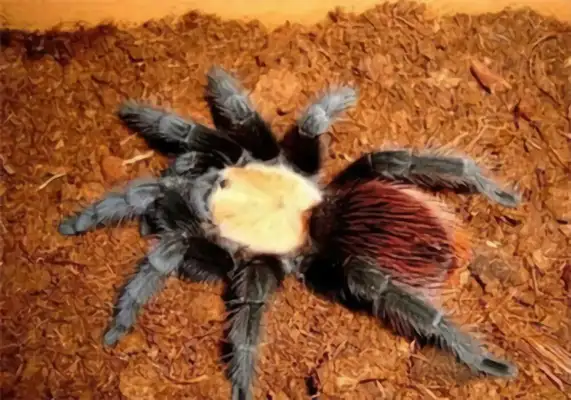
Anantula of Mexico is a toxic desert spider with a life span of 29 years. They are toxic spiders, but they are very gentle, so more people are willing to raise them as pets. It's called the Golden Spider.
Chinese literary name: Goldenback, Mexico
English name: arantula
Latin
Don't call it a blonde spider, a desert spider, a Western wolf spider.
Context: Animals
Gates: arthropod doors
Platforms: spiders
I'm looking at spider eyes.
Section: Bird-catching spiders
Family: Coyote
Region: North America ' s Sororá Desert, Arizona, United States of America, Baja California Bay, Mexico
Named by Chamberlin, 1940 Mexican golden back morphological feature
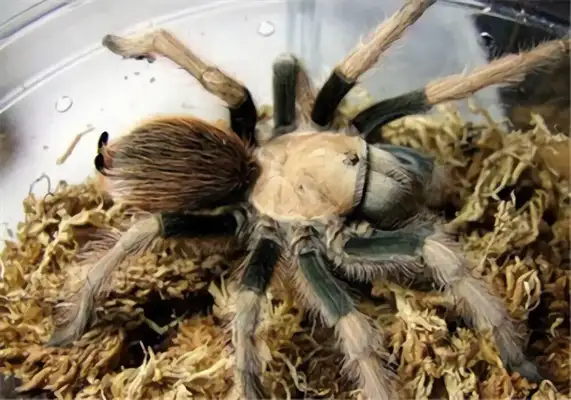
In addition to having a particularly visible back of gold in the back of the body, Mexico ' s huge fangs are also very well known, and those who have been bitten by his torn teeth can feel the pain and bleeding and may even be infected.
Mexican goldbacks are a spider in bird spider hunting. The length of the body ranges from 3 to 4 inches (70 to 100 mm) and life spans up to 20 years. The female is usually a single-coloured tan. Male black legs, head, chest and abdominal copper red. Their caves can be as large as 1 to 2 inches (25 to 50 mm). These spiders, born in the tropics of the Americas, are toxic and all have huge fangs to catch food such as birds, rats and lizards. Mexico's gold-backed living environment
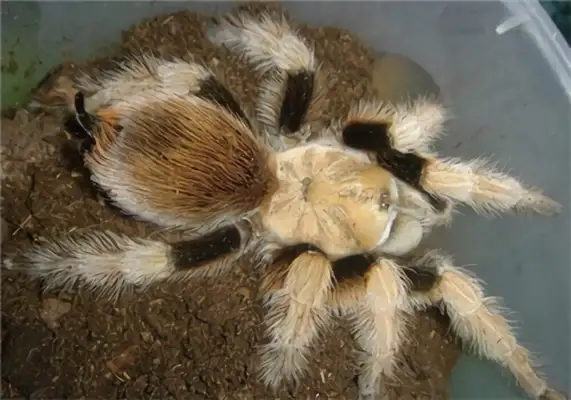
The golden back of Mexico is a typical night predator, and during cold winters, artificially raised animals are forced to insert soil and rocks to survive in a relatively dormant state, during which animals consume their own reserves of fat. What about the circumstances in which Mexican gold survives and thrives?
Control temperature is around 25 degrees, not less than 20 degrees, humidity is between 50 and 80 degrees, using coconut mats, which can be wet on the dry side, larvae fed on a two-day basis, small live foods, usually not more than the size of a spider, can be used for bread worm larvae, etc., large individuals can be fed live foods such as cricket cockroaches, large individuals can be fed twice a week, less disturbed by shock, often ventilated to avoid soft feet and extremely difficult to raise. Mexican gold-backed knowledge.
The hair of the gold back of Mexico is irritating, and the main reason for this congenital hair is that, in order to protect itself, the enemy, like an enemy, removes this natural itching powder from the enemy's back leg and causes the enemy's whole body to tick. The back of Mexican gold usually changes once a year, and every time there's a female Mexican gold spider, it stores sperm in an external female. During the summer rainy season (July, August, September), men usually look for a spouse. Male spiders do not survive long after summer mating. Sometimes a female eats a male, or another predator kills a male. The common male lives only a few months after mating.