Designation: PET3691
English name: L. Arcicus
Character: Strong
Origin: Arctic, North America, Northern Europe, etc.
Vulnerability: ballworms
Life: 5-6 year Arctic rabbit species profile
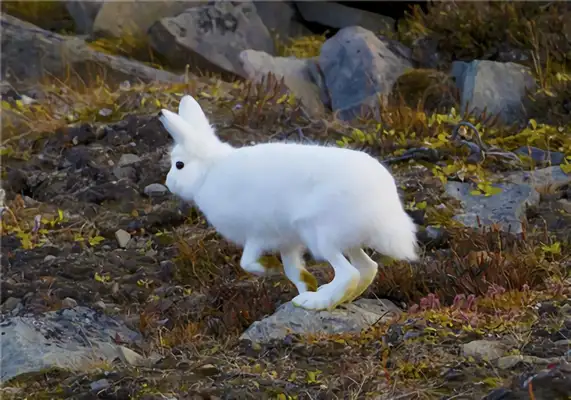
The Arctic rabbit, a rabbit living in the most northern part of the country, is an extremely resilient rabbit and can adjust its hair colour to changes in the environment. Winter is a white, thick fur, summer is a grey, thin coat that complements the colour of the environment, which is a purely natural protection colour.
Arctic rabbits are rabbits adapted to Arctic and mountain environments. Arctic rabbits smell nice, fur is precious. The Arctic rabbit is bigger than the rabbit, is obese, has smaller ears and back limbs, and some have no tails. In different regions, the Arctic rabbits have also become rabbits or blue rabbits and have been considered sub-species of snow rabbits. Arctic rabbits have a fragrance that reduces thermal energy loss to adapt to the Arctic environment.
Chinese literary name: Arctic Rabbit;
Latin: L. arcticius;
Not to mention: rabbits, blue rabbits;
(a) Gate: vertebrate door;
Programme: Lactation programme;
(a) Headings of rabbits;
Section: Rabbit Section;
(a) A rabbit;
(a) Arctic rabbits;
Distribution areas: Arctic, North America, Northern Europe, etc.
Main foods: moss, plants, roots;
Lifestyle: Arctic rabbits belong to a herd of animals, usually with an Arctic rabbit circle ranging from 20 to 300. In addition to communicating in body language, Arctic rabbits wear smart noses to smell dangerous information around them, and they leave special smell signs to provide peer identification information. Characteristics of Arctic rabbits
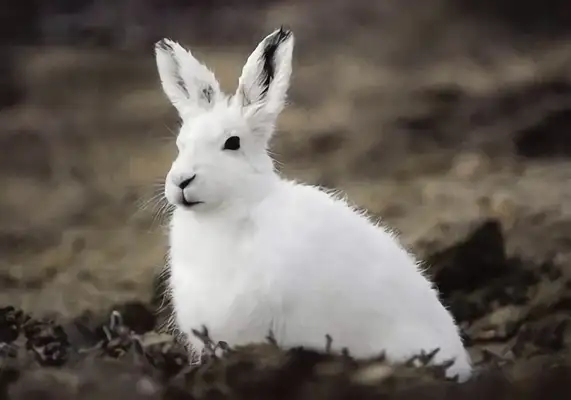
The look of the Arctic Rabbit is cute, it's a hard-to-identify rabbit, the northern part of the country is covered with snow all year round, the Arctic Rabbit is white, the southern part of the country is brown and the Arctic Rabbit is white when winter comes, and it is invisible if it is not self-confident.
The size of Arctic rabbits is larger than that of normal rabbits, and their larger, obese size also means that they can store more fat and heat in their bodies to counter the cold. The ears are small, but the limbs are very strong and flexible, and on average the Arctic rabbit can move about 40 miles. In the event of danger, the Arctic Rabbit stands up and jumps with only its rear feet.
The Arctic rabbits have large soles and long hairs beneath their soles, which not only adapt to cold snow but also facilitate run-off on snow, but also effectively reduce the pressure on their soles without too much downfall at the time of movement, and are therefore nicknamed snowshoe rabbits in North America.
The arctic rabbits have a fairly large volume of hair, and they have two layers of covered hair, with a shorter and thick lower layer, which can keep warm, while the upper layer of hair is thicker, softer and loose, so they can act like a shield against cold temperatures and avoid slime. Arctic hare care knowledge
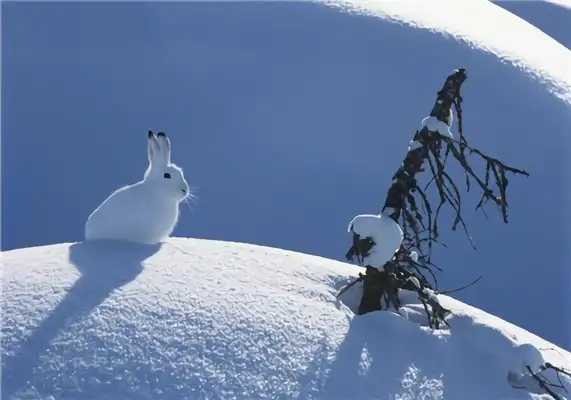
The Arctic rabbits live in worse weather environments, and no one has ever tried to raise such a creature. Although its fur is good and its flesh is fresh, hunting is also a difficult thing, so the number of Arctic rabbits has not been drastically reduced.
In the Arctic, a slightly larger herbivores are rabbits, but their numbers are much lower than those of rats. In the interior of the United States, groups of rabbits are often seen running in fields. But walking on the Arctic savannah, even with cars flying, the number of rabbits seen is very limited, and the number of foxes not seen is high.
The Arctic hares are not very fertile, and because of the climate and food constraints, they produce only one nest per year, with only two to five nests, but their survival rates are high, so their numbers are stable, not as large as that of rats, and they go to suicide groups, and certainly not as high as that of rats.
The Arctic rabbits are not included in the protection of endangered animals, but people still need to protect this vulnerable organism, which, if it is already scarce, can become a problem to start protecting again, and now that the number of Arctic rabbits has stabilized, we try to stabilize it. Arctic Rabbit Living Environment
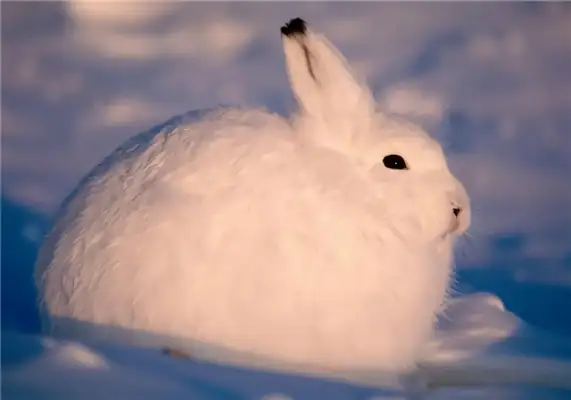
Arctic rabbits live in cold areas, mainly on the ice sheets of northern Canada and Greenland in North America, known as the Arctic Rabbits because of their proximity to the Arctic and their harsh environment, which is a resilient organism that has adapted to extreme weather over thousands of years of evolution.
The names of Arctic rabbits vary, ranging from rabbits or blue rabbits to snow-shoe rabbits in North America. Because in North America such rabbits are not only large hoofs, but also have long hair below them, which helps to reduce pressure and does not easily sink even in snow. Such rabbits have a common feature, or survival trick, that they can change their hair color with seasons, and the three seasons of spring, summer and autumn are brown and white from winter to winter. This not only makes it easier to disguise, but also provides an optical reflection that makes it difficult to detect by natural enemies.
In addition, there is an extreme tactic in the Arctic, which is also necessary for survival, for young children to be able to produce. And the baby of the rabbit always closes her eyes and can't see until 12 days later.
The Arctic rabbit is also able to survive in this weather by virtue of its thick fur, which can be isolated from the cold, large and strangely thick, with white hair turning into its natural protective colour, which, although living at the bottom of the food chain, remains strong. The point of Arctic rabbit breeding.
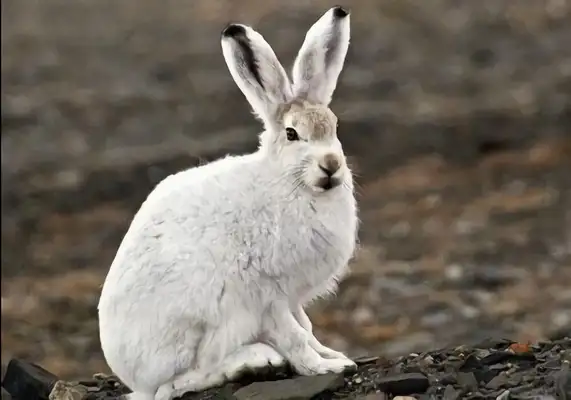
The Arctic rabbits live in extreme weather areas, which are covered with snow all the years, and only a few times the sun shines on the ground, and some green plants grow. Is that what Arctic rabbits do for a year? What's the Arctic Rabbit eating?
Arctic rabbits in the wild feed on moss, plants and roots, but some Arctic rabbits occasionally eat meat. But how did they find food in the thick snow? In fact, they can smell where the food is, then excavate it with powerful and sharp claws, and use them to dig holes in the ground that can hide it. Arctic rabbits have a high survival rate, although they have low fertility.
Unlike rabbits in the Arctic, young rabbits in the Arctic can see things at birth. On the other hand, in spring and summer autumn, Arctic rabbits were probably gray, blue and brown, and in winter they became white, dressed in the growing environment, and the Arctic rabbits were free to become sick to adapt to the harsh growing environment, although the part of the tail was white all year round.