Two core difficulties in the breeding of chameleons are often stress management and dehydration treatment. Doing so would significantly improve survival and health. The following is a comprehensive response programme for family breeders, which contains a list of priorities, specific recommendations and milestones to help you build a stable, low-resilient conservation system.
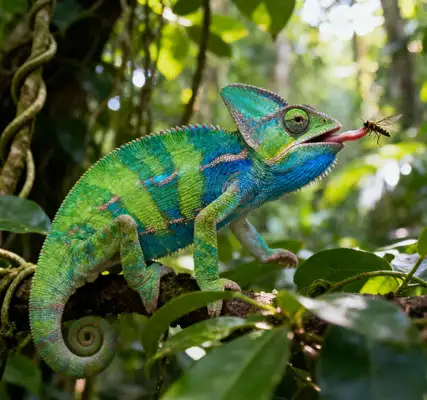
Content-focused environment stability and low stress: Chameleons are highly sensitive to environmental changes, and minor changes in humidity and light can trigger continuous stress. Adequate and manageable water supply: Dehydration is often a hidden threat and rapidly deteriorating if chronic water intake is inadequate. Observation and documentation-driven care: Systematic recording of weight, drinking water, defecation, feeding and behavioural changes, early detection of abnormal signals. Gradual intervention and professional synergy: establish a safe transition between home-based care and veterinary guidance, with diagnostic examinations and treatment if necessary. Long-term prevention is fundamental: regular routine care, periodic health assessments and environmental optimization to reduce stress sources.
Recommended measures (elements version) Environmental and Temperature Gradients: The main day temperature is about 24-28°C, and the temperature in the daylight bask area is 30-32°C, which is reduced to 18-21°C at night to avoid excessive temperature differentials. Humidity management: The target is 60-80 per cent relative humidity (depending on the variety, for example, that some chameleons must be kept at around 60 per cent drying) and stable humidity fluctuations are achieved through aerosols, wet discs and water-jet systems. Light and UV: Provide a UVB light source for 10-12 hours, with regular changes of beads to ensure normal skin calcification and metabolism. Ventilation and hideout: Enclosure needs to be ventilated but adequately covered, with multiple hideouts and supporting rest points to reduce sudden noise and visual irritation. Water and dehydration treatment for observation of urine: frequent examination of eye nests, skin elasticity and dampness of saliva membranes, requiring immediate intervention in case of dryness, eye dents and reduced skin elasticity. Passive dripping resonance with humidity: The dripping system allows the dripping slowly to fall into the basin or drop directly on the plant leaf, maintaining environmental humidity and encouraging drinking water. The drip rate is based on a drop of about two seconds and is too strong. Bathing care: 5-15 minutes per bath, water temperature 25-28°C, ensuring that at least half of the back is covered by water, and that dry towels are applied to water after bathing. Oral rehydration programme: If there is a continuing risk of dehydration, the veterinary doctor is consulted on the use of reptile rehydration programme (containing electrolyte and glucose) approved by the veterinary doctor, which is described as a drug; the self-formulation of high salt/high sugar liquids is avoided and the kidney burden is prevented. Promotion of edible moisture: the provision of hydrogenic active insects before and after feeding, combined with sufficient water before and after feeding to help with water intake. Eating and metabolic diets: small amounts of food, priority for fresh living insects (e.g., small vermin, fruit flies) and a focus on fully nutritious, nutritious prey to prevent hunger from causing stress. Hydraulics and nutrients: Provide water before and after feeding and, if necessary, by drip feeding or micro-infiltration fluids, avoiding a one-time overdose that causes vomiting or misadventure. Stress source identification and pressure-relief strategy operations are minimized: unnecessary capture and frequent transfer are avoided; tools are prepared in advance to reduce exposure time when inspection is required. Observatory behaviour: To record daily activity levels, appetite for feeding, hysteria, vigilance, etc., and to be vigilant in cases of persistent low activity, rigidity or marginalization. Sound and light speed: Keep the environment quiet and avoid the direct or rapidly changing light rhythm. Diagnosis and medical indications show marked dehydration, denial of food for more than 2-3 days, continuous thirst without significant improvement in drinking water, loss of weight, deep eyelids and loss of skin elasticity. If there is a suspicion of a combination of metabolic diseases, respiratory infections and so forth, contact a professional veterinarian and perform necessary tests such as blood tests, ultrasound, X-rays, etc. Long-term preventive fixed inspection forms: weekly weighing, biweekly measurement of body temperature and humidity, monthly assessment of feeding and drinking water effects. Stability training: Establish a fixed feeding and cleaning schedule to reduce pressures from environmental fluctuations. Post-disease recovery programme: in the event of dehydration or stress, the period of gradual recovery is gradually restored to its original level of care.
Provide a complete set of response options (phased list of actions), phase I: 0-24 hours (emergency assessment and stabilization) to record basic data: weight, food, drinking water, defecation, activity level, photo comparison. Adapting the environment: Ensure that the humidity is in the target zone, closes the sources of interference and provides cover. Upgrade: 5-15 minutes of bathing followed by a drip feeding or oral rehydration (if approved by the veterinary doctor). Low-intensity observation: avoid heavy capture and removal within 48 hours, focus on environmental stability and water recharge.
Phase II: 24-72 hours (enhanced moisture and pressure management) progressively increases the frequency of feeding, but is based on digestible, wet prey, which is associated with water intake. The drip system and humidity control are maintained to ensure that the humidity fluctuates between 60 and 80 per cent, but to avoid hyperwetization leading to fungus or pathogen reproduction. In the absence of any significant improvement, or in the event of a continued denial of food and a decrease in body weight, immediate contact with the veterinary doctor may require further examination or intravenous/pelvic rehydration.
Phase III: After 72 hours (assessment and long-term plan), if dehydration is mitigated and body weight is stabilized, enter regularized care and continue to weigh and evaluate water and feeding effects every two weeks. Systematic screening of pressure sources: suitability of the environment for the species, stability of the solar cycle, external interference. Setting long-term prevention goals: regular care schedules, periodic health checks, recording growth curves.
A simple guide to emergencies and medical treatment should be given priority at any time when there is a continued denial of food for more than two days, a severe mental depression, a visible dent in the eye, a loss of skin elasticity, a respiratory anomaly and a stop to defecation. Refrain from self-testing measures such as first aid medication or surgical intubation, especially in the absence of professional training, to avoid further harm.
The pressure and dehydration of chameleons can be effectively controlled through systematic, scientific care. At the core is the creation of a stable environment, scientific hydro-management and careful observation and documentation. In case of difficulties, do not rush towards success, gradually adjust and prove it; if needed, resort to a professional veterinary doctor in a timely manner, creating a virtuous synergy between the family and the profession. Through this kind of “stable, accurate, slow, deep” care, your chameleon is more likely to re-emerge its colorful and dynamic aspects in warm, careful care.