Designation: PET2022
English name: PancakeTortoise
Character: Courage and caution
Origin: East African species born in southern Kenya, northern and eastern Tanzania
Vulnerability: skin diseases, skin rotting nails
Life: 10-25 years
Price: Summary of species of 200-450 cookies
Wild tortoises usually live in rock sews at 1,800 metres above sea level, with an average temperature of 24-30°C, usually one male and one female, but as many as 10 turtles have been seen to live in a rock slit. The data collected by researchers suggest that males may migrate from one to another, while females tend to live in one place. Cookie turtle morphology
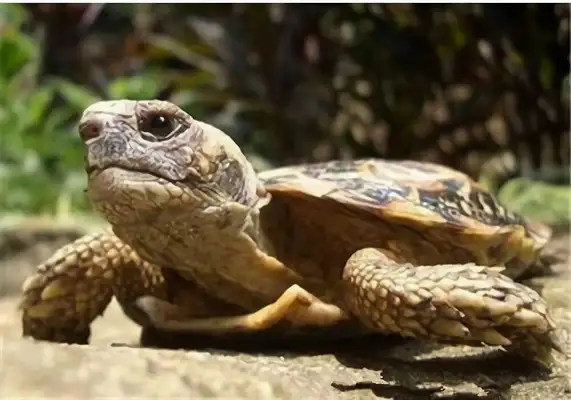
Biscuit turtles have a unique appearance, because he does not have a half-turned turtle shell like other turtles, and his turtle shell is flat and beautiful, like an Indian star turtle that is stomped on, and a very small turtle species.
Biscuit turtles usually have smaller alarms of 12-15 cm abdomen and weigh only about 500 grams. There are relatively large areas of light and softness on its chest, and these shields are covered in large quantities or in partial ditches on the bone shield. Biscuit turtles have fairly flat backs and some are dented. Adult males have longer and larger tails than females. Experience has shown that the length of the tail alone is not a reliable judge of the sex of a cookie turtle.
Biscuit turtles living in the wild usually live in the rock's cortex because of the softness and elasticity of the crust of the biscuit turtles, which allows them to squeeze into smaller cracks than their own bodies, which makes it very difficult to capture a biscuit turtle in the wild, and the turtles do not shrink into the shell when they are in danger, but rather escape.
As a result of the strange state of the body, which has led to a growing popularity of the tortoise turtles, a growing number of people are raising the tortoise turtles, and fortunately the tortoises are well adapted to human breeding, so if you want to know the strategy of the tortoise turtles, they can be found online. Biscuit turtle care knowledge
Vulnerable cookie turtles are listed in appendix II to the Convention on International Trade in Wild Fauna and Flora and Endangered Species of Wild Fauna and Flora, which is on the World Conservation Union red list. In 1981, Kenya prohibited the export of tortoise turtles, except with the written permission of the Minister of Environment and Natural Resources. Tanzania also issued a wildlife protection order for the protection of cookie turtles in 1974 and is protected in the Serengeti National Park. Cookie turtle living environment
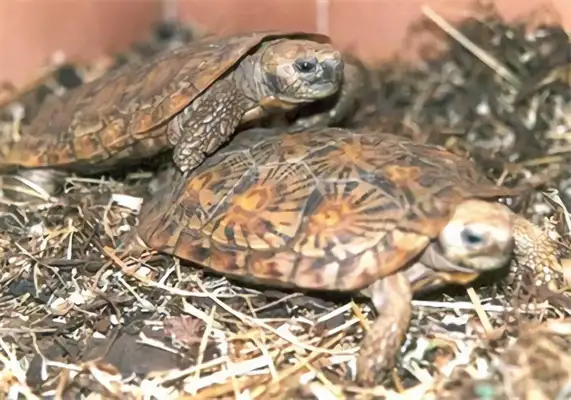
Biscuit turtles, though land turtles, have a different way of life, for example, when they are usually shrunk into their shells when they are in danger, but the turtles run away with great effort, which is also related to his field environment.
I. CHOICE TORTURE ENJOY IN THE FIELD
Biscuit turtles are from Tanzania and Kenya in Africa and are known as Kopjes. This type of terrain provides the cookie turtle with natural rock slits and a climbing environment, so that well-coordinated limbs can evolve so that they do not fall easily when climbing.
Biscuit turtles' backs are radiantly laced with brown stripes to form unique triangles, which are uniquely protective when they are scared to escape to the cracks, which are the fastest moving in all turtles, together with their thin limbs and elastic abdomen that can help them to hide from the masts, so that predators are unable to remove them, with one saying that they can swollen their bodies slightly into the masons, but they are strangling the walls with their front feet.
II. Attention to the Artificial Biscuit Turtle
Biscuit turtles are escape experts, and the rearing boxes must have pent-up strips or nets to avoid their flight. They can be raised in small communities, preferably in a single male and female manner, but with the same individual size.
Undergrounds can be created with newspapers or clean soils to create a dry environment where the soil and park sand can be mixed, with raw wood or well-wetted sandstones forming a creeping environment, but not food at the bottom, which can cause gastrointestinal problems and create a sand-free feeding environment.
In order to avoid some of the bottoms that absorb moisture, it is not recommended to use grass as a base, because it can become damp and cause problems. I use newspapers (for easy preparation), two inches of rock, or marble (for solid importance), plus 100 w of ceramics to heat them up, warm rock to bring them together to breathe warm air and warm abdomen, and some pebbles of pedal type to climb on them, which they would like to enjoy. Biscuit turtles.
Most of the turtles are herbivous, with the exception of the biscuit turtles. For animals that are completely herbivorous, the choice of herbivorous species and herbivore species is important, because it is a matter of his health, and the way to feed them is described below.
I. Cookie turtle eating
Biscuit turtles, which are full vegetarians, are fed mostly by a wide variety of high-fiber herbs, as high as possible, low proteins and high calcium, which can help them to grow healthy and stable.
The most desirable foods - grasses (cattails or Bermudagrass), veggies, piping and sauerkraut, chickens and other deep green plants, grapes, saunas, cargrass, bittersweeds, lavenders, herbs, cactus and flowers, roses, etc. - are also necessary to add powdered calcium, or ink fish bones to help them grind beaks, which in the summer can be supplemented by non-D3 calcium powder and D3 powder when growing indoors.
II. Attention to feed
Don't give too much market food, as this type of food is usually a fibrous vegetable, too many pesticide residues, too many sugars, etc., which are considered of a human consumption nature and are not very suitable for a cookie turtle. No animal protein should be given because they have no means of digesting, and because they cause deaths such as kidney failure and quarries, because they are herbivorous animals, they should try to replicate the food in the field and not feed fruit less than once a month.