No.: PET1029
English name: Malayan Snail-EatingTurtle
Nature: timidity
National origin: Viet Nam, Cambodia, Thailand, Malaysia
Vulnerability to disease: decomposition
Life: An overview of the range of Malay-eating turtles for about 50 years
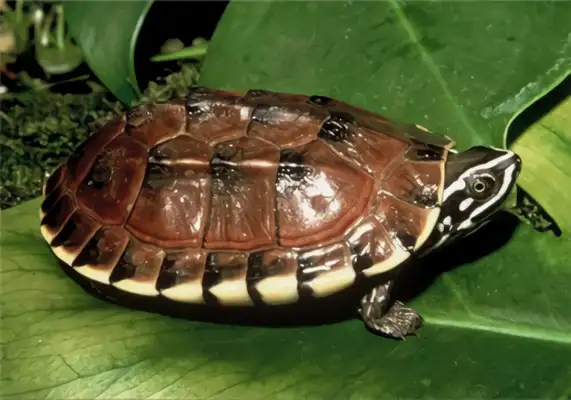
Malai-eating turtles prefer to eat snails, fresh snails, etc., and are therefore called snail-eating turtles, and some are directly called malai turtles in Malaysia and the surrounding areas, medium size, but not suitable for domestic breeding.
Snail-eating turtles usually live in slow-flowing streams or swamps, where aquatic snails, freshwater snails and clams are the staple foods, and where aquatic insects or shrimp crabs are caught. This special diet makes it difficult for snail-eating turtles to adapt under long-term artificial breeding unless crustacean food is available on a regular basis. Livers are afraid, so try not to disturb them at an early stage.
Chinese literary name: Malai eat turtle
Latin name: Maleymys subtrijuga
English name: Malayan Snail-EatingTurtle
Don't call it horse turtles, snail turtles, predators, snail turtles.
Context: Animals
Gate: Pipeline gate
Programme: climb
Tortoises.
Section: Marine turtles
Yes: Snail turtle
Spec: Horse-eating turtles
Geographical distribution: Viet Nam, Cambodia, Thailand, Malaysia
Practice: Living in streams, swamps, rice fields. Fit for temperature: 24-28° C.
Body size: medium size, with back armour of up to 21 cm
Reproduction: There is no difficulty in identifying females and males with smaller tails. Females can produce 3-6 eggs at a time and hatch for about 70 to 90 days at 29 degrees.
Eatability: snails, small fish, earthworms, worms and shellfish
Attention: No hibernation, winter needs to warm up. Malé eats the turtle form.
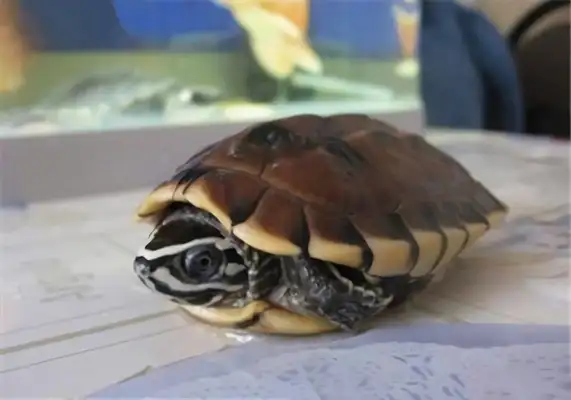
Malée eats the turtles in small sizes, usually of similar sizes, but Malay eats the turtles in full meat and specializes in molluscs, so it is not easy to raise them, after all, to buy food in some seasons.
The horse-eating turtle is a slow-growing turtle. The head is broad and the top is black; there is a "V"-type white stripe on the edge, which extends to the top of the neck, and the stripes are thicker; the kiss is blunt, with a white eyeline surrounding the eye, with one eyeglass; there are four white stripes in the nostrils, with a yellow and white spot on the front end of the eye, and a yellow and white stripe at the bottom of the dot, which extends to the neck under the eyelid, and becomes thicker; and there is a "A" type in the centre of the upper cavity, with two white stripes in the centre of the lower cavity, extending to the neck, black on the neck, with several stripes, and thin stripes.
The backs are black, with three central vertebrates being more visible; the edges of the skin shield are yellow (notably larvae) and there are black spots on the bridge; the abdomen are yellow, with large black spots on each shield; and the back edges are less engraved. Black limbs, yellow white on the edge. Colored stripes, fingers, toes. Both the female and male abdominal acetal centres are flat and undunk. The identification is based on the shape of the tail, with the male and the female being the latter. I'm not sure what you're talking about.
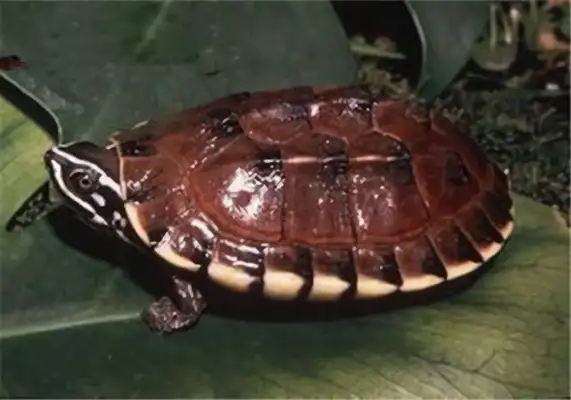
Malai eats the turtles very timidly and it is difficult to adapt to the environment in the early stages of breeding, so avoid unnecessary shock, if there are children in the family, to prevent them from being left undisturbed and to gradually promote their feeding.
I. ELEMENTS FOR COLLECTION OF MALE ENOUGH TRICKS
The malai eaters are warm and afraid of cold, are not fit to buy in late autumn and early spring winter, and have low survival rates and are not easy to feed. However, newly acquired turtles are not easily located in deep water at an early stage, and should be placed in shallow-water towns, with less alarm and adaptation to the new environment. For the more lively, testable earthworms, yellow powderworms, snails, etc. Maley-eating turtles have weak adaptive capacity and are required to pay strict attention to temperature changes in day-to-day rearing, when ambient temperatures are 18°C, stop eating at 15°C, little activity at 15°C, and gradually go to hibernation, and when ambient temperatures are high and low, with a temperature difference of around 4°C, the turtles experience a state of creeping, stretching or constriction. Winter temperatures cannot remain below 10°C for long periods, otherwise the turtles are prone to rectal blockages and cannot be cured.
II. PROTECTION OF THE MALE ENOUGH TORTURE
Snail-eating turtles are a single species of Maleyemis, a daily species of aquatic turtles. Color is a relatively good small and medium-sized species of turtles and has a special appetite. They have strong upper and lower jaws, which can easily bite freshwater crustaceans and swallow them. Turtles are common in Viet Nam and Thailand, and because of their large numbers, they are often exported for food and reward in large quantities, although they are small. The CITES conference at the end of the year is expected to include snail turtles in the CITESII category of care. As a result, the number of people who can be on the market will be significantly reduced in the future. I'm a horse eater.
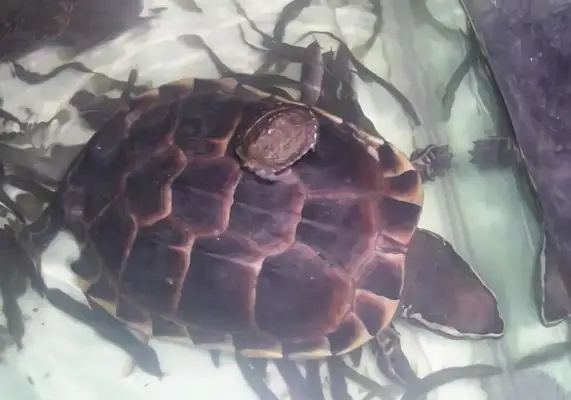
Its health is strongly affected by its environment, in particular changes in ambient temperature, which directly affect the operation of its internal digestive system. It is important to note that Malay eaters do not sleep, and that artificial hibernation arrangements only lead to death.
I. MALE TORTURE AND ENVIRONMENTAL Temperature
Maley-eating turtles have weak adaptive capacity and are required to pay strict attention to temperature changes in day-to-day rearing, when ambient temperatures are 18°C, stop eating at 15°C, little activity at 15°C, and gradually go to hibernation, and when ambient temperatures are high and low, with a temperature difference of around 4°C, the turtles experience a state of creeping, stretching or constriction. Winter temperatures cannot remain below 10°C for long periods, otherwise the turtles are prone to rectal blockages and cannot be cured.
II. MALA ENFORCEMENT
Horse-eating turtles are medium in size and can be 21 cm long in size; depending on the ... size of the turtle, a 7-12 times larger plastic suit or glass tank should be purchased at a height greater than one times the length of the turtle's back nail to prevent the turtle from climbing out. (c) Placing of plastic fur with appropriate pressure on pebbles. The depth of the water is approximately 1-2 cm, so that the whole body of the turtle is not bubbled into a small part; long-term overall water bubbles are prone to death by rotting nails. Water every two days. Horse-eating turtles.
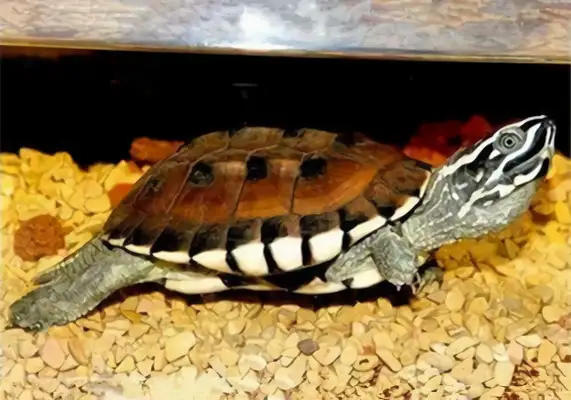
Horse-eating turtles are not chrysanthemum, but they don't eat strange meat foods. They only eat molluscs, the most favorite being the meat, so feed is recommended for the freshest meat.
Mae eats only snails, so you can go to the kitchen and buy a snail, or a snail. You must live, and dead horse eats not. Cut it open with scissors, take out the snail, smell it, and no smell. Prepare a basin with water depths flooding the horse-eating turtle, about 10 cm deep. Put a horse-eating tortoise and a snail into a snail at a time (too much snail-eating in water makes it impossible for a horse-eating to recognize the food) and people walk away from it, usually eating within three days, and those who don't eat for three days basically don't.
Malai eaters are prone to septicaemia because of a single recipe; they can be mixed with child sulcones and child calcium with vitamin D3 to powder them with a shredder purchased on the market and fed about 5 grams at a time. Half a slice of the children ' s slk and two pieces of child calcium with vitamin D3.