Designation: PET2567
English name: Lungfish
Origin: Africa
Vulnerability to diseases: white spots
Life: 5-6 years of overview of lung fish species in Africa
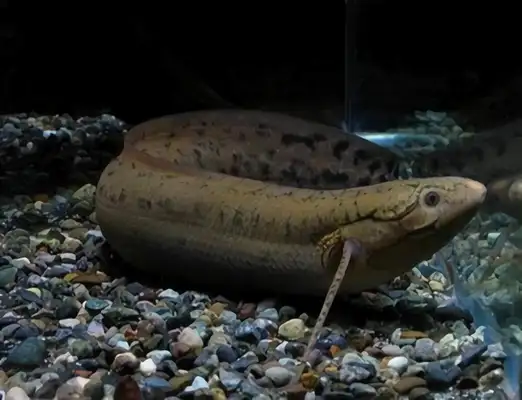
The special feature of African pulmonary fish is that, in addition to being able to breathe with an americium, they can also breathe with a platinum instead of a lung, and because African pulmonary fish are freshwater fish, even when they die, they can go to the mud and sleep.
Chinese literary name: lung fish
Latin name: Lungfish
Context: Animals
Gate: Chordata
Amen: Vertebrata
Platform: Osteichthyes
SAN: Sarcopterygii
Eye: pulmonary, toothy, pulmonary American Contents
Section: Cartoon, American Lung
In Oceania, lung fish, etc.
Distribution region: Equator region of Africa, Oceania and South America
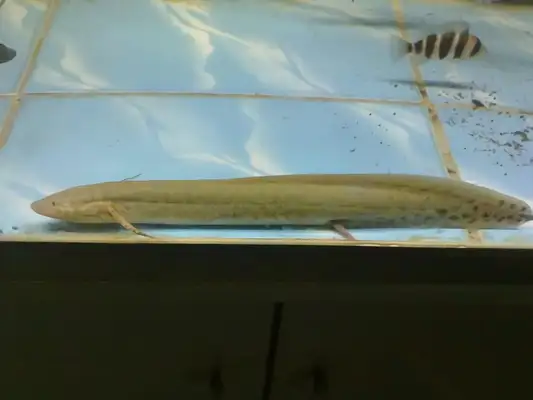
The special feature of African pulmonary fish is that they can breathe instead of their lungs, which makes it possible for African pulmonary fish to survive in the summer when they die, even though they are not really breathing with their lungs.
Living in fresh water, in addition to breathing in an americium, is able to respirate in vitro lungs, even during periods of dry water when they are drilled into the sludge for several months. But there are time limits. The pulmonary fish can live out of water, as its name shows, and it can breathe through the lung.
African pulmonary fish are well developed, with the front end of the whole plume consolidated into a single room, with a short length, and then separated into a pair of the back end of the cavity; the side wall of the cavity of the plume forms many small chambers of various sizes (pulmonary bubbles), and the small chambers are divided into small airbags (pulmonary bubbles), which are very similar to the lungs of terrestrial animals.
Because of the pulmonary function of the plume in African pulmonary fish, it contains a wide array of vascular nets and spirals, short ducts and esophagus, which absorb oxygen and remove carbon dioxide in the event of a lack of oxygen. Interestingly, during the dry season, African pulmonary fish have also hidden themselves deep in the mud and built a strong “small mud hole” from the surrounding mud, opening a small breathing hole in the front of their mouths, lying silently in it for six months of dry season. When the rainy season comes, it breaks out. Living environment for African lung fish
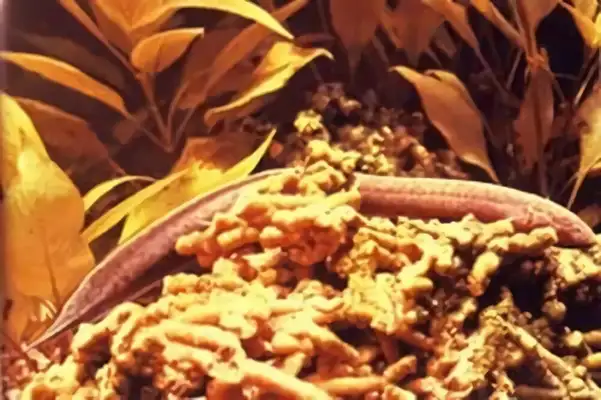
African pulmonary fish are known as living fossils of fish, and as human knowledge of African pulmonary fish grows, scientists find that the waters used by African pulmonary fish for breeding and habitat are diminishing and that African pulmonary fish are at risk of extinction.
Current African pulmonary fish live mainly in rivers of up to 1 to 2 metres in size, with low brain osteoporosis, a spine of cartilage and degradation to osteoporosis. African pulmonary fish are divided into four different species, mainly in rivers and Great Lakes near the African equator, but in northern Senegal and southern Mozambique. African pulmonary fish and American pulmonary fish both have lungs and have relatively small caps to make holes in river bed silt when the river is completely dry, to spend up to six months in hibernation in a dry season that is completely free of water and survives in the air. In the quarries and incipient sediments, pillar sediments containing scattered African pulmonary fish fossils indicate that African pulmonary fish were then able to survive difficult times in this way. African lung fish feeding point
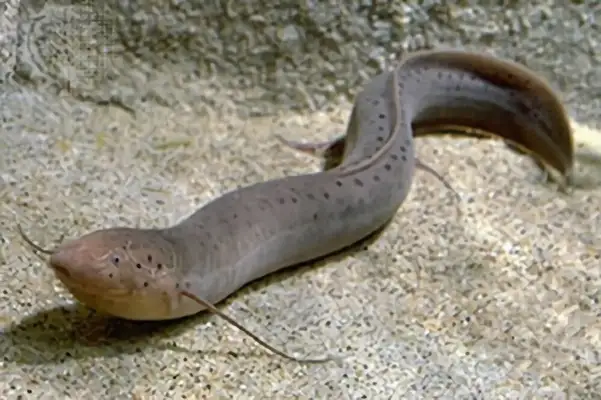
African pulmonary fish are predatory and are fed mainly by fish, molluscs, crustaceans, insect larvae, worms, etc. African pulmonary fish, also known as finfish, tiger pulmonary fish, also require some scientific feeding under conditions of artificial breeding.
The individual size and colour of African pulmonary fish vary widely, ranging from striped to non-existent, but not identical. For them, the marks on the body of African pulmonary fish can be identified as fingerprints.
African pulmonary fish, which had the physiological characteristics of the excavator during the period of juvenile fish, have been reduced and contracted as growth changes are maintained. They grow fast.
African pulmonary fish are not well-sighted, but have a sensitive smell and a weak body of electric influenza to the surrounding organisms, so they react sensitively when they are baited.
African pulmonary fish, which prefers to feed on live baits such as small fish and shrimp, are not ferocious in their habits, but still pay careful attention to them in their normal feeding and water exchange processes, and the damage caused by their strong teeth and upper and lower jaw bites is amazing.