Designation: PET2148
English name: Pallas
National origin: Northeast, Shandong, Shanxi, Henan, Shaanxi, Gansu, Jiangsu
Vulnerability: Vitamin deficiency, fungus
Life: 5-10 years
Price: A brief description of the species of the 50-100 northern ferret
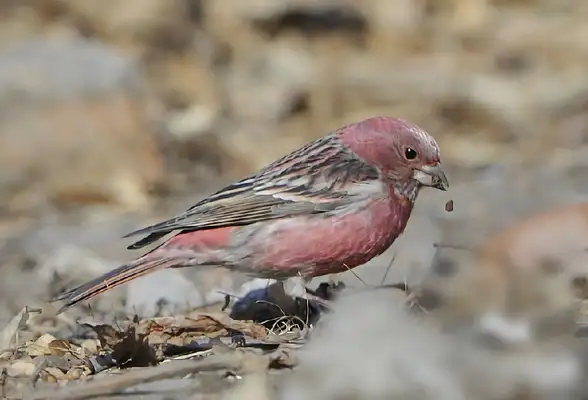
North whitebirds don't breed in China. During the autumn migration, part of the birds and the Achom bird moved over the winter and left in the following spring. Carpodacus roseus, also known as "Red by the Mountain", is a bird's eye, a canary. For winter birds in China, late autumn and winter are found in the north-east, Shandong, Shanxi, Henan, Shaanxi, Gansu and Jiangsu. This bird, which is beautiful in its feathers, sounds nice and easy to breed and fertilize, is one of the most common cage birds in China. However, its red feathers are prone to fade in artificial breeding and how they can not fade, an issue that has yet to be explored. The northern freckles are generally found in mountain colossal forests, broad-leaved forests and hills, in willow forests in the plains, and generally in low-altitude areas. The species's model is based in Udam, Siberia.
Chinese literary name: North Chuan
English name: Pallas's Rosefinch
Two words: Carpodacus roseus
Context: Animals
Gate: Pipeline gate
Programme: Birds
FREEDOM: FREEDOMS
Section: spasco
For: Zhuan
Scrubbing: North Churk
Distribution: physical features of the north-east, Shandong, Shanxi, Henan, Shaanxi, Gansu, Jiangsu-bei
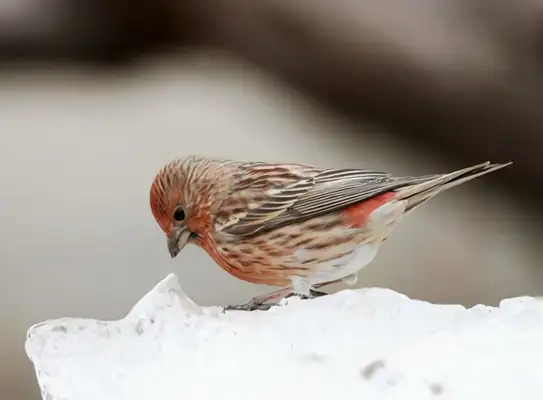
North whitebirds of medium size (16 cm) and chubby, chubby size. A little longer. Males: red for head, lower back and lower body; light for head, forehead and frost; no contrasted eyebrow stripes; brown for upper and covered feathers; pink for edges; red for chest, pink for abdomen and two light wings. Females: Dark, brown-coloured upper body, pink forehead and waist, yellow lower body with long lines, pink chest and white ass. Ion membrane-brown; mouth-near ash; foot-brown. Shouting: usually silent; short, low, low, soft, soft. North whitebirds long about 11.5 centimeters. Most of the feathers of the birds are pink, and their foreheads are silver and white, and their wings and tails are dark brown and covered with pink sides, with two light pink spots on their wings. The head and lower body of the female are brown and have black dry marks.
North whitebirds don't breed in China. During the autumn migration, part of the birds and the Achom bird moved over the winter and left in the following spring. This bird-hot cluster, which pecks the fruits, seeds and seed of various wild plants, also seeks cereal seeds, etc. The common winter bird is located in the north and east of China, in the south of Jiangsu, west to Gansu. In winter, it can reach 2,500 metres above sea level. The summer breeding areas are high at sea level and tend to live in pelican forests but in winter in cedar forests and on the slopes covered by the bush. The point of raising the northern bird.
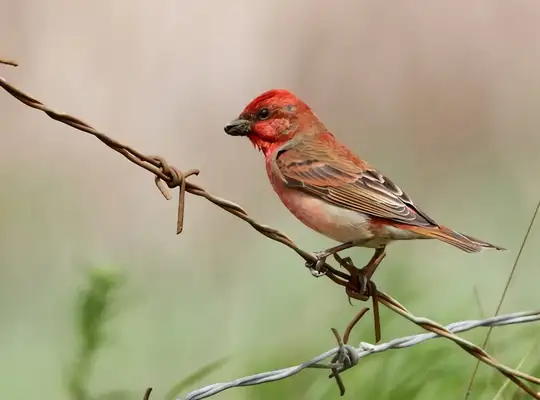
In the winter, northern China, Japan, North Korea and northern Kazakhstan were relocated. It is not common for winter birds to arrive in the north and east of China, in the south to the west to Gansu. In winter, it can reach 2,500 metres above sea level. The summer breeding areas are at high altitude. They live in pelican forests, but in winter in cedar forests and mountain slopes with bush cover. The country is located in Jilin (Bashiyama, Grand Master, Changchun, Liayong), Liaoning (Dandong, mouth of the Grass River), Inner Mongolia (Horrenbel Union, Shinjing Hills, Red Peak), Ningxia (Chongwei, Sinkawa, Horan Hill), Gansu (Kinlong Mountain, South East, Sunnan, South-West Tsun, Ronny, Mati, Akumi), Hebei, Shashixi, West West, Shandong, South Henan, Jiangsu (Sun, Shaway Mountain). The northern canary is raised using canary cages or home-made round and square bamboo cages of similar size. Forage is a variety of grain seeds. A small amount of leaves and fruit may be fed to a mixture of a tungsten, tungsten, tungsten at 6:3:1 or tungsten, and a suitable amount of sugnut may be added in autumn and winter.
The female feathers of the northern jaybirds are brown for olives, with grey stripes on the chest and on both sides, and close to white for the lower abdomen. He was predominantly red, dark brown on both wings and red on the plume. It is one of the bird of view that is widely raised by our people. Environmental Attention for North Cowbird Feeding
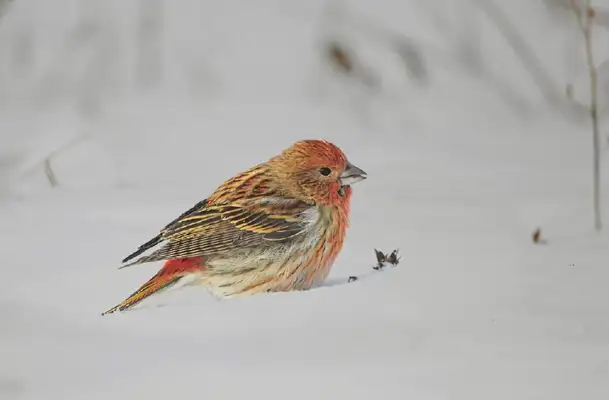
Froucage cages, also known as canary cages and jade bird cages, are suitable for small grain-eating birds, such as canary canaries, white and grey birds, light-headed birds, northern peacocks, gold-mounted pearl birds, sibling birds and three herbs. The northern ferrets live in corrosive, wide-leaved and broad-leaved forests in low-altitude mountainous areas, and in woody and peaceful forests in hilly areas. Many of these communities move, fearless and loud. Weed seeds, berries and leaves are collected. The northern canary is raised using canary cages or home-made round and square bamboo cages of similar size. Forage is a variety of grain seeds. A small amount of leaves and fruit may be fed to a mixture of a tungsten, tungsten, tungsten at 6:3:1 or tungsten, and a suitable amount of sugnut may be added in autumn and winter.
The birds of the North are beautiful, beautiful, vocal, easy to breed and domesticate, and are among the most common in China. However, its red feathers are prone to fade in artificial breeding and how they can not fade, an issue that has yet to be explored. North whitebirds don't breed in China. During the autumn migration, part of the birds and the Achom bird moved over the winter and left in the following spring.