Designation: PET5238
English name: Creaser
Origin: Wrinkled mud turtles live in parts of the northern and central regions of the Yucatán peninsula
Vulnerability: gastroenteritis, white eye disease
Life: around 20 years
Price: Summary of species of 200-1,000 wrinkled turtles
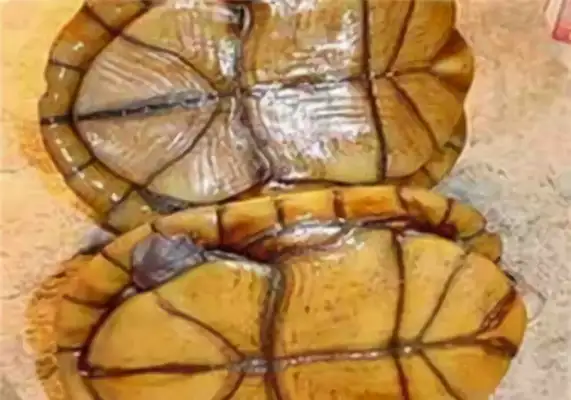
Wrinkled tortoises are the less well-known species of mud turtles, with darker hair on their backs. The variety of turtles is usually fierce, and the wrinkled turtles are more aggressive and territorially conscious, with small numbers of artificially grown animals and less common on the market at unknown prices.
Chinese name: Wrinkled turtle
Latin
English
Context: Animals
Gate: Pipeline gate
Programme: climb
Tortoises.
General Section: General Section for chest turtles
Section: mud turtles
It's a mud turtle.
Tortoises:
Sub species: wrinkled turtles
Geographical distribution: Wrinkled turtles live in parts of the northern and central regions of the Yucatán peninsula.
Appearance characteristics: Brighter surfaces on both sides of the head and at the bottom. The jaws have black stripes, the limbs are light gray or brown, and the back leg surfaces are uncoated.
Practising: Prefering in a quiet forest and in a small, temporary mud pool, during the rainy season, may migrate to land, as if more time was spent in the forest to sleep in the rotting soil.
Eating: Wrinkled turtles tend to eat mainly meat, including insects and snails, but also occasionally eat palm fruit.
Reproduction: spawning, nesting between September and November of winter. The female goes to places that are rare on both sides of the river bank to produce eggs and avoid the effects of flooding, with 6-29 eggs being produced each time. Crawling tortoise morphological characteristics
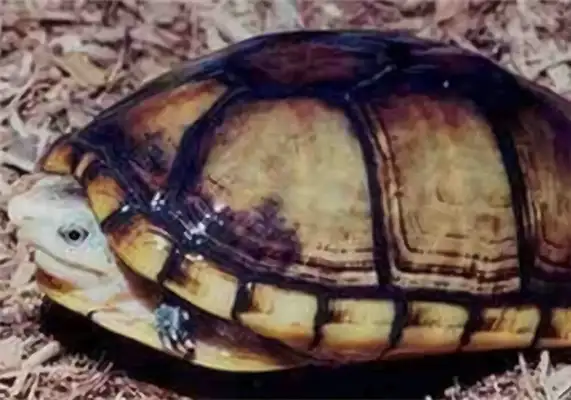
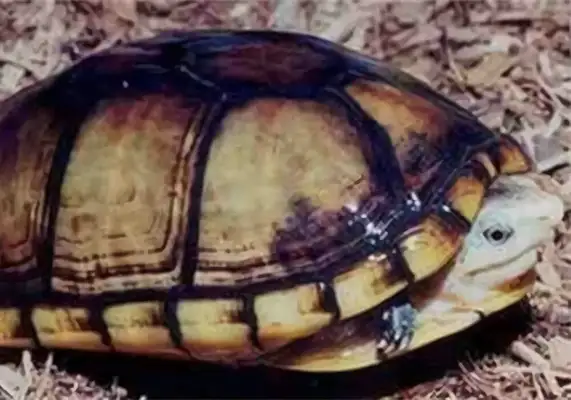
Wrinkled tortoises are small-scale turtle species, with coffee-colored backs, yellow head and limbs with some raisins, relatively large head, strong mouth, some shell food, smaller feet, and not very good swimming skills.
Wrinkled mud turtles have approximately 12.1 cm in length and are elliptical. The highest is in the second half of the centre of the back armour, and almost vertically (the contours of the second half of the back armour), with a less visible vertebrae in the centre of the body ' s back, and in the larvae, with a vague vertebrae on each side of the back. The width and length of the first vertebrae vary little or slightly beyond the length, the width of the second ~4 vertebrae is greater than the length, and the fifth block is relatively small, almost equal in length and width. The 10th and 11th edge shield is slightly higher than the previous 9th and each has a chain cover around the bottom of the abdomen, which is long and wide, and therefore completely closed.
There is no dent at the end of the rear lid, the length of the front lid exceeds the length of the abdomen, but it is slightly shorter than the piece in the back, which is approximately half the length of the front lid. The lower armpit shield was in contact with the groin shield, which was on the bridge with light yellow and black seams between the armour. Large heads of ministers carry a slightly prominent nose, nose and hook-like, strong upper jaws, usually of coffee colour or black neck, accompanied by fine and bright spots, with bright surfaces on both sides of the head and at the bottom. The jaws have black stripes, the limbs are light gray or brown, and the back leg surfaces are uncoated. Knowledge of wrinkled mud turtle care
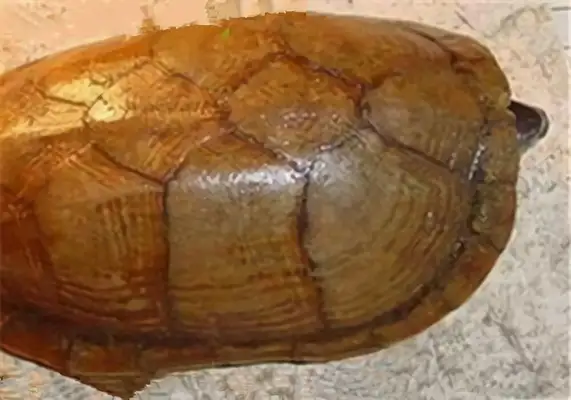
Tortoises usually like to eat some meat, and wrinkled turtles are no exception. For wrinkled turtles, the choice of food is diverse, and when some food is inadequate, the wrinkled turtles eat some of the dead and plant food.
I. Wrinkled mud turtle care
Wrinkled turtles are predators, but occasionally also feed plants in nature. For example, palm tree seeds, leaves, petals and different algae. Animal food consists mainly of snails, insects, molluscs, crustaceans, amphibians and dead fish. It is highly vulnerable to capture by fish hooks that are baited by animal livers, grasshoppers, worms or swarms. In nature, it appears to be playing the role of a cleaner who, while on land, digs into the dung of her livestock to eat unincorporated grass, perhaps looking for insects.
II. Frozen mud turtle habitat
Wrinkled turtles spend more time in slow or stagnant lakes, such as swamps and mud. Of course, it is ideal to have soft ground or mud. It also often occurs in wetter grasslands and in pools with a certain salinity. In Virginia, wrinkled turtles are active from late March (after hibernation) to October. They're water turtles, but they stay on land for some time, even though they're not meant to enjoy sunlight. Wrinkled mud turtle living environment
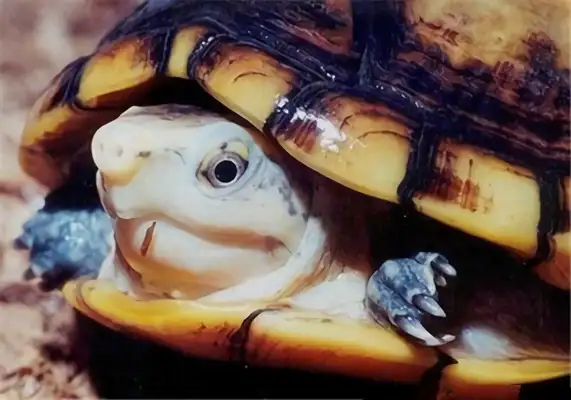
Wrinkled turtles are more selective in their living environment, usually they are not very watery turtles, they prefer to tan in warm places and to sleep in the mud in the summer when it's hot, and they are suitable for living on land.
Wrinkled turtles live in dry areas of the Yucatán peninsula, preferring to be in the silent forest and in temporary small mud ponds, and may migrate to land during the rainy season, as if they would like to spend more time in the forest to sleep in the rotting soil.
The female wrinkled turtles from the Yucatán region have a wider back-link cover, which is significantly larger than that of the Quintana Roo and Campeche Bay regions, while the male abdominal armour and abdominal shields are longer. In addition, the wrinkled turtle backnails from the Quintana Roo area are common blacker, and the neck and head are usually light yellow on both sides.
In addition, wrinkled turtles, also from the Yucatán area, have dark yellow marks on the neck, on both sides of the head and on the front leg; their backs are also relatively bright. Thus, geographical differences still exist. Duellman collected samples of two wrinkled turtles in 1965, which had a light brown backnail; a light-middle yellow abdomen; and a light-grown limb and head, which may depend on the environment in which they inhabit. The wrinkled mud turtles.
Wrinkled mud turtles are food-based, groceries that eat fruit in times of food shortage and, in an artificially raised environment, make the best possible choice of food, ensure food diversity and nutrition, and match proper by-catch.
Wrinkled tortoises are greasy, and if you want to produce a beautiful turtle, don't save it. In addition to turtle food, shrimp is also a chrystal, which contains natural pigments, and turtles are very fond of it. It can be given properly, but not on a long-term diet, which is unbalanced, with a large amount of calcium, but other nutrients are a little bit less than two, easy to eat gastrointestinal disease, all kinds of bacteria are produced, and overbreeding is not necessarily acceptable. And fish, red wires, animal organs, beef, insects, screws, that's good. In short, food diversity is important.
It's best not to feed the turtles, but not the white ones like skins every day. Although proteins and fats are rich and cheap, the surface turtles are not digestive, the turtles are not able to digest birds and lizards are good. Other insects, crickets, larvae and dragonflies can be fed, but it is best not to feed small seedlings, whose stomachs are fragile, who eat turtle food and are safe and nutritious. The best mix of feeding is the main tortoise food, which, like our humans, eats rice for all kinds of meat.