Designation: PET3167
English name: Peach-frontedConure
Vulnerability: respiratory, digestive and parasitic diseases
Life: Overview of the species of parrots 6-7 years
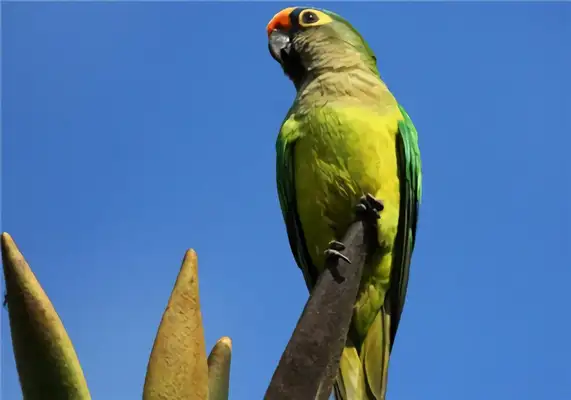
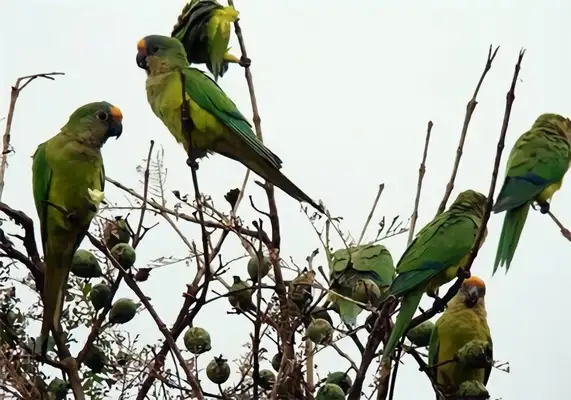
Peach-fronted parrots (Peach-fronted Conure), who prefer to live in semi-dry places in the wild, usually act in pairs or groups. The reproductive mode is ovulation, which can be two to three times a year. The bird is mainly located in Argentina, Bolivia and Brazil.
Chinese literary name: Peaches parrot
Chinese aliases:
English name: Peach-frontedConure
Two words: Aratingaurea
Area: Animal
Door: vertebrate door.
Amen.
Platform: Birds
Today's bird's
It's a parrot.
Section of parrots
Family: Conesian parrot
Distribution: morphological characteristics of parrots in the southern Amazon basin, Bolivia, Argentina, etc.
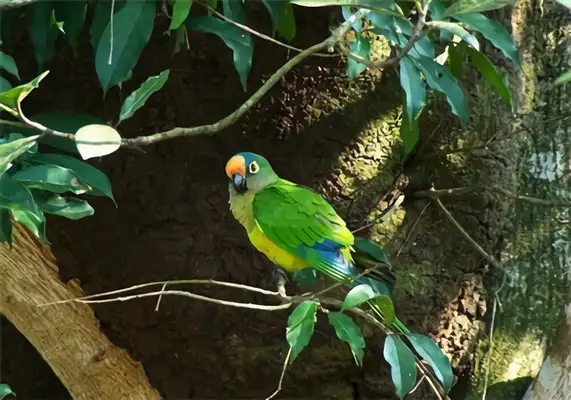
The ideal parrot should be about 28 cm long and the ideal adult parrot should be around 95 g. The crowned orange dots of a mature cone parrot are linked to the eye.
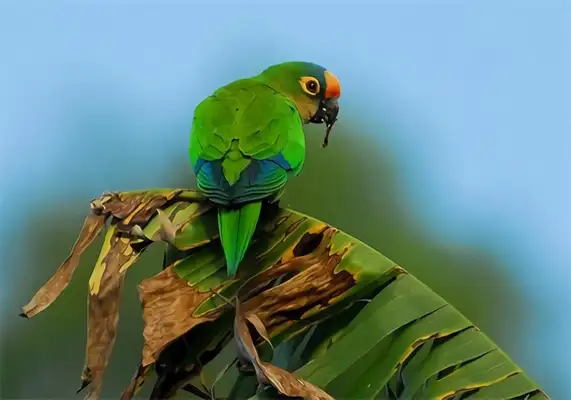
Most of these parrot birds are green, with orange on the forehead, on the top and around the eyes, with orange on the back of the head and deep blue on the neck; cheeks, throats and light olive brown above the chest, yellow on the bottom of the chest, lower abdomen, inside the tail feather, and inside the wings; blue on the tip of the flying feathers and on the side of the flying feathers, olive yellow on the tail and flying feathers, black beaks and oranges. The chronology of young birds is similar to that of adult birds, but there is no orange colour around the eyes and the colour of the iris is deeper. Peaches parrots raise knowledge.
The parrots are very exotic and quickly adapt to the new environment, so it is not difficult for families to raise, and, given their language skills, they can learn the human language when they are idle. It's about building up feelings with birds.
Peaches parrots reproduce in an ovarian manner, with females producing between two and four eggs per nest for an incubation period of about 26 days and young birds with full feathers after 52 days and leaving the nest. The size of the nest frame shall be 13 "x10 " x 10 " for artificial breeding. The entry point of approximately 3.25 "Range.
Peasant parrots are lively birds that are not difficult to care for, and it is useful to provide them with a variety of toys and equipment for play and break time. The young bird breeds a rather lively family, loves to play games, and it is desirable to release more out of the cage every day, not too small, and the provision of large cages can increase the volume of their activities to promote health. Peach cone parrot.
Peasant parrots, who survive outdoors, tend to prey on the hard-earned crops of farmers during the harvest season, which is why local farmers hate them so much, and because they are more visible, often caught and raised, there are now more and more family-fed parrots. At the same time, feeding is the first step in their survival, so what food does family feeding generally depend on?
The food supply is similar to that of other cone parrots generally, with mixed seed grain feed accompanied by beans, nuts, vegetables, fruits and dried bird grains, which are not suitable for feeding too cold or too hot. The best temperature for food is around 37.5 degrees. It is better to feed birds in pairs.