No.: PET1513
English name: Amazona Finschi
Vulnerability: respiratory, digestive and parasitic diseases
Life: Overview of the species of macaws 10-20
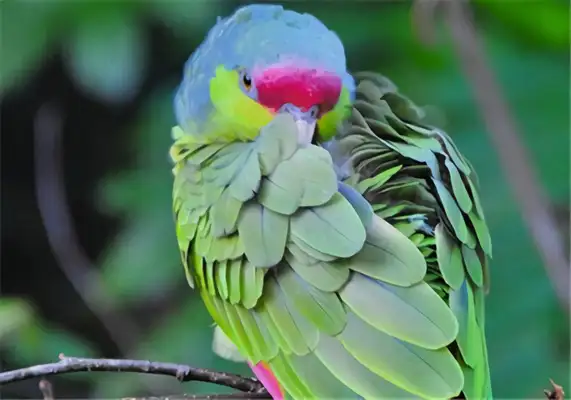
Amazona Finschi is mainly located in the West Bank of the Pacific within Mexico. The macaws are very beautiful, especially the white blue feathers and the red feathers of the forehead.
The purple crown Amazon is a medium-sized Amazon parrot with a more independent and careful personality, with young birds raised from young hands becoming very cute pet birds, with two sub-species. As a result of the decline in the number of first mates of the habitat, the number of macaws in the violet macaw is threatened and is included in the CITES-level care list.
Chinese literary name: Magnificent macaw.
Chinese alias "Little Purple Curtain Amazon parrot"
Two words: Amazona Finschi
Area: Animal
Door: vertebrate door.
Platform: Birds
It's a parrot.
Section of parrots
The Amazon parrot.
A macaw with a purple crown.
Distribution: Characteristics of the purple crown macaw in the West Bank of the Pacific, Mexico
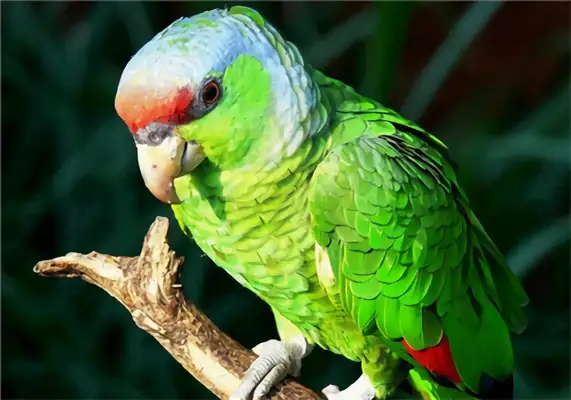
A macaw should be about 32 cm in size, medium size, and the more typical feature is that its bright blue feathers on its head and red feathers on its forehead are striking.
The purple crown of the macaws' forehead and upper eye is dark red. On the bottom of the cheeks and earlid feathers is light lemon green. The top covers, both sides of the head and the back neck are beautiful white purple or pink blue, and some crown feathers have black edges. The feathers have clear black edge green, dark back green, green hips and tails, and bright light. On the edge of the wing feathers is a blue green tone. There's little red spots in the tail. The bottom is yellow and green and has dark blue borders. Some of the feather blue reflected yellow and green. And the rest of the lower feathers are yellow and green, with some black scales in the chest. The tip of the tail is yellow green. The outer tail feathers have a thread and a slight blue colour. Beak pink. Iris orange red, gray legs. The life of the macaw of the Purple Crown.
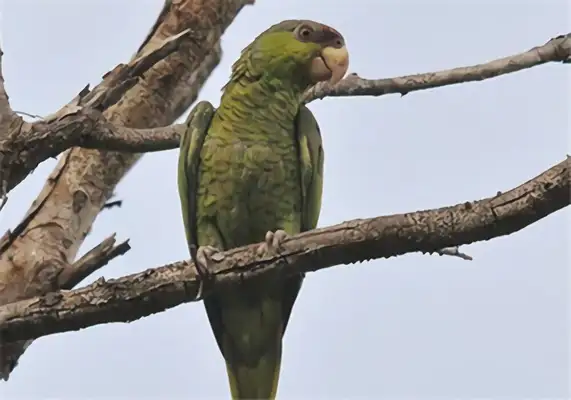
The macaw of the purple crown is of a mild character and suitable for pet bird breeding, and the family should choose a bird cage with a strong metal and sufficient space for movement. The caged birds may sometimes be loud and noisy, but they may be much quieter if they are raised in a large room.
Not only does a very gentle purple crown of the macaws need more extensive space, but life without constant stimuli makes them feel boring, so it is better for the feeders to prepare enough space to put on many of their favorite toys (such as bells) so that the moving parrots are not bored.
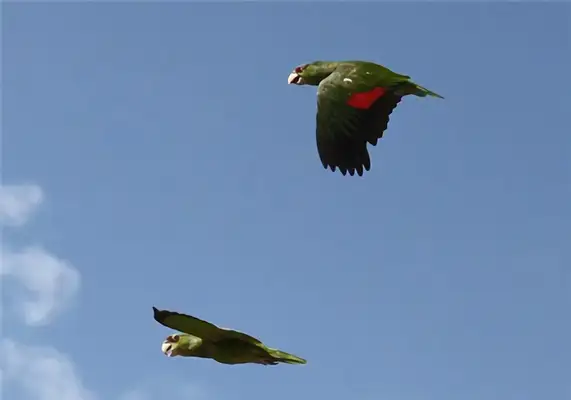
In the wild, mainly in lowland forested areas, in mountain areas at altitudes of 600 to 2200 metres, it is also desirable to operate in pine forest areas or oak trees. Often grouping, which sometimes gathers up to about 300 people, gathers in hundreds of numbers to rest in the habitat of trees, and the whole group gathers in a rather noisy manner. There is also the habit of migration. The location of the relocation depends on the availability of food. A macaw of the purple crown.
The good tamed macaws of the purple crown speak simple words, but they speak less than other parrots. The bird ' s personality is more shy and stable, is more resilient and usually healthy and strong after the period of adaptation. Young birds are better looking than birds.
The macaws of the purple canopy eat figs most in the wild, followed by berries, nuts, flowers, and buds of tree roofs, which also cause agricultural losses in crops such as banana forests or maize fields, and are often shot by farmers.
They usually nest in a tree cave. The nests of woodpeckers and even old nests in termite dunes are generally occupied. During the reproductive season, between February and June, there will be considerable noise around the reproductive period, with male males usually raising their neck feathers, swinging their wings and tails, and female females giving birth to approximately 2-4 eggs at a time, with an incubation period of 26-28 days, usually not having a smooth incubation of every child, which will grow after eight weeks.