Liao Wen Zhen put the body of a two-year-old Garfield, the “Firepot”, on a small bed with flowers, carefully cleaning it of stains and combing its hair. After the moaning, farewell to the master, prayer and other memorial ceremonies, the “fire pot” was placed in the incinerator.
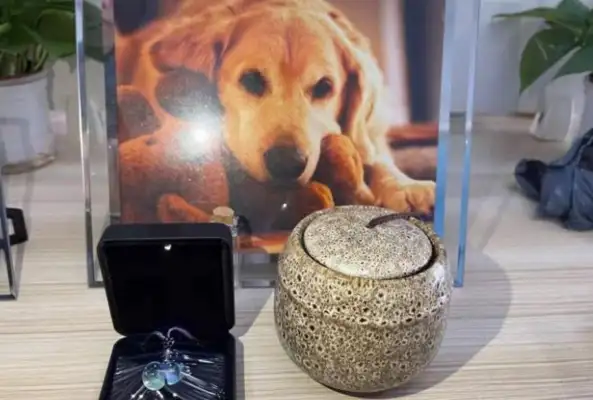
“The master may choose to take the urn home or to send it in a room in which the urn is rented, and come and see it when he misses.” A 26-year-old boy, Liao Wenzheng, a pet funeraler, founded a pet rehabilitation service. The company provides free cremation services to all stray small animals.
“We leave 400 to 500 pets a year, and pet burials are in great demand, but the market is not yet fully open.” Liao Wenzhen has done well for pets such as rabbits, hamsters, turtles, goldfish. He said that it was more important to be a pet funeralist to help the pet owner with emotional excretion, “it is a warm profession”.
The Snack Cat is becoming a new way of life for the younger generation. They are willing to pay for their companions and loved ones, so that the pet economy can flourish. According to Iri ' s 2021 White Paper on Trends in the Consumption of Chinese Pets, in 2020, the market for Chinese pets was close to 300 billion yuan (RMN, the same) and was evolving into a whole industrial chain covering pet clothing, food and old disease.
The increasingly hot pet economy, which has become a hot spot for new start-ups and “goldfields”, has also created many new occupations associated with the breakdown of services in the pet industry. One of them is Liao Wenzheng's pet funeralist.
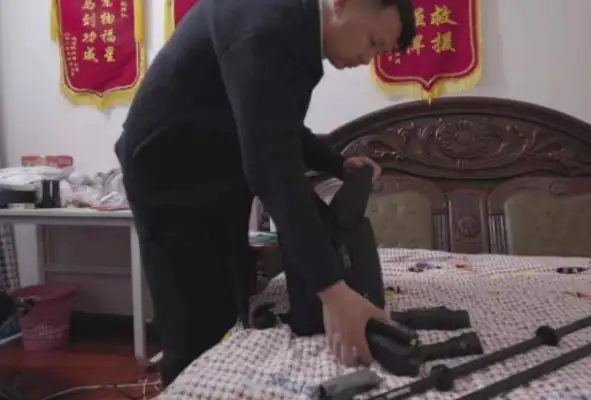
Liu Wei, a 33-year-old pet detective, and his team in Shanghai helped foster families to recover lost pets, with a small reputation in the industry. “We traveled through more than 20 cities in China to find nearly 3,000 pets and recover over 1,000. In addition to cats and dogs, there are small animals such as birds, lizards and hamsters. There's a dog called Mi, and we've been looking for 45 days."
Being a pet detective requires not only responsibility, love, love for pets, but also sensitivity and observation, as well as specialized equipment such as infrared thermal imager and hunting cameras. "Finding for pets is a real technical job. For example, when looking for lost cats, ask about the variety, habits, etc." Liu Wei and the team will calculate the purchase price based on distance.
Liu Wei also posted a pet-hunting video on a short video platform that young people like, which has built up a lot of people to help him find lovers. “The expansion of the team to 15 people, dozens of them the previous year, and now more than 40 a month's summit, also reflects the growing number of pet-raising families.” Liu Wei said.
According to the 2020 White Paper on the Chinese pet industry (consumer's report), the number of Chinese urban pet dogs and cats exceeded 100 million in 2020, reaching 1.84 million. “In the large cities, cats and dogs have become an indispensable part of many young people and are carefully cared for. We're not looking for pets, we're looking for every family member." The Liu Wei team also plans to do pet residential and pet training projects, “The future prospects for the pet industry will be brighter”.
According to the “90s after-90s” Insight Report of 2020, the Grand Institute for Recruitment and Data Studies, the new profession in the pet industry is “90s after-90s”. A 27-year-old, Wu Chiu Jo, turned his hobby into a job by resigning from Beijing to return to Changsha to make cat clothes. "In addition to good looks, wear well and be patient, and make pet clothes with the standard for baby clothes." Her treasure shop fans number almost 30,000, with a maximum monthly turnover of over $70,000.
Wu Cho, who works for original pets, has a lot of animal-loving people. She hoped that her products would be known, even out of the country, by more of the country's pet partners. "Let every cat have a beautiful life." said Wu Cho.
Interviews with journalists revealed that the pet economy has also led to new occupations such as pet UP owners, professional dog walkers, pet test eaters, pet health nurses, and pet dieters.
“Increased demand for pets has contributed to the rapid development of industry-wide chains, generating a large number of new pet-related occupations.” According to the Secretary-General of the Hunan Patients and Counseling Industry Association, the pet economy and its resulting new occupation are also an expression of the country ' s wealth and the improvement of people ' s living standards.
Source: Today ' s headlines