Designation: PET1238
English name: Burman Big-headed Turkle
Origin: South Myanmar, Viet Nam.
Vulnerability to disease: Decay
Life: An overview of the size of Myanmar ' s flat chest turtles for about 50 years
The flat chest turtle, also known as the Eagle Tortoise, is divided into five different sub-species, based on different origins, mainly in Myanmar and Viet Nam, where it prefers to eat some meat food, in large quantities and well adapted to artificial rearing, but with a strong personality, it is important to be careful about raising it. At 5 p.m. to 6 p.m. in September - October, the temperature began to mate at around 20°C to 25°C, and the following June, when water temperature rose, it began laying eggs, which lasted until mid-August. Myanmar tectonic properties
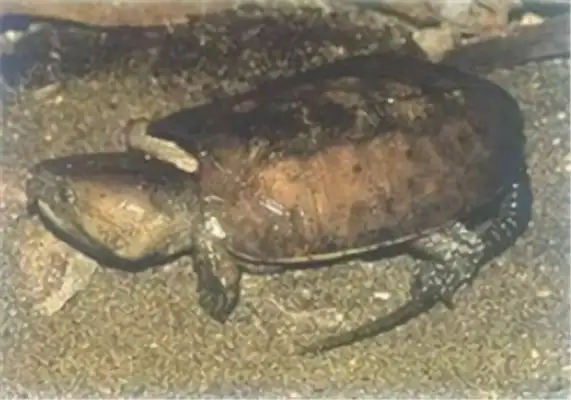
Myanmar pecan turtles are one of the subgenerous species of eagle turtles, similar to China's subgenerous species, with small backs, medium-sized water turtle species, with no figs on their backs, and with no ability to retort their heads into their shells. Thus, the Myanmar pecan turtles are the type that prefers to strike voluntarily.
Myanmar has the biggest ace in size of 20 cm. The head is large, it is triangleed, and the head is covered with a big horny hard shell, with a beak-coated, big eye, no ear. Owing to the size of the head, it is not possible to hide inside the turtle's nail, which is largely protected by a pocket coat. The upper jaw is like the mouth of a Raptor, with a large hook. The back is flat, tan, long eggs are flat and central, and the back and back edges are not toothless. The abdomen are olive, small and flat. The abdomen are connected with the lullaby. Four-legged gray, tile-shaped slabs, finger and toe-toe, half-tip.
Myanmar turret turtles have dark stripes along the edge of the abdomen. There is a visible bone in the middle of the back armour and a less visible presence on both sides. However, the annual wheel on the back of the vest is clear and the back of the vest is in the form of sawn teeth. There are no stripes on the jaw, and there are well-developed hooks on the jaw. In addition, black stripes were found behind the eye. The tail is long, and the tail of a few turtles is longer than the length of their own backslids, covering them with rims. The head, tail and limbs of the turtle cannot shrink to the abdomen. Owing to the small size of the abdomen, the movement of their limbs is not impeded. Myanmar knowledge of chestless turtle care
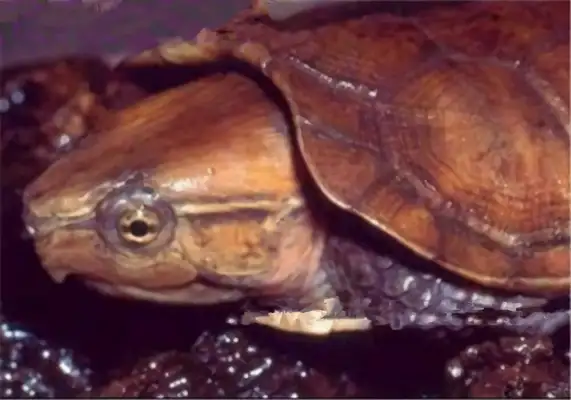
Myanmar urchin turtles are one of the more easily cared for turtle species, but they are fierce, so it takes a long time to domesticate them in the early stages of breeding. Myanmar urchin turtles seen on the market are largely wild and require constant guidance from their owners.
Myanmar turbo turtles are a wild, wild turtle that is more violent than other turtles and is not easily adapted to the living environment of artificially raised animals. Newly arrived turtles may not be released directly into piped water. They should be placed in dry areas, where appropriate, and water should be poured into their bodies and surroundings to ensure that the surrounding environment is wet. And slowly let them eat some live bait, tarts, frogs, earthworms.
If they do not eat for a long period of time, they are still required to place live baits and inject vitamin B, vitamin C into their bodies to increase their nutrients and maintain their health. Myanmar turbo turtles are willing to live in clean water, but the bait is dropped into water, so the remaining impurities can easily contaminate water quality and the whole body of water stinks, which is very detrimental to turtle growth and health. Therefore, water quality should be kept clean at all times, and in the spring and summer seasons, every effort should be made to change the water as soon as Myanmar tortoises are fed, and the fall should wait until noon, and in the cold winter the water should not be changed.
In terms of water depth, Myanmar ' s pecan turtles are not considered to be particularly skilled in swimming techniques, so they are not recommended for deep water, with a depth of 10-15 cm, or 20 cm after some time. Life in Myanmar
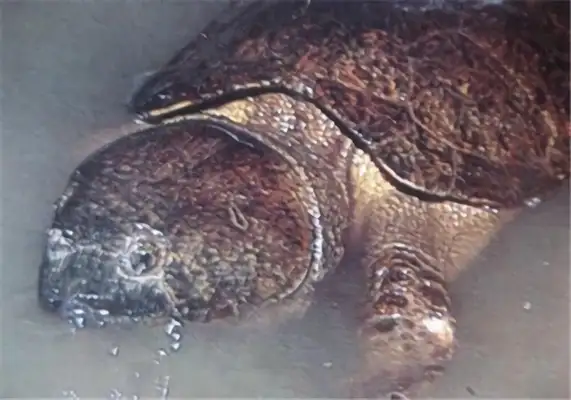
In setting up the environment for Myanmar ' s turbo turtles, the needs of their wild environments, such as deep water, and the fact that Myanmar ' s turbo turtles do not like deep water, should be avoided as much as possible in setting the environment so as to avoid drowning.
I. Recommendations for the environmental setting of Myanmar ' s bare-tonants
In view of the pleasures of breeding, it is recommended that you use a glass tank to keep it for easy observation. The use of filtration systems can reduce heavy water exchange and the effect of creating water currents, and it is recommended that you use the upper filtration system, which can be used both for water maintenance and for sedimentation pumps. It is important that chlorine storms be removed from the water quality, that it be relatively easy to raise Chinese seeds, that if they are in Myanmar, they must be psychologically prepared, and that they are likely to rot in the process of adapting to the quality of water, and that, for some time after the new turtles have taken over, they be carefully observed and protected from the wilayas.
Where shelter and shelter can be found, there can be a stream of wood, and Myanmar has a tendency to hide below. A few stones could also be placed in the water for gas exchange for Myanmar ' s flat chest turtles. The depth of the water is such that Myanmar's flat chest turtles can be replaced by stones. It is particularly recalled that Myanmar ' s turbo turtles, though sea turtles, are not very skilled in swimming and are likely to cause drowning if they are overwatered.
II. Special temperature requirements for Myanmar chestless turtles
The friends who have raised turtles know that they are warmer in winter if they do not hibernate, even in spring and autumn. But Myanmar ' s tortoise is an animal that does not like high temperatures, although it lives in the South. If the water's too hot, it'll probably kill you. Myanmar turbo turtles are usually in water of 15-25 degrees, and the temperature considered by individuals to be most appropriate is up to and down to 20 degrees and below 10 degrees, but not below 5 degrees. More than 30 degrees is a dangerous start. The point of Myanmar ' s breast-tore breeding
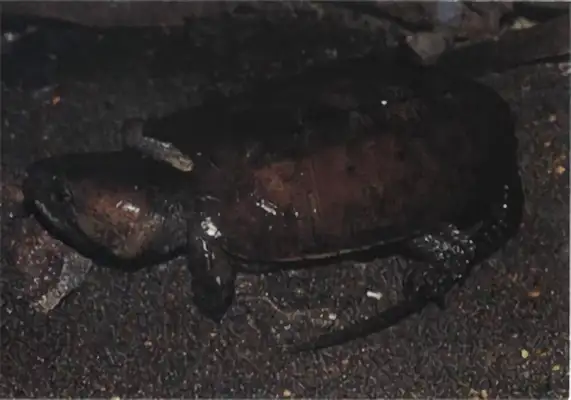
Myanmar turbo turtles are absolute meat eaters, and in the wild, Myanmar turpentine turtles, although poorly swimming, prefer to catch small fish, so as to provide as high quality shrimp or meat food as possible for human feeding and ensure full nutrition.
I. SUGGESTED FOOD RESPONSIBILITIES FOR MURDER AIR
In fact, the richer the variety of foods in the rearing process, the following recommendations combine two aspects: food is easy to obtain and Myanmar has an appetite for eating:
1. Muds: this food is really a good option for Myanmar ' s chest turtle, rich calcium and nutrition, and can restore the wildness of Myanmar ' s chest turtles;
2. Chicken liver, duck liver: this food is nutritious, not good, not calcium enough, and Myanmar has a flat chest tortoise;
3. Shrimp: this is the red shrimp that we normally see, which is supposed to be the best food for Myanmar ' s pecan turtles, and remember to remove the big clips when feeding them, without any other processing, so that Myanmar pecan turtles can easily bite their shrimp shells;
Snails: This one is good, but it's not easy to find small ones;
Pork beef: available to feed and to grow;
Fish: Unfortunately, Myanmar's breast turtles have bad tastes, which is probably what they eat to death, and some of their friends, of course, have vegetarian bananas and so on.
II. Attention for Myanmar ' s bare chest feed
When feeding Myanmar tortoises, there are two small points to remind them of the fact that Myanmar tortoises have problems eating fish, so do not leave fish too much at once. The second is that while it is well known that Myanmar's urchin turtles are best monolithic, some friends will try to mix, which is not an option in a few cases, it is better not to mix, as it was said earlier, that Myanmar urchin turtles have higher water quality requirements, and that if they are species like Brazil that can easily mix water, it is better not to mix.