No.: PET5056
English name: Egyptian Cobra
Origin: Egypt
Vulnerability: enteric and parasitic diseases
Life: Overview of the Egyptian cobra species, 25-30
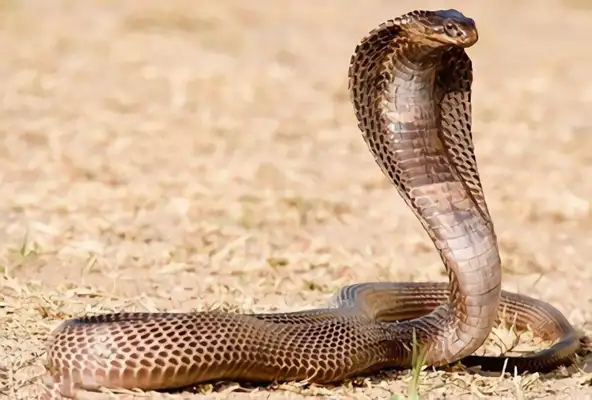
Egyptian cobras can be divided by geographical division into three sub-species; Egyptian sub-species (N. haje haje), coloured in yellow gray to brown; Moroccan sub-species (N. haje legionis), which are almost luminous black; and Arab sub-species (N. haje arabica), which are usually yellow and black in the neck, settled in the southern part of the Arabian Peninsula, which is currently the only African cobra scattered outside the African continent. The Egyptian cobra, the famous daughter of the ancient Egyptian dynasty of Tolmi, Cleopatra VII (also known as the "Egyptian Queen"), who killed himself by biting himself, was named “aspis”. The Greek writer Prutak noted that Egypt had experimented many times on death row prisoners, eventually confirming that the “aspis” toxin brought minimal pain to the intoxicator among many deadly toxins. In modern research, there was general agreement that the then “aspis” meant Egyptian cobras.
Latin name: Naja haje
English name: Egyptian Cobra
Classification: Elapidae
Areas of distribution: around the Sahara desert in northern Africa, as well as characteristics of the Egyptian cobra in the Arabian Peninsula (Arab Asian only)
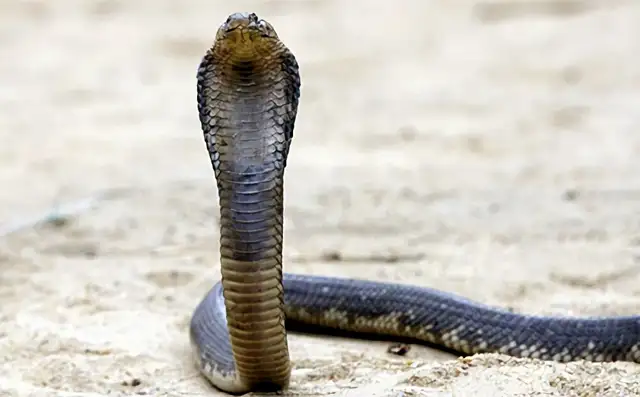
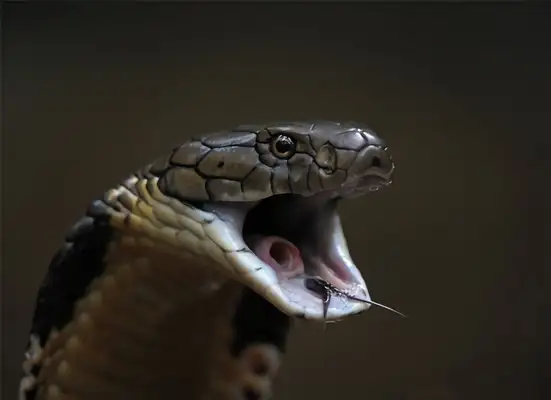
Egyptian cobras are large, large, large and highly toxic snakes with a size of 1.5 to 2.4 metres, most notably large head and neck, and wide beaks. The eyes are larger than other snakes and have round pupils. The larvae of the neck can expand to between 15 and 18 cm. Egyptian cobras were able to release, on average, 175 to 200 milligrams of toxins per attack, second only to Filipino cobras. However, the fatality of the Egyptian cobra is generally considered to be higher than that of the above-mentioned cobra because of the larger size of the Egyptian cobra, the more aggressive nature of the cobra and the fact that each bite can release a larger amount of snake poison. Egyptian cobras are night animals who like dark environments, but they occasionally find themselves in the morning bathing in sunlight. They may live between caves, termite dunes or rocks excavated by other animals, and sometimes even enter the human environment in order to hunt for poultry. As in the case of common cobras, when Egyptian cobras hunted or sensed a crisis, they fled a few metres away, or raised the first half of their bodies, and spread their skins on both sides of their necks in order to intimidate their opponents; but when they met stronger rivals than they felt invincible, they made fake deaths.
The venom of Egyptian cobras is mainly neurotoxic, mainly disrupting the nervous system of animals, forcing the suspension of the transmission of neural messages to muscles, depriving even vital organs, such as the heart, of the ability to receive a neural signal, and eventually dying of respiratory failure. There are signs of immediate pain, swelling, discovery of hard pieces, bubbles, carcasses, etc. after being bitten, while, as the intoxication is deep, other manifestations may include headaches, vomiting, abdominal pain, diarrhoea, dizziness, fainting or convulsions. Egyptian Cobra Feeding Point
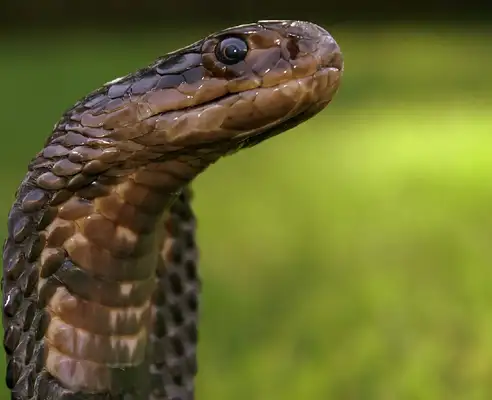
Egyptian cobras live mainly in dry, small-scale savannahs or semi-desert areas with little water and vegetation, and are virtually absent from desert areas. In some cases, there are oases, arable land, mountainous areas with scattered vegetation and general grasslands. The most dangerous situation is that Egyptian cobras often enter houses inhabited by humans, but they are usually attracted by human-fed poultry or rats recruited by humans. In addition, there are a number of Egyptian cobras that can swim in the Mediterranean Sea, which can be seen to have some water quality. Egyptian cobras feed mainly a wide variety of small animals, lizards, aphids and even even other snakes, including cobras. The female Egyptian cobra can produce between 8 and 33 eggs, usually on anthills, and after a 60-day hatching period, the small snake will break its shell.
Egyptian cobras are night animals who like dark environments, but they occasionally find themselves in the morning bathing in sunlight. They may live between caves, termite dunes or rocks excavated by other animals, and sometimes even enter the human environment in order to hunt for poultry. As in the case of common cobras, when Egyptian cobras hunted or sensed a crisis, they fled a few metres away, or raised the first half of their bodies, and spread their skins on both sides of their necks in order to intimidate their opponents; but when they met stronger rivals than they felt invincible, they made fake deaths. Egyptian cobra breeding environment
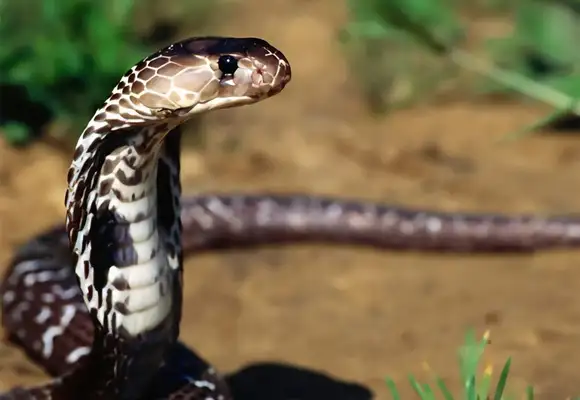
The most prominent features of Egyptian cobras are their large head and neck, and their large beaks. The eyes are large for snakes and have round pupils. The skin of the neck can expand as wide as 15 to 18 cm. Egyptian cobras live mainly in dry, small-scale savannahs or semi-desert areas with little water and vegetation, and are virtually absent from desert areas. In some cases, there are oases, arable land, scattered mountains, and general grasslands. The most dangerous situation is that Egyptian cobras often enter houses inhabited by humans, and they are usually attracted to chickens eaten by humans or rats recruited by humans. In addition, there are Egyptian cobras that can swim in the Mediterranean Sea, which can be seen as having some good water quality. Egyptian cobras feed mainly a wide variety of small animals, lizards, aphids and even even other snakes, including cobras. The female Egyptian cobra can produce between 8 and 33 eggs, usually on anthills, and after a 60-day hatching period, the small snake will break its shell. The formation of Egyptian cobras is approximately 1.5 to 2 metres long, and in some areas individually up to 8 feet long.
Each time a Egyptian cobra bites, an average of 175 to 200 milligrams of toxins are released, second only to the Philippine Cobra (Philippine Cobra). However, the fatality of Egyptian cobras is generally considered to be higher than the above-mentioned cobras, as they are larger in size, more aggressive and each bite can release larger amounts of snake poison. Egyptian Cobra Feeding Requirements
Egyptian cobras mainly prey on a variety of small animals, including lizards, toads, rats and other snakes, including cobras. The female Egyptian cobra can produce 8 to 33 eggs, usually in termite dunes, and after 60 days of incubation, the small snake will break its shell. The venom of Egyptian cobras is mainly neurotoxic, mainly disrupting the nervous system of animals, forcing the suspension of the transmission of neural messages to muscles, depriving even vital organs, such as the heart, of the ability to receive a neural signal, and eventually dying of respiratory failure. There are signs of immediate pain, swelling, discovery of hard pieces, bubbles, carcasses, etc. after being bitten, while, as the intoxication is deep, other manifestations may include headaches, vomiting, abdominal pain, diarrhoea, dizziness, fainting or convulsions. Egyptian cobras live mainly in dry, small-scale savannahs or semi-desert areas with little water and vegetation, and are virtually absent from desert areas. In some cases, there are oases, arable land, scattered mountains, and general grasslands. The most dangerous situation is that Egyptian cobras often enter houses inhabited by humans, and they are usually attracted to chickens eaten by humans or rats recruited by humans. In addition, there are Egyptian cobras that can swim in the Mediterranean Sea, which can be seen as having some good water quality.
Egyptian cobras are night animals that love dark environments, but are occasionally found in the mornings to enjoy the sun. They may live between caves, termite dunes or rocks excavated by other animals, and sometimes even enter the human environment in order to hunt for poultry. As with common cobras, when Egyptian cobras hunt or sense a crisis, they are able to flee a few metres away, or lift up the first half of their body, and spread their skins on both sides of their necks in order to intimidate their opponents; but when they encounter rivals stronger than themselves, they do not feel able to catch them, they do it.