Designation: PET2154
English name: Scarlet-chested Parrot
Origin: Australia
Vulnerability: respiratory, digestive and parasitic diseases
Life: Overview of species of red macaws for 8-10 years
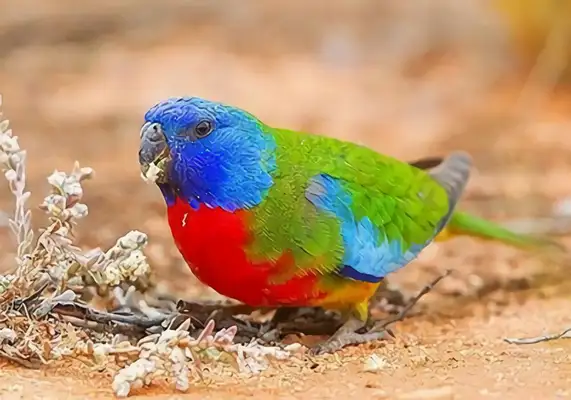
In Australia and New Zealand, there are birds with beautiful feathers, called red macaws. And if you would guess that the feathers in the chest must be red, then you would be right in half, because the feathers in the breast of the male are red, but not of the female, and they are green in the chest, so you want the sex of the parrot in the red breast, just look at the color of the feathers in the chest.
In addition to the names of red macaws, they have a number of aliases, some of whom will call them radiant parrots, and others who will call them red parrots. When you hear these two names, don't think of them as other birds.
Scarlet-chested Parrot, the English language, reflects their morphological characteristics.
Chinese literary name: Red breast parrot
Context: Animals
Gate: Pipeline gate
Programme: Birds
Look: Parakeet.
Section: parrots
Yes: Orange parrots are characteristic of the red macaw.
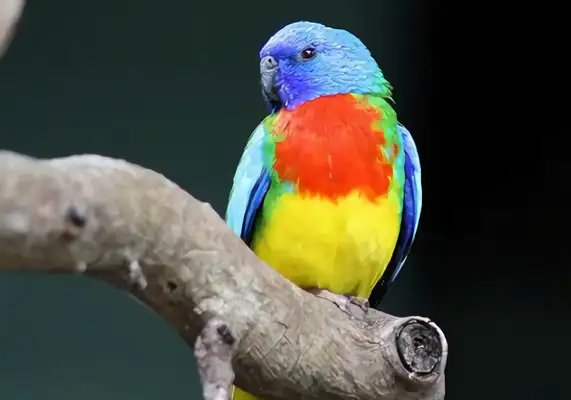
When it comes to red chest parrots, the first reaction is that the feathers on their chests are red, so is there any other morphological characteristic of red chest parrots? Of course, if you've ever seen a red chest parrot, you might find that their toes are two forwards and two backwards, because red chest parrots are birds climbing, and that's how they fit to climb.
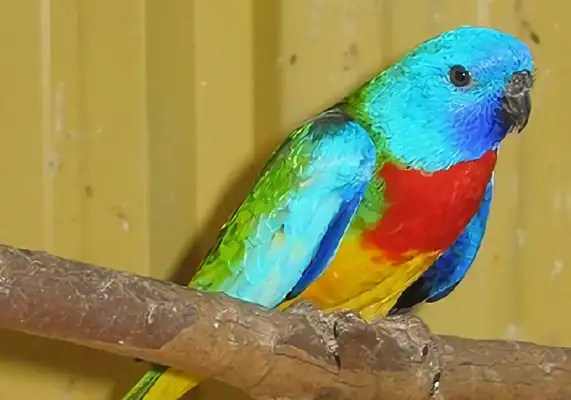
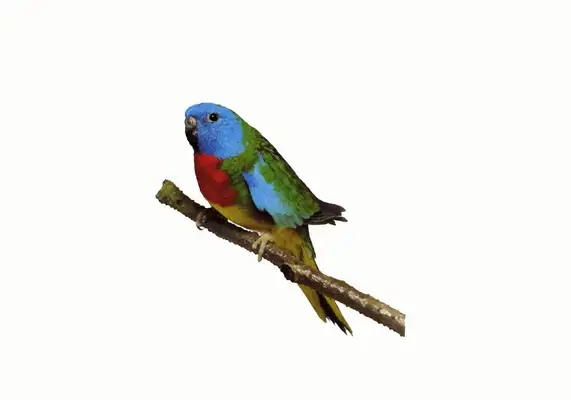
The size of a red macaw is around 20 cm and generally does not exceed 45 g. Male red-breathed parrots usually have more bright feathers, with blue, orange, purple, dark green colours in addition to red feathers on the chest. In contrast, female red-breathed parrots are “lower” than they are, with little red chest feathers and a smaller blue face.
The morphological description of the red macaw.
Size: 20 cm or so.
Weight: 35-45g.
Beak: Black.
Iris: Ash brown.
Face: Blue, female face less blue.
Boobs: The male has little red feathers on his chest, the female does not, and is green.
Abdominal: orange yellow.
End: Yellow on the outside and dark green on the background; yellow on the inside.
Moreover, young birds are not exactly the same as adult birds, but after two years of growth, they can have the same feathers as adult birds. Red chest parrot living environment
Red macaws are non-threatening species and are more common in Australia. If you want to know how they live, you have to go deep into Australia's dry inland areas, which have bushes and grasslands like the red macaws. Usually you don't just see a single red macaw because they're all in groups and the number is around 10.
Unlike the birds that feed on the top of the tree, the red macaws look for food on the ground. Because they're not very defensive animals, they won't fly away even if you're a few metres away. Of course, if you scare them, they'll fly away immediately, but they won't be able to fly away, usually with red breasts and parrots choosing to observe the ground on a closer tree.
In general, you don't see red macaws in the water because they don't go much. So how do they replenish the water they need? It has been found that fresh red chest parrots rely on dew and beads on plants to obtain the required moisture.
The red-bread parrots are not noisy and, in an artificially raised environment, masters are required to do their job of setting up the environment. When they start raising red-bread parrots, they may not be well adapted to the new environment and to their owners, but they do not have poor adaptive capacity, and they will not be long before they adapt to their master ' s breeding life. In addition, the owner is required to keep the environment dry as much as possible and, if the temperature is low, to provide heating measures. Red breast parrot breeding requirements
Although the difficulty factor for raising a red macaw is not high, this does not mean that the owner can be taken lightly. Scientificly sound conservation methods can allow fresh red macaws to grow healthy, and, on the contrary, inappropriate rearing can lead to situations you do not want to see. The masters must do the following:
I. What kind of living environment a red breast parrot likes.
If it is not human-grown, red-bread parrots usually live in the dry interior of Australia, so it is important for the masters to ensure the drying of the environment when raising red-bread parrots artificially. In addition, low temperature environments are not suitable for the growth of red macaws, and if the temperature is low, the masters are required to do the keeping.
ii. What does a red macaw eat? Okay.
The masters are usually aware of the food nature of the red macaws before they are raised, and in the natural environment, the food of the red macaws, such as seeds of plants, fruits and buds of plants, is still quite abundant. However, it is not realistic to give them food exclusively in the natural environment under conditions of artificial rearing, and the owner has to prepare food according to the needs of the bird.
In order for the birds to receive adequate nutrition, the owners feed the birds. But there are some nutrients on the market that are not designed for red macaws, and if you're not sure if what you see is suitable for feeding red macaws, you can ask experts. In addition, there are feeders who make food for birds at home. If you want to do the same, make sure that your food contains all the nutrients you need.
III. Special attention to reproduction
If the bird is in reproduction and the master wants the bird to reproduce, the master needs to pay particular attention to the following:
1. When the birds are fully mature before they are reproductive. Usually birds over two years of age can breed.
2. Provide nesting boxes suitable for them. Because for a long time the parents of birds and birds will be with their newborns in their nesting boxes, the size of the nesting boxes is particularly important, and the owners can provide nesting boxes suitable for the birds according to their size.
3. While it is natural that scientific diets and full nutritional supplementation should be avoided by the owner, at the same time, to avoid feeding the birds that they cannot eat, such as plants such as spinach, which contain herbic acid, which inhibits calcium absorption and, if the bird lacks calcium, leads to a decrease in the yield of eggs.