Designation: PET5953
Country of origin: Peninsular Malaysia, Philippines, Indonesia (Kalimantan and Sumatra), Cambodia, Viet Nam and Laos
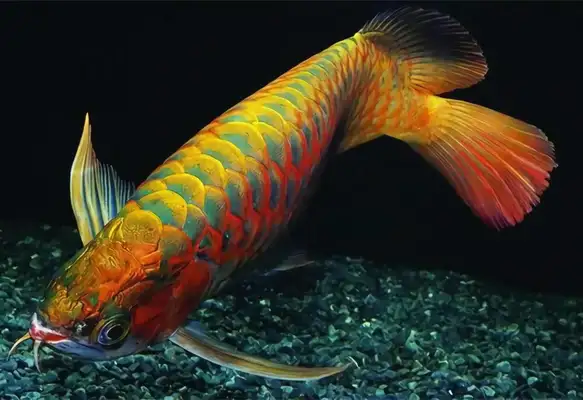
Asian dragonfish are ancient and primitive species, known in Hong Kong as dragon dumplings, are endangered species and are known as “activated fossils”. Asian dragonfish, like many dragonfish, are very popular with fish friends because of their appearance as legendary dragons.
Chinese literary name: Asian dragonfish
Context: Animals
Gate: Phylum Chordata
Amen: Vertebrata
Platform: Osteichthyes
Actinopterygii
Osteoglossformes
Section: Osteoglosidae, also known as Osteoglosidae
Scleropages
Animal species: Asian dragonfish
Distribution: Asian dragonfish appearances in Peninsular Malaysia, Philippines, Indonesia (Kalimantan and Sumatra), Cambodia, Viet Nam and Laos
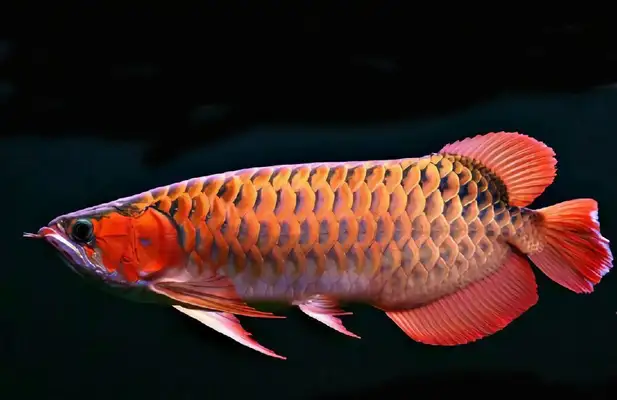
Asian dragonfish are the highest and most popular species of dragonfish, which were first found in South-East Asia. Asian dragonfish can be classified according to their origin and colour as follows:
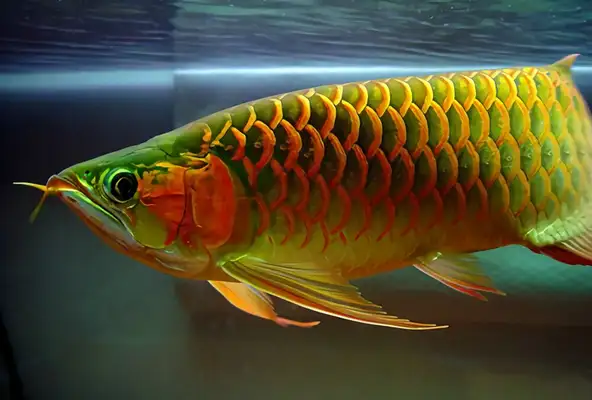
l. Blue dragonfish: Blue dragon fins are yellow and scales are blue. The kisses were yellow, and when they turned into fish, they were all golden and blue, so they were called Blue Dragons. Yellow-tailed gold dragons, yellow-tailed dragonfish and blue-tailed dragons are very much alike, except the back three fins are yellow at a slightly higher price than blue-tailed dragons.
ii. Redtail goldfish: The gold frame in the blue-bottomed light-red strip, which is the same as during the larvae stage, is transformed into golden yellow. The only difference is black on the top of the back fin and tail fin, red on the lower half of the tail fin and ass fin, and gold bars reach the top of the scales, starting with the abdomen. This characteristic is the distinguishing factor between the back and the red tail gold dragons. Redtail gold, known by name, focuses on whether tails and hips are red or red, the reder the better. Not every dragonfish, commonly known as red tail gold, has the characteristics of red tails, and some of them are even slightly red or non-colored.
The first stage is a super-class red tail gold dragon: all seven fins are red, and then the three fins are obvious and the scales are bright.
The second stage is Class A Redtail Golden Dragon: the latter three fins are red and the abdomen and chest fins are pink and yellow.
The third stage is the common Redtail Golden Dragon: the latter three fins are light orange red, and the black odour and stripes are more visible.
iii. Overback gold dragons: The juvenile fish is characterized by a small gold frame in a light red strip with a blue base, a shallow frame of growth will be turned to gold yellow, and the golden blue or green poles will reach the fifth row of the scales, crossing the entire ink-green back, where the difference with red anger is, in addition to the scab, the difference between anger and hips, and the upper half of the back and tails should show deep blue.
Red dragons: can be classified into four categories. The four categories are red blood, red chili, orange and gold. & & & & & & & & & & & & & & & & & & & & & & & & & & & & & & & & & & & & & & & & & & & & & & & & & & & & & & & & & & & & & & & & & & & & & & & & & & & & & & & & & & & & & & & & & & & & & & & & & & & & & & & & & & & & & & & & & & & & & & & & & & & & & & & & There is no red frame in the red red of the red dragon, and there is no visible red radon mark in the caps, but it is spread all over the body evenly, but the colour is red. The dragon is largely colourless, its lips are smoother when it comes to its juvenile fish, its head is less sharp, its gills are light orange, its fins are not visible red or light orange, and its fins and tails are light orange. High-backed red tail gold across the red-backed gold dragons hand over the subs. The emergence of high-backed red tail gold has made the back of a gold dragon. There are currently more controversial species. The difference between the two is only on the back of the sixth row! And high-quality redback tail gold is a possibility! (The odds are low) because it also inherits the blood of the back. It's a real overback. Growing up and coloring. It's not the back of a red tail. It's comparable. The difference is blood. So it's not that there's no reason why a pure-blooded overtook dragon is priced.
V. Seven coloured dragons, radiant, red gold dragons: The species of dragons in this series are modified by red dragons that have mixed backs. Family names are different. But not when they grow up. It's as beautiful as the posters. Everything depends on the individual's performance. Special dragons include “camel dragons” with deformed backs, “blind dragons” with deformed eyes, “two-headed dragons” with conjunctural deformities, “one dragon” with a deformity of the back, as well as chromosomal “chelons”, “black dragons” with blue chords, “red-eye dragons” with red-eyed whites, “panda dragons” with transparent caps, “two gods” with more than one eye on their heads, and the unusual look of dragonfish. These dragonfish, which are not very common, are in artificial collections where prices rise because of their rareness and uniqueness. Asian dragonfish breeding environment
It would be more regrettable if deaths were to occur if Asian dragonfish were raised at higher prices. What quality of water is suitable for Asian dragonfish if stable water quality is necessary for breeding them?
Asian dragonfish are suitable for weak acid or medium-sized soft water and take care to remove chlorine or fluorine from the water, such as from hard water such as well water, before they can be used by boiling the water, removing impurities, or using ion-for-slip filters to remove the impurities and convert them into soft water. Water is raised at 24-28°C and silver dragons and black dragons at 27-28°C. When new juvenile fish are purchased, a small amount of antibacterials must be added to the water to be bred, which is the best in gold methin and tetracycline. Add 13 milligrams to 1 litre of water to make the water in the aquarium slightly yellow or cyanide. The raising of Asian dragonfish cannot replace the entire water, otherwise it causes harm to fish. At first, one eighth to one sixth of fresh water can be injected, and once fish are used to it, a little fresh water can be exchanged every day or the following day. In the case of larger aquariums, small numbers of fish are raised and more water is exchanged. It's safer to start with young fish. Asian dragonfish must be too much and too little for water. Too little water exchange can lead to opacity and oblivion in the fins of Asian dragonfish and even to the flipping of caps. Every time water is exchanged, one quarter to one fifth of the volume of water in aquariums, not more than one third, in order to prevent changes in water quality. In some cases, the fins and scales of Asian dragonfish have been seen falling, which is the cause of too much water exchange. As long as the water exchange is suspended, the fins recover and the scales grow. The ability of Asian dragonfish to adapt to water quality is high, with an ideal pH between 6.5 and 7.5, which is too low and too high to affect the growth and chromatography of Asian dragonfish. 3-12 dH is ideal. The Asian dragonfish feed.
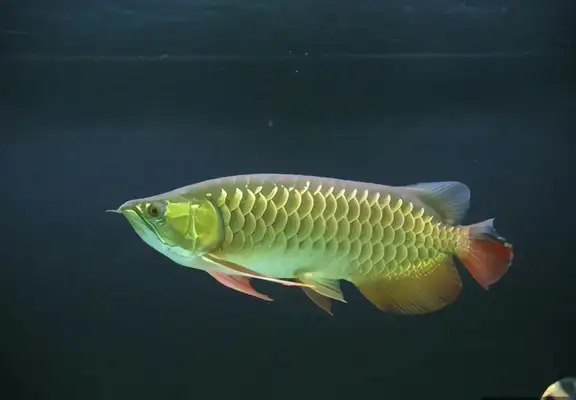
In addition to proper water quality environments, healthy, nutritionally balanced baits are also important for raising Asian dragonfish. The bait for Asian dragonfish can be divided into artificial and biological baits, so how are Asian dragonfish selected and fed? I'll analyze it for you.
Artificial bait: easy to obtain, clean and healthy, without parasites, easier bait. There is now a sale of Asian dragonfish bait. Asian dragonfish are carnal and are not used to artificial baits, which will take some time to feed.
Biological baits: There is a large variety of biological baits available, with different modes of baiting Asian dragonfish at different stages. For example:
Young Asian dragonfish under 1 to 12 centimetres start eating baits, at which point white bread worms, small streams (fresh off), hard tails, blood worms can be fed. Special attention should be paid to feeding periods, with fewer meals, which is particularly important for the growth of young Asian dragonfish.
Small Asian dragonfish, about 15 centimetres, can feed normal breadworms and shrimp or 1. Five centimeters of small fish. When you feed the shrimp, you're going to take off your sword so you don't stab your stomach. At this point, it grows fast and eats more.
Asian dragonfish, 3 or 20 centimetres or more, can feed larger fish, shrimp (crawling shrimp swords), meat, mud, etc. There are also seasonal live baits, such as frogs, crickets, acne, spiders, cockroaches, etc., which are particularly popular with Asian dragonfish. Roachs are the favorite, and care is taken not to be contaminated with pesticides.