Designation: PET4864
English name: Chaetodon unimaculatus
Origin: India to the Pacific
Vulnerability to diseases: white spots
Life: Overview of single-banded butterflies species 4-5 years
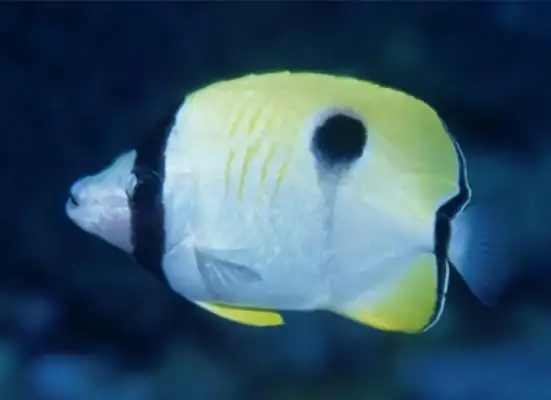
Single-banded butterflies, known as a little bit of butterflies, are a more distinctive and common species of butterflies. Since single-banded butterflies are mainly located in the Indian-Western Pacific tropics, attention must be paid to the management of seawater fish breeding.
School name: Chaetodon unimaculatus
Named by: Bloch, 1787
It's called Butterfly Fish.
Section name: F393 Chaetodontidae
Model origin: East Industries
World distribution: India to the Pacific
Maximum size: 20 cm
Habitat depth: 1-25 m
Living environments: reefs, coastal zones, lakes
A little butterflies, a little clean
English common name: One-spot butterly, One-spot butterfish, Terradrop butterfish
Famous names: Anitochaetodon unimaculatus, Chaetodon intermruptus, Chaetodon Sphenosilus, Chaetodon unimaculatus interruptus
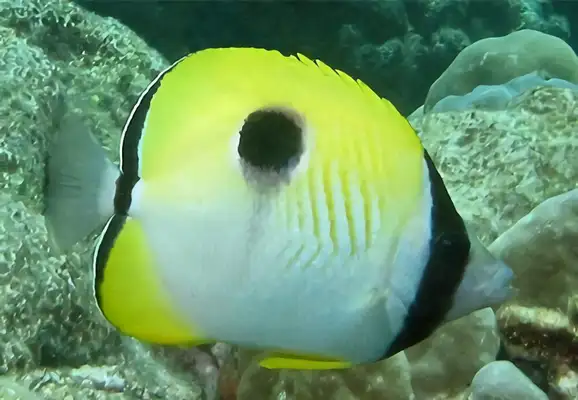
Single butterflies can understand from their names that there is a drop of black on the upper part of their body, which is a very distinctive place. The differences between larvae and adult fish are small and yellow, but the larvae are more yellow.
Monochrome butterflies are tall and have an egg cylindrical shape; the upper contours of the head are flat and the nostrils are dented. Kisses high, sharp lips. The front nostrils have nose petals. Ex-gill bellows have fine sawn teeth; gills are connected to the isthmus. The teeth are thicker and the inner ones smaller. The body is covered by medium-sized scales; the sideline rises upwards to the lower side of the back fin, to the bottom of the back fin, to the bottom of the base.
Single butterflies have single back fins, hard roughy, softy 23-24; assystolic roughy III, softy 19-20. The upper part of the body is yellow and the lower part is light; the front part of the body has 10 brown vertical stripes; the upper part of the body has a black dome of about two times the diameter of the eye; and the head is about the same as the black eye belt of the eye, which extends down to the upper part only. Gold yellow on the back, abdomen and hips; a black narrow zone on the back of the back fin to the back of the hip; light or yellow on the residual fin. Monochrome butterfly fish breeding environment
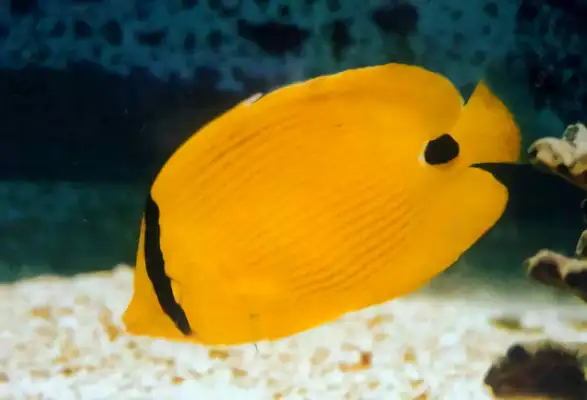
Monochrome butterflies prefer to live on reefs, and since monochemic butterflies are marine fish, care must be taken when raising monochemic butterflies, and how to deploy water in close proximity to seawater is the most critical issue in raising seawater fish.
When all the equipment in the water tank is installed, the natural seawater or artificially deployed seawater, which is pre-sealed, will be packed in non-metal containers and pumped into the aquarium. A plastic disk or plate is placed on the bottom sand of the aquarium to mitigate the impact of the current and avoid damage to the prepared bottom sand, and the function of the pump is tested when the recharge is halfway through. Check if the filter is functioning properly after the water has been filled and see if the bottom filter leaks at the end of the pump. Finally, a liquid crystal thermometer was placed on the wall and all the equipment was turned on to increase water temperature to 24°C and to test the weight of sea water using weights. If too low a proportion continues to be added to artificial sea salt, then a portion of the sea water is extracted and added to the fresh water exposed to the sun, and will continue to be measured until the weight reaches 1. Standards up to 022.
Monochrome butterflies like to live in clear coral reef areas of 1 to 60 meters, are mild and have a certain "home" range, circled over corals or reef platforms during the day. One-bone butterflies.
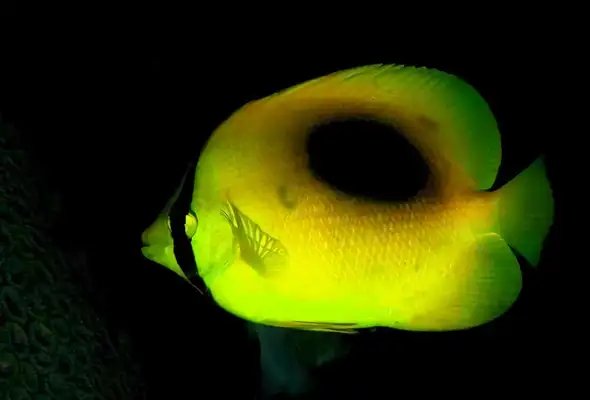
Monochrome butterflies are impregnable seawater fish and can be fed on a daily basis by coral worms, small invertebrates and algae. In everyday life, single-stained butterflies must observe their diets, excreta, etc., which can help prevent disease.
1. Observe the food intake of single butterflies and, if they are found to be single butterflies that do not eat or have their appetite reduced, identify the reasons and provide timely justification.
2. Observation of feeding patterns: Regular observation of single-blanche fish feeding patterns allows for an understanding of their habits and, over time, different methods of baiting them according to the aquarium. For rock-eating species, meat and algae can be made in a sticky state, painted on rocks, dried up by wind, and fed for pecking; for species such as freckles fed in water, a variety of baits can be used, with nutrient-rich fertilizers, fresh fish shrimp, various dry baits and refrigerated baits, and some fresh vegetables can be fed; for special-eating fish, they can only eat coral worms and moss, and it is difficult to find bait suitable for them, and only when they are grown from juvenile fish can they gradually adapt to other alternative baits.