“520” is no longer just a critical cycle for men to win over girls, and 520 has become a critical moment for scavengers to fight for the heart of their cats and dogs.
On 20 May, more than 55 head and waist pets were involved in the “Multiplatform 520 marketing war”. The sales information from Skycat and Kyoto shows that the growth in pet-related consumption during the “520 consumption cycle” shows the same trend as that of “love items” such as flowers and desserts. On the other hand, pet-related content during the 520-cycle cycle is very hot on the shivering and little red book platforms.
The heat at the consumption end affects capital in reverse. Since 2021, the pet track has seen a new wave of “in and out”: According to statistics, in 2021 there were more than 70 cases of investment in pet tracks, a new peak since 2017.
“The economy of households affected by the epidemic has given the pet track a dividend.” The pet track analyst, former “cats say”, told the tiger on the afternoon of May 21st that “520” pet consumption heat had become apparent in 2021, continuing the trend in 2021, but there was a marked change: the boundary between pet and emotional consumption was blurring.
In mid-May, Skycat and Consulting, Roland Berger, jointly published a White Paper on pet-card crowd strategy, which, according to statistics, recorded an annual increase of 26 per cent in annual per capita pet consumption for Z generation consumers. With the continuing impact of the epidemic, the consumption of young people's pets has become one of the fastest-growing and most certain areas.
But there is still a lot of doubt about the pet track.
“In the C-end market, the buy-back rate is a key challenge; at the B end, the industry lacks a standard system, is not well developed and the pet-related supply chain is not mature. That means our pet industry is big and small." Citing the consumption of pets during the “520” period this year, Cheng summer points to the challenge in the track: the pet market continues to be highly market-dependent and, with marketing incentives and subsidies, consumption power can only be activated. A deep lifeline problem, however, is that the Z generation consumers, who are most rapidly growing, have less average consumption power. A large number of indigenous brands are concentrated in this group of low- and medium-consumption users, and they are staged in intense marketing battles that eventually lead to the Red Sea.
"Assisting 500 a month" Shuro: The pet economy is not like the mother-child economy.
“A monthly average of $500” is considered to be a key consumption line, with the implication that raising a pet is a monthly average of $500 per month for all projects around food, supplies, medical care and so on (annual consumption of $6,000).
It is worth noting that professional sources told Tigers to smell that this data focuses on two key elements in the statistics: urban pet owners and pet dogs. It is understood that the indicator line for simply raising cats is “a little lower”. This is due to the fact that, as a result of the “dog-keeping certificate”, municipal pet dogs are the most easily quantified pets in the country, while urban pet dogs' “frequent needs” for vaccines and regular care make consumption projects around pet dogs clearer. By contrast, there are many “mixed areas” in the consumption statistics for pet cats.
A key detail is that, in 2020, the pet indicator line averaged $500 per month “stopped” more than half of the pets, while at the end of 2021, the proportion of urban pets within the index line was still more than 40 per cent — in short, in the Chinese town pet market, the “average $500 per month population” was the largest user.
They are also key targets of the brand “hunting”: Chengxia tells Tiger that more than 60 per cent of domestic pet cards are concentrated in the market for this group of people, and even more if they are counted as “white”. The key to competition in this market is value for money, exposure, access, where low prices and ease of purchase are critical, and brand visibility is crucial.” Cheng summer indicates that a key reference in pet consumption research is the “first consumption brand” — first-time pet consumers are often not allowed to study in depth the differences between major brands and can only be recommended through channels (e.g., pet stores) or recognized consumption.
In contrast to other consumer goods, the impulse consumption of first-time pet users does not occur in articles or food, but in pets themselves - The most common cases are when young people pass through a pet store, like cats in windows, rush to finish the deal. At this point, in order to keep the cat alive, young people who have just become pet owners must immediately purchase the “care base”. Over the next three months to six months, pet owners have often not yet developed a mature “paternity awareness system”, during which established cognitive and easy-to-shopping knowledge becomes a key factor in consumption.
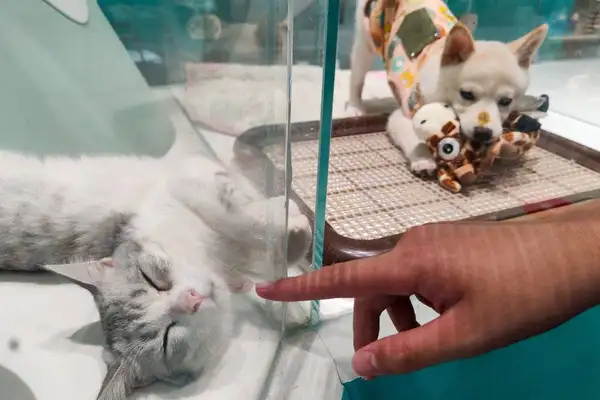
The pet shop is a key scenario in this field.
Another point, unlike other consumer goods, is that there is a “consumption downgrade” cycle for pet consumption: when first-time food items need to be replaced, first-time pet owners tend to experience fluctuations in consumer willingness - Some of the pet owners give up their pets or lower their expenses because of the difficulties they experience. According to Cheng Summer and its team studies, “a higher rate of downgrading of consumption” occurs in the first year of domestication in urban areas.
The key logic behind these phenomena is that, unlike what many people in the circle call “a child-raising economy similar to a mother-to-child economy”, pet tracks are part of the same path, but they are not entirely consistent. “Different abandonment rates are the key difference between the two tracks, but some people in the tracks always avoid the key proposition.”
In the opinion of analysts such as Cheng summer, the evolution of the pet track is more similar to “emotional consumption” than the mother-and-child track. Following the epidemic, pet consumption, like emotional consumption, showed marked cyclical fluctuations — during the Valentine's Day, New Year's Eve, 520 and Christmas cycles, all showing growth. Single youth, on the other hand, are the key groups behind consumption.
520 cats and dogs behind the heat.
"Two years ago, I saved more than a month's salary and bought a watch for a boy. What happened? The bastard took my watch and went to see the other girls. This year, I paid only $100 for two dogs to buy cans and $200 for my own food and small gifts, and 520 was very happy.” On 21 May 1997, Wang Ki, born in 1997, told Tiger that she had paid a special visit this year to the boy's circle of friends 520 that night, “No wonder, he changed his purpose and went to be kind”.
But Wang Ki didn't realize that she might be affected by the pet card.
In March 2022, the head of the content of a Beijing-based MCN (clients are mostly new consumer brands, with major channels at station B, Little Red Book and Dancing) told Tiger that, starting in March 2021, there was an interesting change in the circle: pet cards began to make some non-product-directed drop and flow patterns - The key direction of cooperation is to describe the dangers of love and the loyalty of pets.
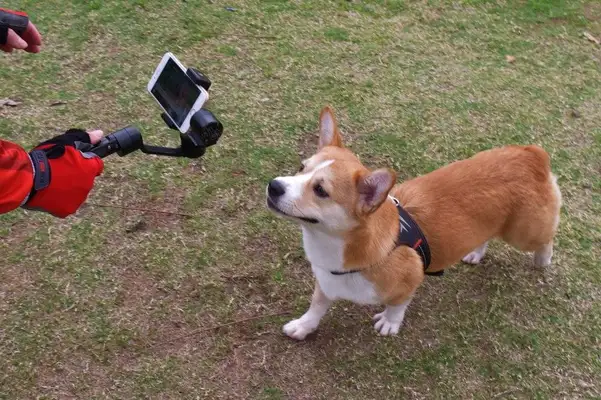
Content flows are affecting the mind of pet consumption.
In 2021, some emotional text creators were surprised to discover that they could be involved in “the relevant topics in the pet field” within the platform, even during the Valentine's Day creation cycle, when emotions and pets were classified as docking with the same operator. One of the key issues is that, after the epidemic, there is itself an “optimal trend” in emotional creation — the authors say that the content that traffics in emotional anxiety and marital anxiety is generally more frequent. When this tendency and the pet world “accompanies”, it tends to evolve into a certain fixed result: the unreliability of shaping people (especially men) and the degree of loyalty of animals (especially pet dogs, creators tell tigers to smell that some of the cat's products are in the emotional realm of a “problem crisis”). Interesting case is the short blue cat in the pet cat. The creators indicated that there was a strange connection between the concept of the short blue cat and the “scumcat” in emotional circles and in emotional opinion, so that blue cats were not usually used as protagonists in the production of animal “loyal love”.
Some pet cards saw the opportunity of “emotional content orientation”, and in the second half of 2021, branded teams with pets focused on the creators of emotional content and institutions and sought in-depth cooperation. Noteworthy are the core users of these emotional content: single young girls.
“In 2021-2022, during these consumption cycles on Valentine's Day, we observed a marked increase in consumption enthusiasm among women consumers.” Chengxia told the tiger that one of the reasons for this was that traditional emotions such as flowers and snacks were often based on the traditional pattern of “men giving gifts to women”, while single girls were more likely to “sensual consumption” and buy to cats and dogs based on emotional compensation during cycles such as Valentine's Day. “A key trend we have observed is that, during Valentine's Day or the 520 cycle, single boys tend to buy themselves snacks or gamuts when they see people in the circle of friends, but single girls are more likely to consume their pets or family members.”
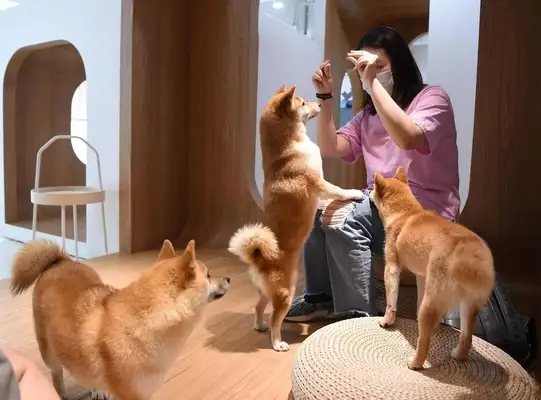
The pet economy is eating the love economy pie?
Deepening the “emotional potential” of pet consumption will be a key direction in 2022.
In industry, it has been suggested that in some content flow platforms, the boundaries of the channels of pets and emotions are blurring — and even the concepts of “love” — are becoming difficult to distinguish between “humans and animals” and that in related content activities, human and animal-based content is placed together. In contrast, in Kyoto and Skycat, pet channels have been pulled out and become a core group, even at key points in the APP interface, where pet-related products and content have taken their place.
The logic behind this is that brands and marketing parties seek to further the boundaries of human emotions and pets (consumption baits) at the intellectual level of content and build on this to expand consumption potential, while brands and platforms on consumption platforms want to give consumers a clearer “consumption port”.
A deep question is, is whether a cat or a dog should be the key direction for action?
“Before 2021, we've been mixing up the cat-dog economy, but in practical terms, it seems that the cat-dog economy is very different.” In the middle of the summer, it was thought that there might be a tendency for the cat economy to move closer to emotional consumption, while the dog economy to move closer to mother and child economy. “In Beijing and Shanghai, the abandonment rate of pet cats and dogs is different, and the current industrial development of pet dogs is relatively more mature to provide systematic products and services.”
A B-station pet UB told Tigers that the key change around “cat flow” from late 2021 to the present was that the audience wanted to see UP masters and cats close: holding cats and then doing things quietly; kissing cats and touching cats; and being surrounded by cats that looked warm and warm. The author of emotional content has discovered a new flow secret — a few articles she wrote in 2021 — “The public cat doesn't care about the calves and the slag is very popular with her female reader, who, after studying several books on animal behavior, is prepared to build on the fresh insight that a large number of female readers still have cats after reading them, and their logic is that “cats are loyal to themselves, compared to other cats” — and, based on this logic, many pet cards choose to work with her.
Cat and dog fever is considered by some practitioners as a “little test cow knife”. They believe that the seventh anniversary of August may be a new pet opportunity as the impact of the epidemic in Shanghai and Beijing decreases and consumption warms. It is worth noting that 8 August of each year coincides with International Cat-Friends Day, and the seventh night of this year coincides with 4 August — will this open up a hot season for cat consumption?