Designation: PET1262
English
Origin: Cape, South Africa
Vulnerability to disease: sudden death
Life: Overview of geometric land turtle species over 50 years
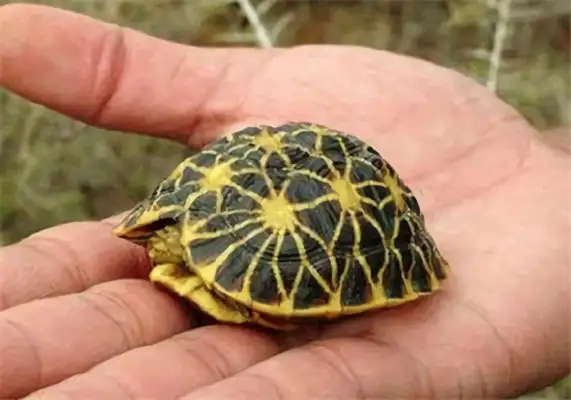
Geometric land turtles are a relatively vulnerable species of turtles, and although many try to raise them, many fail to do so, and the number of geometric land turtles is scarce and one of the species in need of protection.
Geometric land turtles, also known as geometric turtles, geometric sand turtles or geometry cluster turtles, are South African turtles. They can be 6 inches long. Female turtles dig holes in the ground to produce eggs and cover them with plants. They are endangered species threatened with loss of habitat and hunting for food. Locals steal their eggs to eat and decorate their turtle shells. Other mammals also prey on them. The South African Government has set aside regions to care for them.
Chinese literary name: Geometric Turtle
Chinese alias: Geometric Treasure Turtle
English
Two words: Psammobates geometricus
Context: Animals
Gate: Pipeline gate
Amen: vertebrate Amen.
Programme: climb
Tortoises.
C: Turtles
Species: Geometric land turtles
Distribution: Cape, South Africa
Practising: Living in dry sandy and reckless areas. Fits at 18-30 degrees Celsius.
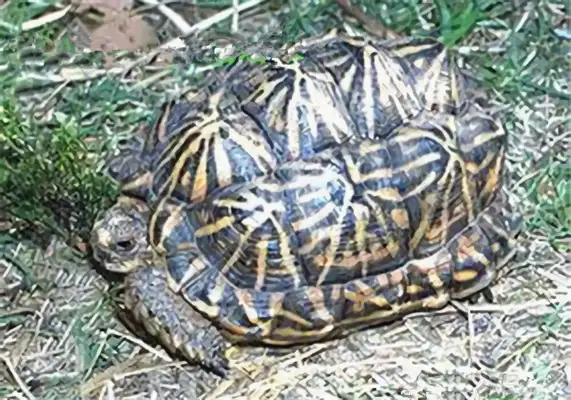
Appearance characteristics: Geometric Treasure turtles are very similar to Indian star turtles, each piece of armour is also black as the bottom colour, and yellow stripes are issued in the middle of the shield, while the edges of the armour are not serrated. Most limbs are yellow, while some turtles have black spots on their heads.
Reproduction: Eggs.
Eating: The wild depends on grass and desert plants. Geometric land turtle morphological characteristics
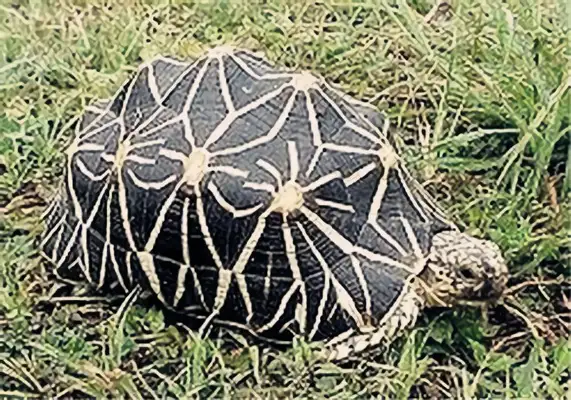
Geometric land turtles, also known as geometric starlets, are of the same three species with similar but different appearances. At the same time, geometric land turtle patterns are similar to Indian star turtles. So if you like geometric land turtles, it's recommended to raise Indian star turtles as an alternative, because they are relatively larger and easier to raise.
I. The appearance of geometric land turtles
Geometric land turtles are very similar to Indian star turtles, and each piece of armour in the back is also black, with yellow stripes coming out in the middle of the shield, while the edge of the armour is not serrated. Most limbs are yellow, while some turtles have black spots on their heads. The edges of geometric land turtles are not serrated and can be distinguished from the other two areas, which are relatively large and can reach South-West Africa.
II. Geometric turtle care
Geometric turtles hibernate when the temperature is too low, but at too high temperatures they also sleep and do not eat. As South Africa is located in the southern hemisphere, it is the summer of Taiwan that turtles sleep. This time difference may also be one of the reasons why geometric turtles are not easily adapted. The male abdominal acetal cavity, with large tails, and the female producing 12-15 eggs per nest, is very productive, and the calf is about 3 cm long. Geometric land turtles are the largest of the three geometric land turtles and can reach more than 20 centimetres, with the other two not exceeding 15 centimetres. Geometric land turtle care knowledge
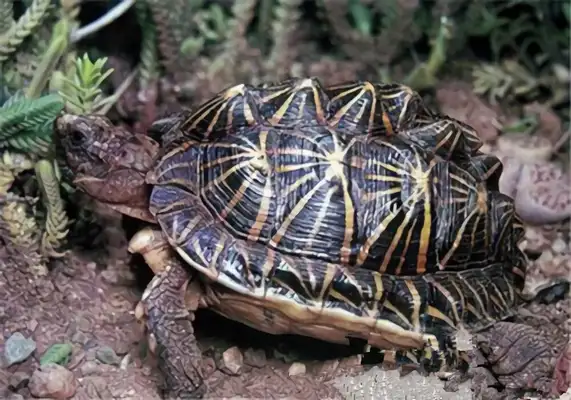
Geometric turtles are more environmentally demanding, and are vulnerable to disease and death in the context of artificial breeding, so breeding is not recommended, and people should focus on the protection of wild geometric turtles and stop destroying the homes on which they depend.
I. Geometric land turtle breeding
Geometric turtles can only adapt to a warm and dry environment, which is similar to Indian star turtles when exposed to damp conditions and prone to respiratory diseases, while turtles are also susceptible to shell disease, and bottoms are best fed by dry sand substrates, with geometric turtles having difficulty living for more than a year under artificial rearing, which is a very difficult turtle species and the most important control of humidity. Of these, only the tented geometry turtles are more adaptable to the artificial environment, where they depend on coarse grass and desert plants for their livelihood, so that the food in the artificial environment is dominated by rougher leaves or weeds, together with cucumbers, carrots, tomatoes and pumpkins. Geometric turtles hibernate when the temperature is too low, but at too high temperatures they also sleep and do not eat.
II. Geometric turtle bathing
A bath would allow geometric turtles to excrete (or excrete) in real time, reduce the time when urine forms urine acid in the body or combine with other organic substances, leading to the risk of the creation of stones. Every day a bath prevents the occurrence and spread of in vitro parasites. Because they are used to defecating in the water, they are less excreted in places and relatively hygienic because of daily baths.
Bath time is about 10-20 minutes, water depth is about half the height of turtle shells, and water temperature is slightly lower than human bath water. Temperature can be easily lost in winter, heating lights or heaters can be installed to improve the temperature, and cold water can be used directly in the summer, preferably to dry immediately after bathing, in order to avoid a cold. Geometric land turtle living environment
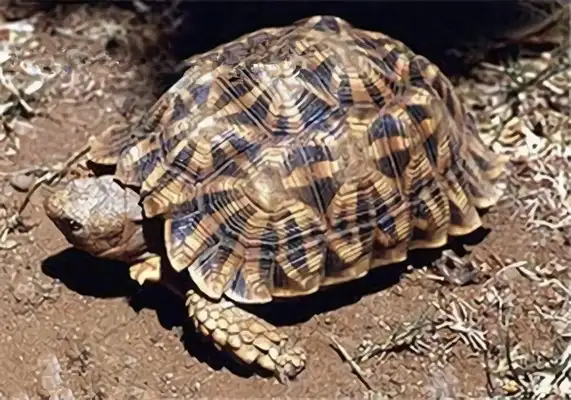
The environmental requirements of geometric land turtles lie mainly in light, and geometric sea turtle calcium is a difficult task, so adequate light is essential, while at the same time light has some advantages for temperature control, as described below for the appropriate growth environment of geometric land turtles.
I. Temperature requirements for geometric land turtles
Temperature also has an absolute effect on the appetite of geometric land turtles. Geometric turtles tend to stop eating at temperatures below 18°C to avoid indigestion. Tortoises or other reptiles are thermogenics that cannot produce higher body temperature to digest food and deliver nutrients for metabolism, so their body temperature must be reached at normal temperatures with the full help of external sunlight or artificial heat sources. It is difficult to treat if inadequate temperatures cause indigestion or indigestion. Therefore, heating light bulbs, heating pads, or ceramic heaters must be used when winter temperatures are below 20 degrees. It's warm and dry. But be careful not to burn.
II. Geometric land turtle light requirements
Geometric land turtles require sunlight for a long time, as they originate in the African region, ultraviolet light is important for the formation of vitamin D3, which promotes calcium absorption. Therefore, in an artificial environment, a reptile lamp would have to be lighted for more than 10 hours or a direct sunbath, but would have to be provided with shades to avoid excessive exposure to dehydration. Now the UVB light bulb launched in the United States integrates ultraviolet and warming lights and is an ideal source of light. However, no source of light can be used to replace solar light, so regular sun tan is indispensable. Geometric land turtle breeding points
Geometric turtles have their own characteristics for food requirements, which are said to be difficult to feed. Geometric land turtles have more brittle intestinal tracts and require large quantities of calcium, so be careful about food choices.
Food requirements for geometric land turtles
There are three principles to allocate several land turtle foods: one, calcium ratio; two, high fibres; and three, low proteins. Geometric land turtles, especially juvenile turtles, require large quantities of calcium to grow turtle nails and bones. Their digestive tracts are long and require high fibres to enhance gastrointestinal creeping and sound digestive functions. Long-term consumption of low-fibre supermarket vegetables is more likely to lead to inadequate gastrointestinal creeping and degradation, to rejection and dehydration. This is one of the leading causes of death in geometric land turtles. Animal foods, such as meat or cat and dog feed and beans, contain a large amount of protein, which, if regularly given to geometric turtles, accelerates their growth and metabolism, causes overloading of organs such as the heart and kidney, and causes backs and stones, leading to death in the long run.
II. Interactivity of geometric land turtles
Geometric land turtle breeders often feel depressed, the turtles are unhealthy, sleepy and do not like activity. Compared to other people's turtles, they're completely different. Actually, it's still on the breeders. Often land turtles need to adapt to a new environment. It's been a long time. It should be used to taking the initiative to make it accept. It's too long to play with them when they're free. It's more interactive, less afraid of people.