Designation: PET5276
English name: Loggerheadseattle
Character: Strong
Origin: Temperature waters of the Atlantic, Pacific and Indian Ocean. South China Sea, East Sea Sea
Life: Overview of Atlantic turtle species around 50-80
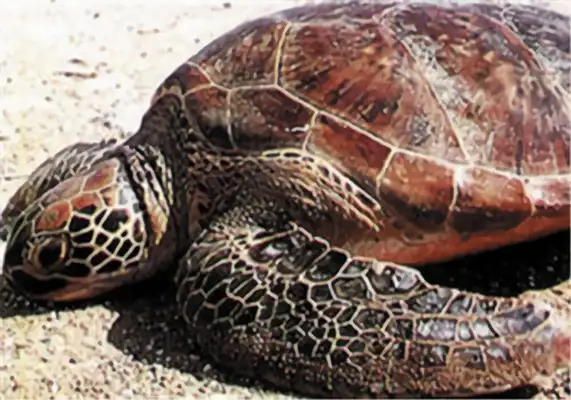
Atlantic turtles are typical species of turtles, and since they are species of turtles, many habits are different from other species of turtles, such as the Atlantic turtle migration parade, which is more characteristic and worthy of study. People have been looking at how Atlantic turtles know exactly where they are under the water.
Loggerhead turtle, commonly known as green turtle. It is distributed among hot waters of the Atlantic, Pacific and Indian Ocean. The South China Sea and the East Sea have Atlantic turtles. It is large and can be as long as 1 metre and generally weigh about 100 kg. Fish, shrimp, crab, molluscs and algae are fed.
Chinese literary name: Tortoise
Chinese common name: Red Sea Turtle, Red Sea Turtle, Spirit Turtle
Latin name: Carettacaretta
English name: Loggerheadseattle
Species Nameman and Age: Linnaeus, 1758: Animals
Gate: Pipeline gate
Amen: vertebrate Amen.
Programme: climb
Tortoises.
C: Turtles
Crop: Atlantic turtle
Distribution: Temperature waters in the Atlantic, Pacific and Indian Ocean. South China Sea, East Sea Sea
Protection: Listed in Appendix I to the Convention on International Trade in Endangered Species of Wild Fauna and Flora. Approved by the State Council on 10 December 1988 and published jointly by the Ministry of Forestry and the Ministry of Agriculture of the People ' s Republic of China on 14 January 1989, the National List of Priority Wildlife Protection is classified as Level II Animal Protection. Atlantic turtle morphological characteristics
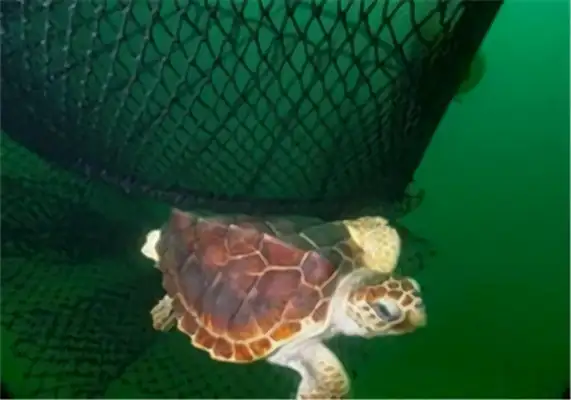
Atlantic turtles are one of the branches of turtles. They are larger turtles of up to a metre size, but they have a temperamental character and are of fine meat and nutritional value, so that they have been overkilled and have become protected species.
Atlantic turtles have a large size of up to 1 metre long, typically weighing about 100 kg and up to 300-400 kg. Head with body back red or red brown, abdominal yellow. The hook, big and wide. Symmetry of the back of the head, 2 pairs of foreheads, elliptical shape of the front of the back nail, sharper back edge, slightly rising in the centre. The larvae's three-strength backs are slowly growing. Five to six vertebras, usually five pairs, and three extended lower edges on the bridge. Four-legged oars, long front limbs, one to two claws. It is located in hot waters of the Atlantic, Pacific and Indian Ocean. The South China Sea and the East Sea have Pacific turtle distribution.
Tortoises can be divided into two subcategories: Atlantic turtles (C.c caretta) and Pacific turtles (C.c gigas). The main spawning grounds for Pacific turtles in the western Pacific are Okinawa, Kagoshima, Kumamoto, Dejima, Aichi, Shinagawa, Chiba counties in Japan. Atlantic Turtle Care Knowledge
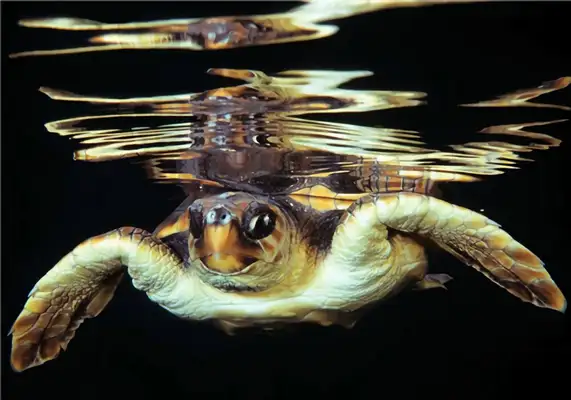
It is a fact that the number of turtles in the Atlantic is becoming increasingly scarce, and it is a fact that it is inevitable and already happening, and that over-fishing by humans has put the species at risk, and some even steal some eggs from their spawning grounds, leading to a sharp decline in the number of turtles.
The endangered state of Atlantic turtles
Predatory and indiscriminate hunting of eggs is an important factor in the sharp decline in turtle resources in the Xisha Islands. It has been reported that “a large number of fishermen come to Xisha each April/July, particularly in Jonglei State. They're not only hunting turtles at sea, they're digging eggs. Seasides near each island can see turtle-capturing fishing vessels. On China Island, fishing vessel 00,258 was seen with more than 20 turtles. The ship returned to the port of Tammen, in Jonglei State, where it was captured by the fishing services, where turtles were confiscated, released and fined; on the atolls, two fishing vessels with turtles were seen coming and fled in a hurry. Each sea turtle lays eggs during the season, as many as dozens of vessels catch them, and one ship catch more than 100 turtles a year, with more than 1,000 eggs dug up.” According to this article, there have also been a large number of sea turtles on Hainan Island in the past, as a result of the fact that henan Island had lost sight of them 20 years ago, as a result of the fact that they had dug eggs. The beach landscape on the eastern coast of Taiwan Province is beautiful, but, unfortunately, there are virtually no sea turtles to lay their eggs after being killed and destroyed.
Protection measures for Atlantic turtles
Existing protective measures: Listed in Appendix I to the Convention on International Trade in Endangered Species of Wild Fauna and Flora. Approved by the State Council on 10 December 1988 and published jointly by the Ministry of Forestry and the Ministry of Agriculture of the People ' s Republic of China on 14 January 1989, the National List of Priority Wildlife Protection is classified as Level II Animal Protection. Atlantic Turtle Living Environment
As Atlantic turtles are large marine reptiles, the size of the transmitter does not affect their behaviour, but because of the high cost of construction and data processing, the technology has so far been used to study cases of Atlantic turtle migration, with no more than 200 in the world, and less than 40 of them. Essentially, researchers have found that turtle migration can be divided into fast swimming across the sea and slow swimming along large islands or continental margins. Atlantic turtle breeding point
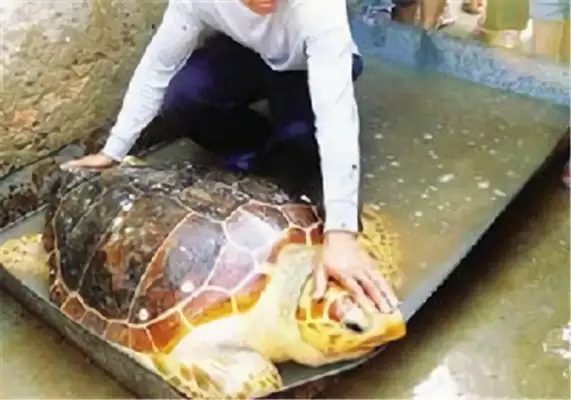
Atlantic turtles are expected to take a lot of time to eat every day in the course of their time. The main sources of food for Atlantic turtles are molluscs and possible fish shrimps, among others, with very little ingestion.
Atlantic turtles live for seawater. Food is provided by crustaceans such as fish, shrimp crabs and molluscs. In May-July of each year, eggs are laid from 60 to 150 eggs, white eggs, spherical shapes and approximately 38 to 40 mm in length on beach. Under natural conditions, turtles hatch for 60 days. The main spawning sites in the western Pacific Ocean are the coastal beaches of Japan, Kagoshima and Okinawa.
Shortcomings of the turtle:
1. Lack of motor cells: The maximum speed of the turtle can reach only half the speed of the old turtle, and the gift of the gifted parents of the movement is a sin.
2. Fancy: Tortoises are the most vulnerable to abdomen when they rise out of the sea and change air. Sea turtles have, on average, two or three seconds in which time they travel to find their head and go down. Tortoises come up and hang out for two or three minutes. It's safe to remember the bottom of the ocean to enjoy a sunbath.
3. Presumptuous: Without a video, it took two hours to eat a few dozen beaks, leaving no doubt that the native-born tortoise community in the South Pacific has also been brainwashed by the culture of the French table, and that it can swim quickly after such an intestinesy meal.