In recent days, Nandu journalists have received a response from Mr. Lee, a citizen of Shenzhen, that his favorite dog, alias, was suspected of having suffered kidney damage as a result of a car accident, and that he was referred to the Long Post Branch of the United Pet Hospital (hereinafter referred to as “the joint hospital”), where he was treated with suspected irregularities, irregularities in the use of medication, etc., which eventually led to his death as a result of his death as a result of the death of his life in hospital less than 20 years.
In response, the joint hospital authorities stated that the dogs were already dangerous when they were referred to the hospital, and that the owners had been informed and consented to the risks prior to the operation. This week, Nandu journalists learned from the Market Regulatory Authority that the Longjian Inspectorate of the Shenzhen Market Supervisory Authority is still investigating complaints from their clients.
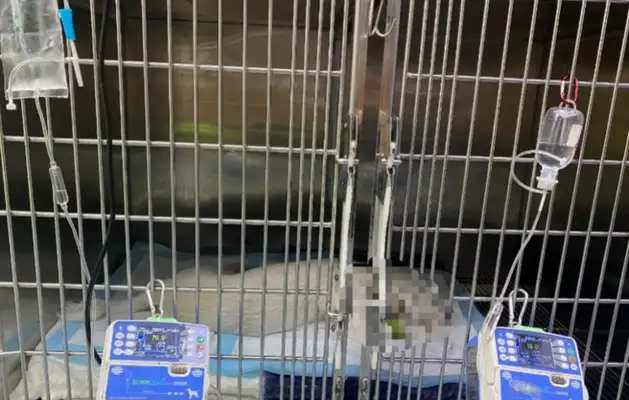
Citizens report that less than 20 hours after a dog referral to treat an invalid death and that the pet hospital is suspected to operate irregularly
According to Mr. Lee, at about 1900 hours on 20 June, his dog rag was in a car accident and was then taken to a pet hospital for treatment. On 23 June, at approximately 9 a.m., Mr. Lee's lover and friend Ms. Shaw sent Siu, after a general consideration, to the Long Post Branch of the Joint Pet Hospital (hereinafter referred to as “the Joint Hospital”), located in the Ki-lin Road, in the Yongkang district, where he determined that he had suffered serious kidney damage.
According to Mr. Lee, on the same day, the joint hospital carried out blood, film and B tests on Boots, which were followed by a double IV. At about 10 p.m., the joint hospital again examined the rags and examined the abdominal fluid around the kidney. Ms. Lee, the attending physician, judged the fluid to be urine and suspected of damage to the urinary tube or bladder, recommended that the urology of the rags be examined.
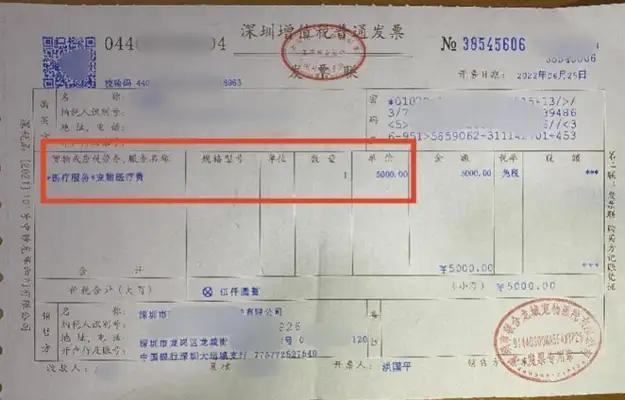
It was described that between 2330 hours and 1.30 a.m. on the following day (24), the joint pet hospital had completed a photocopying of the urology system in the minibus, which did not result in a break in the urine tube and bladder, but that the kidneys were severely damaged and that dialysis treatment was recommended. The joint hospital then informed Mr. Lee and others of the payment of the deposit for the hospital and indicated that a person would be placed under night supervision of Boo. At around 2.04 a.m., Mr. Lee and others left the Union Hospital after paying a deposit of $5,000 for hospitalization.
Mr. Lee recalled that at about 3.50 a.m., another Dr. Lee was able to send a video of twitching and oxygen-absorbing coverings in the “hospital group” at the Union Hospital and to learn, upon enquiry, that there was a risk of heart failure leading to death. Mr. Lee and others went to the joint hospital separately upon being informed, but during that time several calls were made to the attending doctor, Ms. Lee.
Mr. Lee told the Nandu reporter that her friend Ms. Shaw had been the first to see Boo at about 4:22 a.m. in the rescue room and had not felt vital signs, but that “Dr. Lee” indicated that there was still a weak breath, and Ms. Shaw contacted the doctor who had previously visited the pet hospital and suggested that he should be taken to the high pressure oxygen module immediately. At the request of Ms. Shaw, the Union Hospital contacted the Patburg Pet Hospital next door for treatment in high pressure oxygen cells.
However, at about 4.46 a.m., when Mr. Lee and his lover arrived at the Patburg Petty Hospital, Boo was no longer breathing or moving in the high-pressure oxygen chamber, and approximately 30 minutes later, after examination by Patburg ' s doctor, it was informed that his heart and lungs had ceased to function and had lost vital signs.
With regard to the consequences of the ineffective treatment of dogs and the eventual death, Mr. Lee et al. argued that, after receiving the seriously ill patient at the joint hospital, the attending physician went out during the golden treatment period and had no telephone contact, while the joint hospital placed another “doctor Lee”, who was not licensed to practise veterinary medicine and had no independent capacity to practice medicine, in charge of the treatment and night supervision of the minibus, while there was some responsibility for the irregularity of rescue measures, such as the excessive burden on kidneys and the use of human medicine, as a result of the use of film-making agents. Subsequently, Mr. Lee complained to the General Hospital of the United Petty Hospital, admitting that there had been some faults, but that he believed that the other party was willing to refund only the medical expenses and the compensation of $3,000, and that the apology was in vain.
Pet Hospital Response: The dog was already dangerous when it was referred to the hospital, and the owner was informed of the risks before the operation.
In response, Ms. Lee, Director of the Longgang Branch of the United Pet Hospital, said that Boo had been referred to the hospital for a preliminary diagnosis of kidney failure, along with symptoms of high levels of urinary poisoning, urinary abdominal and potassium blood, and that the indicators were not very good, and that the blood tests showed signs of a critical state, a “dog that would be lost at any time”, when she had made a detailed communication with the owner, informing him that the current symptoms were very serious and that he had subsequently been placed in hospital. Of these, after the initial examination and at the time of deposit, the dog owner confirmed that the condition was serious and signed an agreement on the condition.
Among them, the filming of the cloth was “to determine its problem, not to make it worse”. The agent of choice was also the safest one at present, followed by a telephone call from the owner of the dog to consult some of his colleagues, and the joint hospital took place only with his consent. At the same time, Ms. Lee indicated to the Nandu journalist that the joint hospital had informed the other party of the risks prior to the operation and had obtained their consent.
Ms. Lee claims that after the photograph was completed, the dog ' s owner left the joint hospital at more than 1 a.m., and that he was taken care of by the attending physician and another doctor until almost 3 a.m. The card entry showed that he did not leave until 2.54 a.m. When an emergency became impossible, it was explained that “since I was at a meeting that day, my cell phone was silent”, and when the assistant contacted, the cell phone was silent and was not heard.
In the case of Mr. Lee's pending billings, which included “head spasms”, Ms. Lee stated that “because of system problems”, but the disposal order of the day contained another drug, which was actually used in practice. Ms. Lee stated that the joint hospital also spoke to the owner of the dog after the incident, “but he refused to interview” and made a claim of $60,000, which was “unacceptable” for the pet hospital.
This week, Nandu journalists learned from the Market Regulatory Authority that the Longjian Inspectorate of the Shenzhen Market Supervisory Authority is still investigating complaints from their clients.